Table of Contents
The recent World Economic Forum in Davos served as a stage for high-stakes geopolitical theater, revealing widening cracks in the Western alliance regarding the conflict in Ukraine. While the event is typically choreographed to project unity, Ukrainian President Volodymyr Zelensky’s appearance exposed deep frustrations, shifting power dynamics with the United States, and a European leadership that appears increasingly paralyzed. Coupled with revelatory comments from Mark Carney regarding the "rules-based international order," this year’s forum marked a significant departure from the confident narratives of previous summits.
Key Takeaways
- Zelensky’s Diplomatic Failure: Despite pressure to attend, the Ukrainian President left Davos without the security guarantees or reconstruction funding ($800 billion) he sought from the US and EU.
- The European Paradox: Zelensky delivered a scathing critique of European weakness, yet received a standing ovation, highlighting a disconnect between EU rhetoric and geopolitical reality.
- Economic Realities vs. War Narratives: While Kiev projects a narrative of a collapsing Russian economy, economic indicators suggest Russian inflation is stabilizing and manufacturing is growing.
- The Myth of the Rules-Based Order: Mark Carney’s comments effectively admitted that the "rules-based international order" was a construct that is now being abandoned for pragmatic national interests.
The Davos Ultimatum: A Summoning and a Rejection
The circumstances surrounding Zelensky’s attendance at Davos were fraught with tension from the outset. Reports suggest the Ukrainian leader initially had no intention of appearing, preferring to stay in Kiev unless he could secure tangible results. His primary objective was clear: to obtain a signed document from the Americans promising security guarantees or, at the very least, a concrete commitment regarding an $800 billion reconstruction fund. This document was intended to serve as political capital back in Kiev, where concerns are mounting over the cessation of US financial flows and the stagnation of European aid.
However, geopolitical realities forced his hand. It appears Zelensky was effectively "summoned" by Donald Trump during the latter’s own Davos address, creating an imperative for European leaders to pressure Zelensky into attending. The message from European capitals was likely urgent: Do not antagonize Trump; show up, be diplomatic, and you might secure the funding.
The Meeting with Trump
The subsequent meeting between Zelensky and Trump was brief—lasting less than an hour—and reportedly perfunctory. The outcome was a worst-case scenario for the Ukrainian delegation. Trump remained evasive regarding security guarantees and offered no commitments on reconstruction financing. Zelensky emerged from the meeting empty-handed, fueling a sense of betrayal that set the tone for his subsequent address to the forum.
Europe’s Crisis of Self-Respect
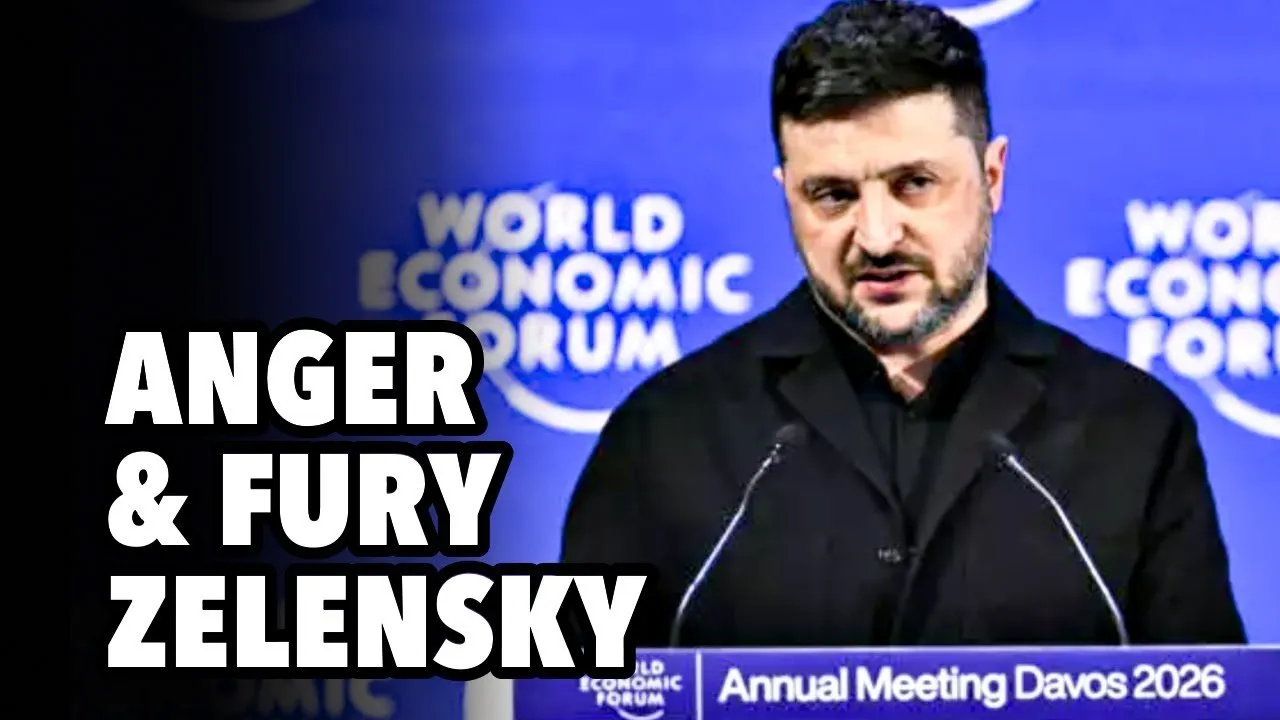
The most striking aspect of the summit was Zelensky’s speech, which devolved into an angry tirade against his European allies. In a display of frustration, he lashed out at European leaders, characterizing them as weak and incapable of achieving meaningful results. He targeted Hungarian Prime Minister Viktor Orbán aggressively and even directed ire toward Iran, creating a diplomatically awkward atmosphere.
Yet, the reaction from the European audience was baffling to observers. Despite being openly derided as "useless" and criticized for their lack of backbone, European leaders gave Zelensky a standing ovation.
"The Europeans are doing everything to try and regime change Orban... It’s election meddling. But to the extent that people in Hungary pay much attention to what Zelensky says, this is probably going to harden support for Orban."
This reaction underscores a profound loss of self-respect within the European political class. Critics argue that the applause signifies a total commitment to "Project Ukraine" regardless of the cost or humiliation involved. It suggests a leadership willing to appease a partner who openly disrespects them, primarily to keep the financial and political machinery of the conflict running. In contrast, Zelensky’s rhetoric toward the United States remained noticeably softer, acknowledging American strength—a clear indication that he understands where the true leverage lies.
Economic Indicators: Propaganda vs. Reality
During his address, Zelensky provided specific figures regarding the war of attrition, claiming massive Russian casualties and a "tired" Russian economy teetering on collapse. He cited a dramatic increase in Russian losses and suggested that victory was imminent if Western funding continued. However, analysts suggest these numbers are likely fabricated to maintain morale and justify continued Western investment.
The Resilience of the Russian Economy
Contrary to the narrative presented in Davos, economic data paints a picture of resilience rather than exhaustion. While Kiev claims Russia is struggling with production and manpower, the reality on the ground indicates stability:
- Inflation Control: Russian inflation has moderated to approximately 5.5%, with the central bank successfully cooling the economy through interest rate adjustments.
- Manufacturing Growth: There has been an overall increase in manufacturing output, driven by an investment boom and military production.
- Currency Strength: The ruble remains strong, and foreign currency reserves have largely recovered to pre-conflict levels in value terms.
The narrative of a collapsing Russia is essential for Kiev to maintain the flow of aid. Admitting that the adversary’s economy is growing and its military is advancing would likely sever the remaining lifelines of Western financial support. Consequently, the "delusional" numbers presented at Davos serve as a necessary fiction to keep the political washing machine spinning.
Mark Carney and the End of the "Rules-Based Order"
Perhaps the most significant long-term revelation from Davos came from former central banker Mark Carney. In a speech that garnered significant attention, Carney effectively dismantled the concept of the "rules-based international order"—a phrase that has underpinned Western foreign policy rhetoric for decades.
Carney’s comments suggested that this order was never truly "real," but rather a narrative construct used to align nations behind American hegemony. His pivot toward stabilizing economic relations with China, driven by the necessities of the Canadian economy, signaled a shift away from ideological adherence to US foreign policy goals.
"He admitted that the whole international rules-based order thing was all pretend... And because now this pretend is not in our benefit, let's make up something new."
This admission has reportedly infuriated Donald Trump and alienated segments of the US political establishment. It lays bare the reality that as economic pressures mount, even staunch Western allies are beginning to prioritize national survival over the maintenance of a collective geopolitical myth.
Conclusion
The events at Davos signal a fracturing of the unified front that has characterized the Western response to the Ukraine crisis. Zelensky’s empty-handed return to Kiev, combined with his public lashing of European leaders, highlights the desperation of a government facing dwindling resources. Meanwhile, Europe’s willingness to applaud its own humiliation exposes a deep strategic paralysis.
As technocrats like Mark Carney begin to peel back the curtain on the "rules-based order," it becomes clear that the geopolitical landscape is shifting. The narratives that sustained the conflict are clashing with hard economic and military realities, suggesting that the current status quo is unsustainable.