Table of Contents
In the evolving landscape of cryptocurrency, few figures command the respect and historical perspective of Zuko Wilcox, the creator of Zcash. As the industry matures, the conversation is shifting from simple financial speculation to the urgent intersection of privacy, artificial intelligence, and user experience. With the rise of surveillance tools and predictive AI, the original "cipherpunk" vision of a free, private digital economy faces its most significant test yet.
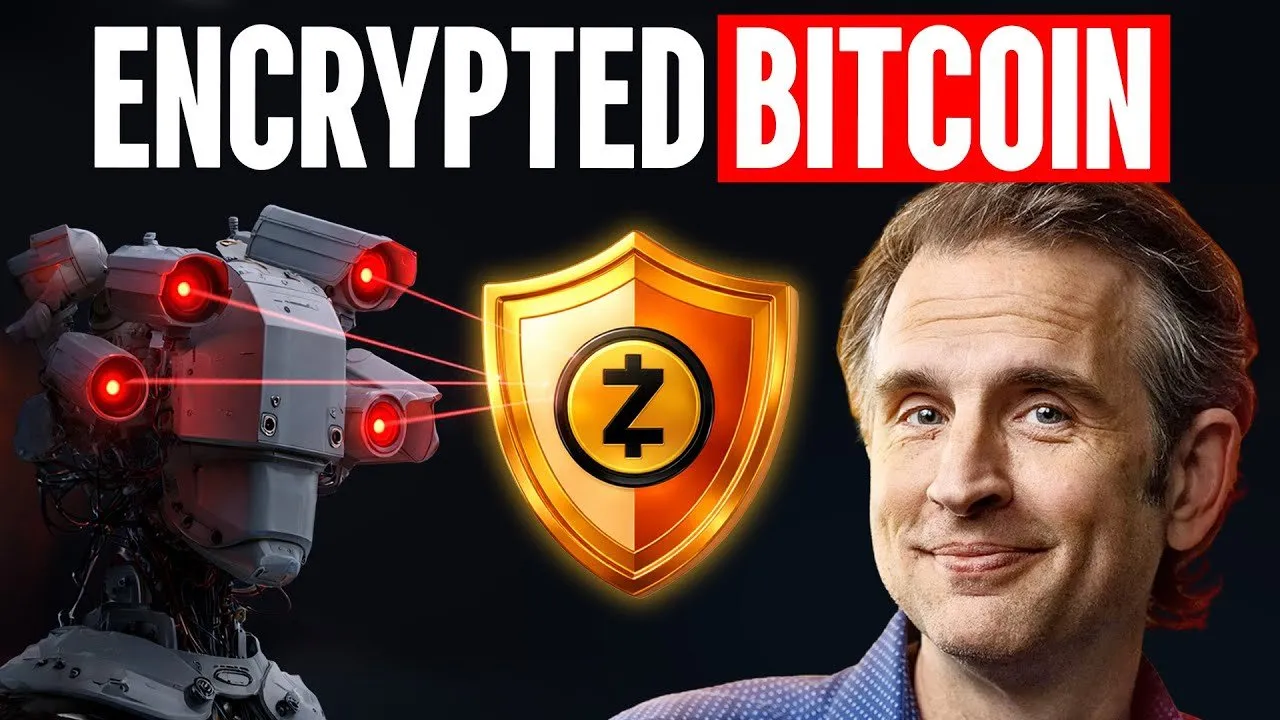
In a recent discussion with Bankless, Zuko dismantled the traditional views on crypto privacy, arguing that our current methods are insufficient against modern AI. He proposes a radical rethink: moving away from privacy as a transactional feature and toward privacy as a fundamental state of existence—a concept best encapsulated by the emerging narrative of Zcash as "Encrypted Bitcoin."
Key Takeaways
- The "Black Hole" Strategy: Privacy cannot be achieved by simply mixing funds ("value in flight"). True anonymity requires holding assets in a shielded pool indefinitely ("value at rest") to break the causal link that AI pattern recognition exploits.
- UX is the Barrier: Adopting the philosophy of Signal founder Moxie Marlinspike, crypto will fail unless it achieves 100 million users through seamless user experience rather than ideological purity.
- Zcash as Encrypted Bitcoin: ZEC is positioning itself not just as a privacy coin, but as a store of value with the same 21-million hard cap as Bitcoin, but with native encryption.
- The Checking Account Model: The most practical approach to digital privacy is treating Zcash like a checking account—converting a portion of net worth into ZEC for future, undetermined use.
- Sustainability via Dev Fund: Unlike Bitcoin’s purist approach, Zcash’s protocol-level development fund has successfully financed ongoing innovation and survival through bear markets.
The AI Threat: Why "Mixing" No Longer Works
For years, the standard operating procedure for crypto privacy was simple: take an asset like Bitcoin or Ethereum, pass it through a mixer or a privacy coin, and send it to a new wallet. Zuko argues that in the age of Artificial Intelligence, this model is fundamentally broken.
AI excels at pattern recognition. It aggregates vast amounts of metadata—timing, amounts, and user behaviors—to infer intent. If a user moves funds into a privacy protocol and shortly thereafter withdraws them to purchase a specific item or fund a specific wallet, AI can link the entry and exit points with high probability.
The Metaphysics of Intent
Zuko posits a theory that borders on the metaphysical but is grounded in information theory: AI can effectively "read your mind" by analyzing your digital footprint. If you have a specific intention—such as buying a car—and you funnel money through a privacy tool to do it, the pattern is detectable.
"The AI read your mind. It knows you want that or it will eventually. It will eventually figure out that that's what you wanted. Okay, but what if you said this? What I want is to convert half of my ETH into ZEC and hold it in ZEC. That's the end of my plan... The AI is foiled. He doesn't know what happens next."
This leads to the concept of the Zcash Black Hole. To defeat surveillance, one must not use privacy tools as a temporary tunnel. Instead, users must move value into the shielded pool and let it sit there. By removing the immediate "exit" transaction, the causal link is severed, rendering the predictive capabilities of AI useless.
The Pivot to User Experience: Moxie’s Law
The early crypto ethos mirrored the early Linux movement: build superior, free tools for a niche group of experts and hope the world eventually learns to use them. Zuko candidly admits that this "cipherpunk" strategy has failed.
Drawing on the philosophy of Moxie Marlinspike, the creator of Signal, Zuko suggests that privacy technology is irrelevant if it doesn't reach at least 100 million users. The barrier to entry is not ideology; it is User Experience (UX).
Ideally, the technology should disappear. Just as Signal looks like a standard chat app but provides encryption by default, modern crypto wallets must abstract away the complexity of keys and shielded pools. The success of the Zashi wallet and integrations like "Near Intents"—which allow users to swap assets across chains privately without friction—demonstrates this shift. If a user has to "learn" how to use privacy, the product has already failed.
Zcash as "Encrypted Bitcoin"
Narratives drive crypto adoption, and Zcash is coalescing around a powerful new meme: Encrypted Bitcoin. This definition serves two purposes:
- Monetary Policy: It highlights that Zcash shares Bitcoin’s scarcity model, specifically the immutable 21 million coin hard cap.
- Technological Superiority: It emphasizes the one critical feature Bitcoin lacks—native privacy.
While Bitcoin is often touted as a store of value, its transparency is a liability in a world of surveillance capitalism. If a store of value exposes the holder to kidnapping risks, targeted advertising, or state surveillance, its utility is diminished. Zcash offers the same sound money principles but protects the holder's identity.
Governance and the Development Fund
A key differentiator between the two protocols is funding. Bitcoin relies on voluntary contributions and corporate grants for development. Zcash, conversely, implemented a "Dev Fund" where 20% of block rewards are allocated to development and governance.
While controversial in purist circles, Zuko argues this mechanism has been the project's lifeline. It creates a positive feedback loop: as the network grows, funding for engineers increases, leading to better tools, which in turn drives adoption. This model has allowed Zcash to survive severe market downturns that obliterated other projects lacking sustainable treasury models.
Practical Application: The "Checking Account" Strategy
How should the average user navigate this landscape? Zuko advises against complex, high-stress privacy maneuvers. Instead, he suggests a "checking account" mental model.
Users should identify a comfortable amount of liquid value—their "checking account"—and convert that amount into shielded Zcash. This value should sit at rest. When a need arises, such as a subscription purchase or a transfer, the funds are already inside the privacy shield. This avoids the "value in flight" problem where a user panic-mixes funds immediately before a purchase, flagging themselves to surveillance systems.
"You can't get privacy from value in flight. You can only get privacy from value at rest."
Conclusion: The Future of Privacy
The battle for privacy is no longer just about hiding from a government; it is an arms race against sophisticated Artificial Intelligence and data harvesting conglomerates. The tools of the past—mixers and temporary privacy solutions—are becoming obsolete against pattern-matching algorithms.
The path forward, according to Zuko, lies in a combination of superior UX, sustainable protocol funding, and a shift in user behavior toward long-term shielded holding. Whether this behavior is called "Encrypted Bitcoin" or simply "Zodling," the imperative is clear: privacy must be native, passive, and persistent to survive the digital future.