Table of Contents
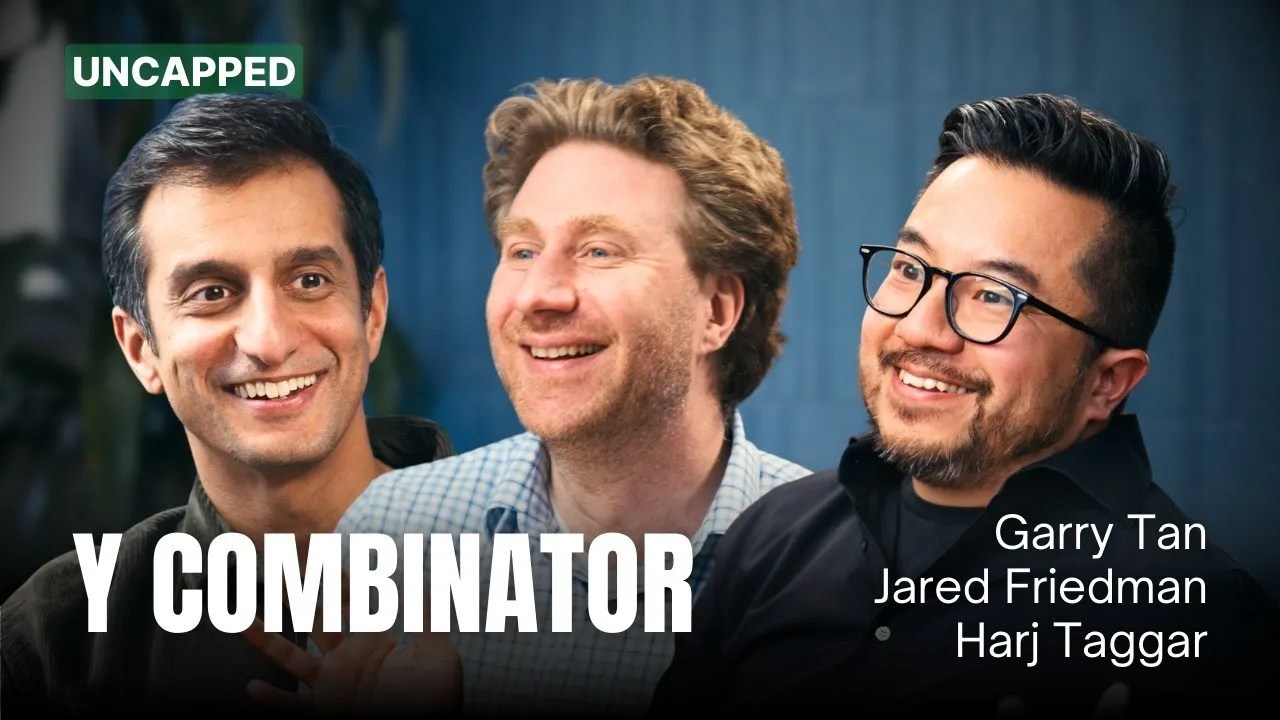
The landscape of Silicon Valley is undergoing a seismic shift as artificial intelligence redefines the mechanics of company building. In a recent discussion, Y Combinator (YC) leadership explored how the legendary accelerator is adapting to this new reality. While the core mission of YC remains centered on a "transformative social process," the tools and speed at which founders now operate are unrecognizable compared to the early days of the program. From compressing years of development into weeks to reshaping the very archetype of the successful founder, the age of AI is not just an incremental change—it is a total reimagining of the startup lifecycle.
Key Takeaways
- Hyper-Productivity: AI tools like Claude and Cursor allow solo founders to accomplish in weeks what previously required years of work and millions in capital.
- The Rise of the Product Thinker: The traditional "genius engineer" archetype is being joined by "commercially intelligent" founders who use AI to bridge technical gaps.
- Higher MVP Standards: Because building is faster, the bar for what constitutes an impressive Minimum Viable Product (MVP) has risen significantly.
- Structural Decentralization: To scale, YC has moved toward a decentralized "pod" model, allowing dozens of partners to operate with the autonomy of early-day YC.
The Enduring Product of Y Combinator
Despite the technological shifts, the fundamental value proposition of Y Combinator has remained remarkably consistent since its founding in 2006. The leadership team describes YC as a "Disneyland for transformation," where earnest, technical builders are molded into formidable founders. This process is less about business school theory and more about a "socially constructed reality" that normalizes the strange, high-pressure experience of starting a company.
The Vortex of Calibration
For many founders, entering YC is described as "being a fish out of water and then jumping back into the water." The environment serves as a vortex that identifies talent and pulls it into a community of peers. This calibration helps founders understand the new language of the ecosystem and sets a high internal bar for what is possible. Even as information becomes more accessible online, the "stamp of approval" and the proximity to other high-performers remain the program's most significant moats.
"YC is like a transformative process... we take people who are earnest and technical and then at the end of that process hopefully they become formidable."
Building at the Speed of Intelligence
The most radical change discussed is the sheer compression of development time. Gary Tan, President and CEO of YC, shared a personal anecdote about recreating his 2008 startup's entire codebase—approximately 70,000 lines of code—in just 90 hours over two weeks using modern AI agents. This level of output formerly required a team of five engineers and two years of runway.
From "Write Code" to "Prompt and Talk to Users"
The classic YC mantra of "write code and talk to users" is evolving. The new workflow is increasingly "prompt and talk to users." This shift has become so prominent that YC now allows applicants to upload transcripts of their interactions with AI coding agents. Partners look for how founders think about systems, whether they are over-engineering, and how they handle edge cases within their prompts. As the "back of the cabinet" becomes easier to build, the focus shifts to the artisan's taste and the quality of the "system architecture" they define through AI.
"I could create like in 80 hours something that I could not create with $5 million and five engineers in two years."
The Expanding Founder Archetype
In the pre-AI era, a non-technical founder often faced an insurmountable wall unless they could recruit a CTO immediately. Today, the "Parker Conrad" archetype—the commercially brilliant product thinker who may not have a CS degree—is finding a new advantage. AI allows these individuals to build sophisticated applications themselves, increasing the "agency and taste" available in the market.
Agency, Taste, and Tenacity
YC partners emphasize that while they still fund "genius engineers," they are increasingly looking for founders who exhibit extreme agency and taste. Agency is the belief that a problem can be solved with technology; taste is the ability to build a version that people actually want to use. The "tireless gardener" who obsesses over the user experience is now more valuable than the one who simply knows how to write syntax, as the syntax itself is becoming a commodity.
Market Trends: Beyond the AI Echo Chamber
While AI dominates the current batches, other "glimmers of the future" are emerging. Prediction markets are gaining traction, driven by regulatory clarity and the success of platforms like Kalshi. Similarly, stablecoins and crypto are seeing a resurgence as practical tools for moving money rather than just speculative assets.
Is SaaS Dead?
The leadership addressed the growing sentiment that "SaaS is dead" due to collapsing public market multiples. Their counter-argument is that while traditional SaaS models are under pressure, the "agentic" view of software is just beginning. Companies that serve as "systems of record" (like Rippling) or those that touch regulatory and financial flows remain resilient. The danger lies in "brittle" SaaS companies whose only moat was a set of simple integrations that AI can now replicate in minutes.
"The bar for what you should demo even a few weeks into the batch just keeps going up and up."
Scaling an Institution: The Pod Model
To accommodate the influx of talent without losing the "magic," YC has decentralized its operations. Instead of one massive, centralized batch, YC now functions as a collection of "pods." Each partner effectively runs their own mini-accelerator of about 30 companies, providing the same intimate experience that founders received in the early 2000s.
The "15 PGs" Strategy
By employing roughly 30 total partners, YC has effectively scaled the "Paul Graham" (PG) model. This structure allows the organization to fund hundreds of companies per batch while maintaining high-touch mentorship. The goal is to solve the bottleneck of founder supply rather than capital supply. As the cost to start a company drops, the mission is to convince more people to take the leap into entrepreneurship earlier in their careers.
Conclusion
The conversation concludes on a note of "aggressive abundance." The leadership of YC rejects the "zero-sum" fear surrounding AI and unemployment, instead arguing for a "lack of imagination" in current business models. By embracing a culture that builds rather than litigates, they believe the next decade will see a radical transformation in how products are created and how much they can accomplish. For the modern founder, the message is clear: the tools have never been more powerful, the speed has never been faster, and the only remaining limit is the courage to "boil a few lakes" before taking on the ocean.