Table of Contents
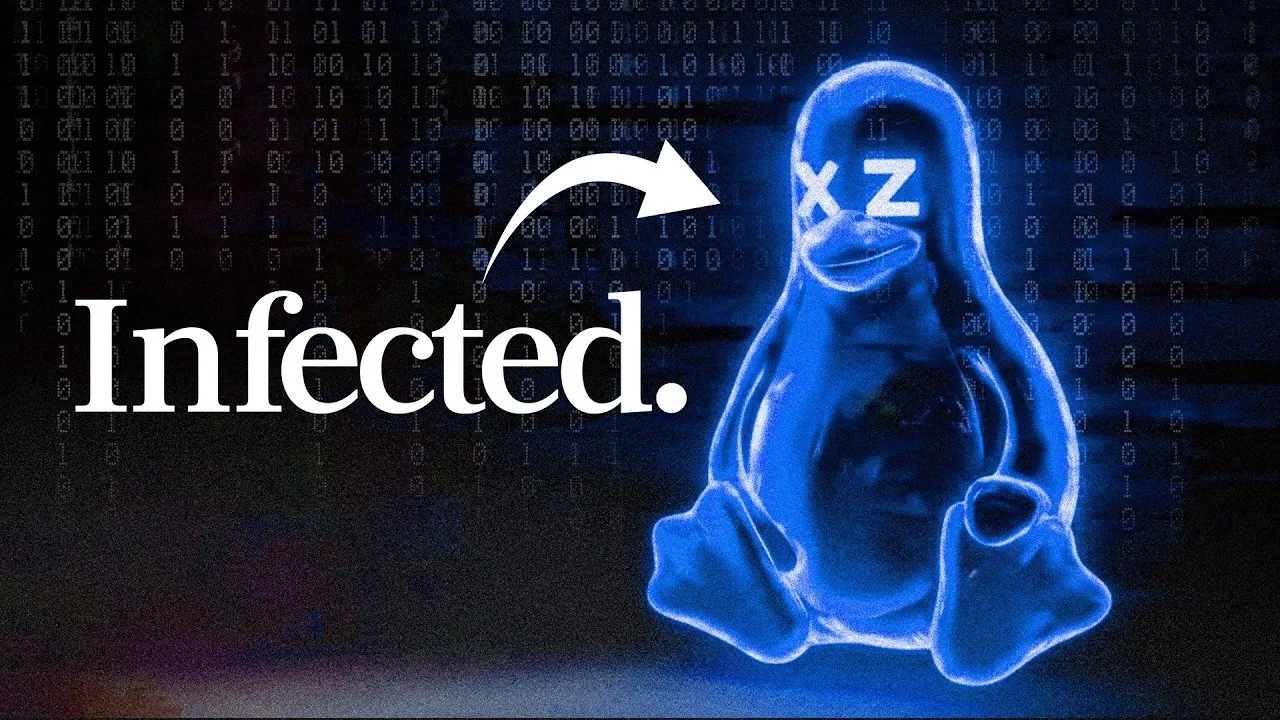
In early 2024, the digital world narrowly avoided a catastrophic collapse that could have compromised millions of servers worldwide. It wasn't a sudden hardware failure or a massive power outage that threatened the internet, but a meticulously planned "backdoor" hidden within a tiny, obscure piece of software. For years, a sophisticated actor lived a double life as a helpful contributor to an open-source project, waiting for the perfect moment to seize control of the global network. This incident has exposed a fundamental truth about our modern world: the entire digital economy rests on the shoulders of a few over-stressed, unpaid volunteers.
Key Takeaways
- The XZ Utils Incident: A high-level supply chain attack nearly compromised OpenSSH, the primary tool used to manage the world's servers.
- Social Engineering: The attacker, known as "Jia Tan," spent over two years gaining the trust of a burnt-out maintainer through a series of "sock puppet" accounts.
- The Human Factor: Critical internet infrastructure often depends on "passion projects" maintained by single individuals without financial support.
- Accidental Discovery: The backdoor was only found because a Microsoft engineer noticed a tiny 500-millisecond delay in a server connection.
The Foundation of the Modern Internet
To understand how the internet became so vulnerable, we must look back to the early 1980s and a frustrated researcher at MIT named Richard Stallman. When a laser printer at his lab kept jamming, Stallman tried to write a simple fix, only to realize the source code was locked away by the manufacturer. This sparked a revolution. Stallman established the Free Software Foundation, arguing that users should be free to run, study, change, and share software.
This movement eventually birthed the GNU Project and, later, the Linux kernel, developed by Linus Torvalds. Today, Linux is the invisible engine of the planet. It runs every single one of the world's top 500 supercomputers, the Pentagon's systems, US nuclear submarines, and over three billion Android devices. Because it is open-source, any developer can inspect or improve the code. However, this transparency relies on a dangerous assumption known as Linus's Law: "With enough eyeballs, all bugs are shallow."
The Hidden Fragility of Dependencies
Modern software is not built as a single block; it is an ecosystem of thousands of tiny tools and libraries called dependencies. Many of these libraries are maintained by solitary volunteers coding on nights and weekends. While the Linux kernel itself has thousands of "eyeballs" watching it, the smaller components—like data compression tools or networking libraries—often have only one.
The Long Game: Anatomy of an Infiltration
The target of this specific attack was XZ Utils, a data compression tool used across almost every major Linux distribution. Since 2005, XZ had been maintained by Lasse Collin, a developer in Finland. Over time, the pressure of maintaining a globally used tool for free began to take a toll on his mental health. In 2021, a group of seemingly random users began badgering Collin on public mailing lists, criticizing his lack of updates and demanding he hand over control to someone else.
Amidst this artificial pressure, a "helper elf" appeared: a developer using the name Jia Tan. Unlike the critics, Jia was responsive, talented, and conscientious. Over two years, Jia Tan became a core contributor, eventually gaining the "keys" to the project. As software researcher Rich Fearn noted regarding the community's perception of such contributors:
"In all of the dimensions, Jia Tan would be a very good contributor because he's obviously a good coder. He's very responsive, he's very keen, and I love all that."
With the trust of the community secured, Jia Tan began the second phase of the operation: weaving a "Trojan horse" into the software. This wasn't a crude hack but a masterpiece of obfuscation. The malicious code was hidden inside "binary blobs"—files used for testing that humans rarely, if ever, read.
The Technical Masterpiece: A Stealthy Backdoor
Jia Tan’s ultimate goal was to compromise OpenSSH, the protocol that allows administrators to log into servers remotely. Hacking OpenSSH directly is nearly impossible due to intense scrutiny. Instead, Jia targeted a chain of dependencies that linked XZ Utils to the SSH login process. The exploit was designed to trigger during a specific "Goldilocks zone" in the system's memory-loading process.
Hijacking the "Master Key"
The backdoor targeted the RSA authentication step of a secure login. Jia used a specialized tool called an IFUNC resolver to swap out the legitimate decryption function with a compromised version. This malicious code would listen for a specific, secret "master key" known only to the attacker. If the key was present, the attacker gained total "root" access to the server. If it wasn't, the system behaved normally, leaving no trace of the intrusion.
To ensure the backdoor remained undetected, the code was wrapped in layers of custom encryption. It even included safety checks to make sure it wouldn't crash the system and draw attention. It was a "cat burglar" approach to cyber warfare—quiet, meticulous, and invisible.
The 500-Millisecond Miracle
By March 2024, the compromised version of XZ Utils had already been integrated into experimental versions of major Linux distributions like Fedora and Debian. The internet was weeks away from a "doomsday" scenario where the majority of global servers would have been accessible to a single actor. The only thing that stopped it was a stroke of incredible luck and a very observant engineer.
Andres Freund, a developer at Microsoft, was testing a new version of Debian when he noticed that SSH logins were taking about 500 milliseconds longer than usual. Most people would have ignored a half-second delay, but Freund dug deeper. He traced the lag back to XZ Utils and discovered the hidden audit hooks Jia Tan had planted. When the news broke, the global tech community went into an immediate lockdown to revert the changes.
"Actually, I'm still surprised now that the mainstream news outlets haven't really covered this very much... millions of systems would have been compromised."
Who Was Jia Tan?
The identity of Jia Tan remains a mystery. Experts agree that the level of patience, technical skill, and social engineering required points toward a nation-state actor. While the timestamps on the code suggested a Beijing time zone, other clues—such as work patterns during holidays—have led some to speculate that the Russian-state-backed group APT29 (Cozy Bear) might be responsible.
Regardless of who was behind the keyboard, the incident has sparked a difficult conversation about the sustainability of open-source software. Critics argue that the model is fundamentally flawed, but others point out that proprietary, closed-source software is often even more vulnerable to state-sponsored backdoors that are never discovered by the public.
Conclusion
The XZ Utils backdoor was a wake-up call for the digital age. It revealed that the security of our global financial, governmental, and defense systems often depends on the benevolence and sanity of unpaid volunteers who are frequently under attack. While the disaster was averted this time, the "Jia Tans" of the world are likely already working on their next multi-year infiltration. To prevent the next crisis, the tech industry must find a way to support the "Lasse Collins" of the world before they burn out and let the wrong people in. The price of our digital freedom is not just eternal vigilance, but also sustainable support for the people who build it.