Table of Contents
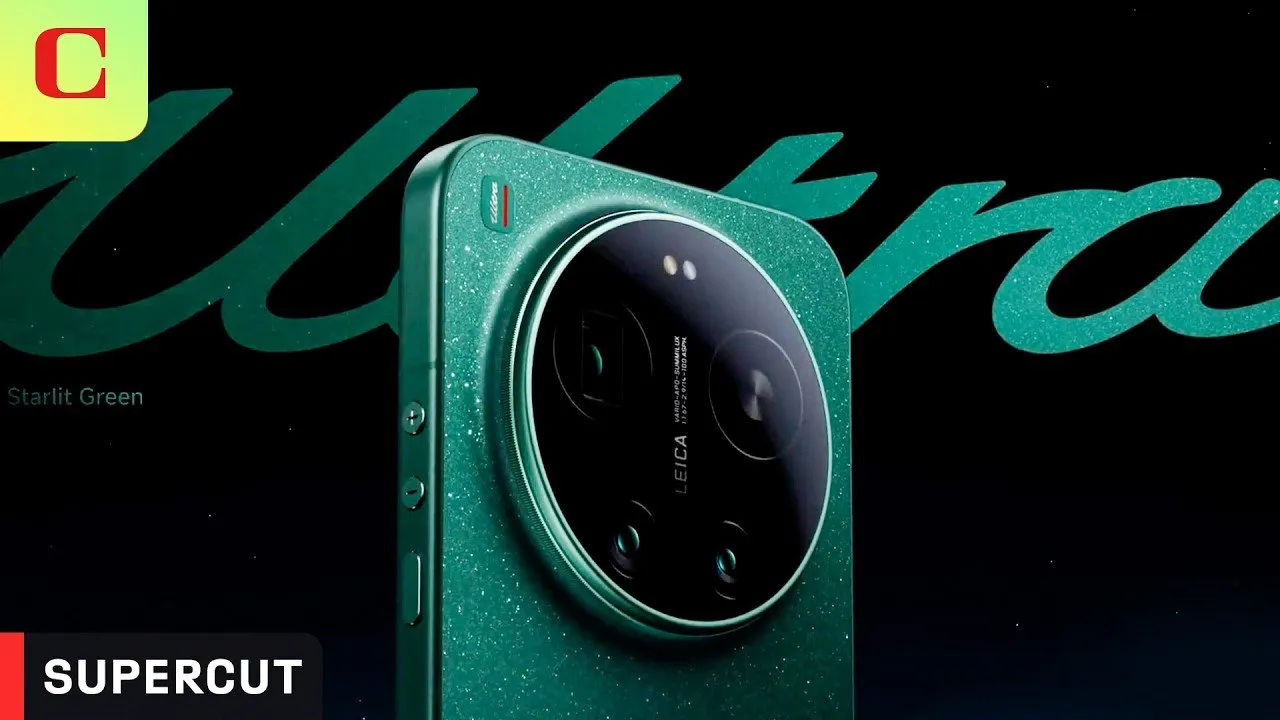
At the 2026 Mobile World Congress (MWC), Xiaomi officially unveiled its highly anticipated Xiaomi 17 flagship series, headlined by the premium Xiaomi 17 Ultra. The new lineup introduces significant advancements in mobile photography through a partnership with Leica, alongside the integration of the latest Snapdragon 8 Elite Gen 5 mobile platform to drive high-performance efficiency.
Key Points
- The Xiaomi 17 series features the Snapdragon 8 Elite Gen 5 chipset, offering industry-leading CPU and GPU performance.
- The Xiaomi 17 Ultra introduces Loic sensor technology, designed to expand dynamic range by increasing light well capacity by six times.
- The device features a world-first Leica Apochromatic (APO) telephoto lens equipped with a mechanical optical zoom system similar to professional DSLR hardware.
- New Xiaomi Hyper RGB display technology claims to improve clarity while reducing power consumption compared to traditional 2K Pentile arrays.
- The standard Xiaomi 17 starts at €999, while the Leica Light Phone special edition is priced at €1,999.
Advanced Imaging and Hardware Innovations
The core of the Xiaomi 17 Ultra is its focus on high-fidelity imaging. Co-engineered with Leica, the device features a 1-inch Light Fusion 1050L sensor. According to Xiaomi, the inclusion of Loic technology marks a shift in smartphone photography by addressing the long-standing limitation of dynamic range. By providing each pixel with an additional capacity for light, the sensor allows for improved detail in both shadowed and highlighted areas, a feature Xiaomi claims will be the new industry standard for night-time photography.
The telephoto capabilities represent a departure from standard digital zooming. The 200MP telephoto lens utilizes a mechanical optical zoom system, physically shifting lens elements to maintain full optical quality across the focal range. This hardware is supplemented by the Leica APO certification, which denotes an uncompromising standard for optical aberration correction previously reserved for high-end professional camera lenses.
The Leica light phone powered by Xiaomi is a really revolutionary image tool. It creates a connection between photographer and the environment. It brings a feeling of a camera into the mobile world.
Thermal Management and Display Technology
To support the intense processing power of the Snapdragon 8 Elite Gen 5, Xiaomi has implemented a proprietary 3D dual-channel ice loop cooling system. This system utilizes a bionic vapor chamber with directional micro-structures, resulting in a 50% increase in thermal conductivity compared to previous iterations. This hardware configuration is aimed at maintaining sustained performance for power-users and mobile gamers.
Visual fidelity on the Ultra model is managed by the new Xiaomi Hyper RGB display. By moving away from traditional Pentile subpixel arrangements, the screen utilizes complete RGB subpixel arrays. This allows the 1.5K resolution panel to achieve clarity comparable to 2K displays while simultaneously improving energy efficiency. The display is protected by Xiaomi Shield Glass 3.0, which the manufacturer states offers a 30% improvement in drop resistance.
Market Availability and Future Strategy
The Xiaomi 17 series is positioned as a direct competitor in the premium smartphone market, emphasizing both internal hardware speed and exterior industrial design. The move toward an "all-flat" aesthetic for the Ultra model, combined with an ultra-thin frame, reflects Xiaomi's intent to prioritize ergonomics alongside feature-dense internal components. The Leica Light Phone, a specialized iteration of the Ultra, further solidifies this focus on the professional photographer demographic by incorporating mechanical controls for exposure, zoom, and shutter speed.
Xiaomi confirmed that the Xiaomi 17 and 17 Ultra will be rolled out across major European markets via local carrier partnerships. Consumers are encouraged to visit local retailers to view the Alpine Pink, Venture Green, and Starlit Green colorways. As mobile imaging continues to evolve toward professional-grade hardware, Xiaomi’s reliance on mechanical zoom and proprietary sensor tech will serve as a key differentiator in the coming fiscal year.