Table of Contents
The global geopolitical landscape is witnessing a profound shift as China and Russia intensify their coordinated efforts to push back against assertive US foreign policy. This strategic alignment is particularly evident in their responses to the ongoing blockade against Cuba and the escalating rhetoric and actions targeting Iran. What began as diplomatic objections has evolved into concrete countermeasures, signaling a determined effort by Beijing and Moscow to challenge Washington's unilateral dominance and reshape the international order.
Key Takeaways
- China and Russia are actively resisting what they perceive as American "neo-imperial" ambitions through diplomatic and material support to targeted nations.
- Specific assistance includes military aid and intelligence to Iran, along with critical oil, food, and energy supplies to Cuba.
- Despite their growing cooperation, China and Russia currently lack the global reach to directly match US military power, necessitating a long-term strategy and significant investment.
- Internal political fragmentation, deep-seated infiltration, and a historical reluctance to fully embrace external aid in countries like Iran and Cuba present significant challenges to the effectiveness of this support.
- The US strategy against Iran involves economic warfare, covert operations, and the threat of military strikes, all aimed at regime change.
The Shifting Geopolitical Landscape: A Tale of Two Visions
The current global dynamic is starkly defined by two opposing geopolitical blueprints. On one side, the US administration, articulated notably by Senator Marco Rubio at the Munich Security Conference, has outlined an "uber neocon project for American imperialism around the world." This vision advocates for aggressive unilateralism and the projection of US power to maintain global hegemony.
In direct opposition, China's Foreign Minister and National Security Advisor, Wang Yi, presented a different, "opposing agenda." Speaking at the same conference, Wang Yi positioned China as a staunch defender of international law and existing multilateral institutions, actively resisting what he termed the "American neo-imperial drive." This diplomatic counter-narrative is supported by high-level coordination between Beijing and Moscow.
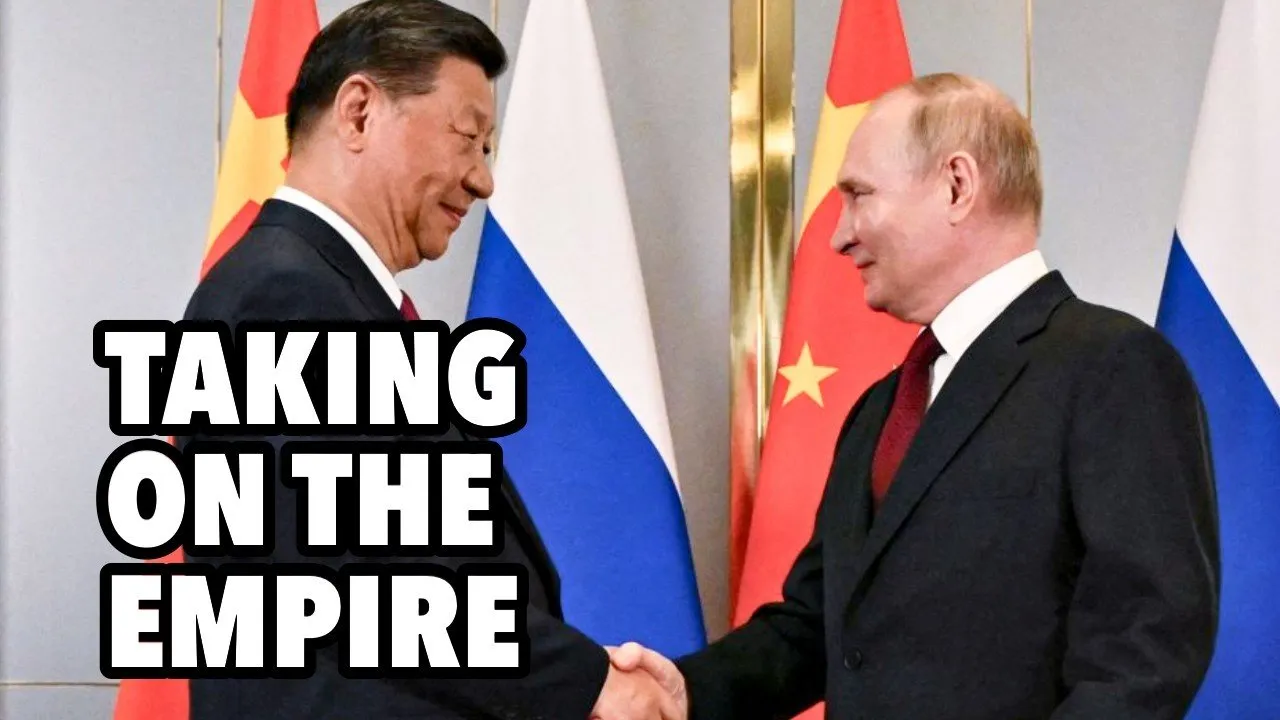
Over recent weeks, intense discussions have taken place between Chinese and Russian officials. Putin's National Security Adviser, Nikolai Patrushev, was in Beijing, and both President Putin and President Xi Jinping held a significant virtual conference. These interactions underscore a strategic alignment that is translating into tangible actions on the ground, signaling a new phase of collaboration designed to challenge American dominance.
Wang Yi basically set out not just a different agenda from Rubio's but I would say an opposing agenda to Rubio's. He basically foresaw imperialism of the kind that Rubio was talking about.
Concrete Countermeasures: Bolstering Allies Against US Pressure
The strategic partnership between China and Russia is now moving beyond rhetoric to provide specific, material support to nations facing intense pressure from the United States. This includes a robust package of assistance to both Iran and Cuba.
Support for Iran Amidst Escalating Tensions
The US has openly pursued regime change in Iran, employing a multi-faceted strategy that combines economic warfare, covert operations, and the threat of military force. Critics note that the US engineered a dollar shortage in Iran, causing a crash in the rial, while simultaneously smuggling Starlink terminals to coordinate protests intended to exploit the economic crisis. Faced with these aggressive tactics, China and Russia have significantly stepped up their aid to Tehran.
This assistance includes critical military and intelligence provisions such as electronic jammers, aircraft, helicopter gunships, and satellite data. Chinese spy ships are actively monitoring US warships in the Arabian Sea, providing crucial intelligence. Furthermore, China, Russia, and Iran solidified their partnership in January with a tripartite agreement, deepening their collaboration. Despite these efforts, Iran's internal vulnerabilities, particularly deep-seated infiltration, continue to pose a significant challenge to its resilience against external pressures.
Trump is now open. He says that regime change is the best outcome.
Lifelines for Cuba's Humanitarian Crisis
Similarly, China and Russia are now working in concert to support Cuba, which is grappling with a severe energy and food crisis exacerbated by ongoing US sanctions. Russia has pledged to provide oil to Cuba, a vital humanitarian gesture that also opens the door for sustained future deliveries. China is "rushing" support, dispatching aircraft laden with essential food supplies, including rice, and solar panels to alleviate Cuba's energy woes. The coordination of this aid was a specific topic of discussion between Presidents Putin and Xi during their recent virtual conference, highlighting its strategic importance in their broader pushback against US policy.
The Asymmetry of Global Power and Long-Term Strategy
While the coordinated efforts of China and Russia mark a significant shift, it is important to acknowledge the inherent asymmetry of global power. The United States still possesses an unparalleled global military reach, boasting a vast network of bases, the most powerful ocean-going fleet, and ten nuclear-powered aircraft carriers. In contrast, China, with its rapidly expanding navy, currently operates only one aircraft carrier comparable to US supercarriers, and it is not nuclear-powered.
Despite this disparity, both China and Russia are engaged in a concerted long-term strategy to build up their armed forces and economic resilience. China's massive shipbuilding program is a testament to its ambition to project power more globally. Economically, initiatives like BRICS Pay are beginning to function, and China has reportedly initiated a concerted move to sell off US treasury bonds. However, experts estimate that it will take "at least 10 years" for them to truly match the global reach of the United States, if they continue on their current trajectory.
This buildup period is reminiscent of the early decades of the Cold War, when the Soviet Union invested heavily in technology and industry to become a global superpower by the mid-1960s. Unlike the Soviet Union, however, China and Russia today possess a significantly larger industrial base, multiple times bigger than that of the Soviets, and even larger than the American industrial base. This capacity allows them to mount a more sustained challenge, though the process demands time and immense strategic commitment.
Internal Hurdles: Obstacles Within Embattled Nations
Even with increasing support from China and Russia, both Iran and Cuba face significant internal challenges that complicate their ability to effectively withstand external pressures. These hurdles range from deep-seated infiltration to historical skepticism and fragmented leadership.
Iran's Vulnerabilities: Infiltration and Missed Opportunities
Iran, in particular, appears to be heavily infiltrated. Evidence from past events, such as the precise intelligence available to adversaries during military actions and the coordination of internal protests, suggests pervasive penetration of its security agencies. This internal weakness is compounded by a curious historical reluctance to accept external aid that could have bolstered its defenses. For instance, Iran reportedly turned down Russian offers to help build its own air defense system, Chinese offers for an early warning system, and joint proposals for advanced fighter jets. Furthermore, when the US engineered the collapse of the rial, Iran reportedly failed to utilize a Chinese credit swap offer that could have stabilized its currency. These missed opportunities highlight a concerning lack of decisive action and internal cohesion.
Cuba's Historical Skepticism and Internal Lobbies
Cuba's situation is similarly complex. Despite a long history of close relations and economic aid from Russia during the Cold War, there has been an "unwillingness by Cuba to move forward" with Russian offers in recent decades. Russian oil executives were reportedly turned away, with Cubans preferring to develop costly offshore oil fields themselves. Offers to complete a nuclear power station and build a metro in Havana were also declined. This skepticism or reluctance is hypothesized to stem from powerful internal groups whose interests might clash with accepting such aid. For example, elements within Cuba's tourism industry might have worried about Russian re-engagement deterring Canadian tourists, or interference with lucrative oil trades with Venezuela.
In both Iran and Cuba, the absence of strong, centralized leadership, akin to a Fidel Castro in Cuba or a unified political system in Iran, contributes to this fragmentation. Iran's political system is often described as chaotic, and its Supreme Leader is aging, potentially limiting his tight control. These internal lobbies and fragmented decision-making processes can override national strategic interests, making it challenging for these nations to fully leverage the support offered by China and Russia.
Conclusion
The coordinated pushback from China and Russia against what they view as aggressive US foreign policy marks a pivotal moment in international relations. Their increasing strategic alignment and material support for nations like Iran and Cuba underscore a determined effort to foster a more multi-polar world. While formidable challenges remain, particularly the current asymmetry of global military power and significant internal hurdles within the recipient nations, the sustained efforts by Beijing and Moscow are demonstrably reshaping geopolitical dynamics. This evolving alliance signals a long-term commitment to challenging unilateral hegemony, promising a future of intensified geopolitical competition and complex power shifts.