Table of Contents
Microsoft has announced a significant leadership reshuffle within its gaming division, appointing Asha Sharma to lead Xbox as Phil Spencer and Sarah Bond step down from their respective roles. The transition comes amid a broader industry pivot toward cloud services and artificial intelligence, even as competitors like Samsung struggle to excite consumers with iterative hardware updates. These shifts suggest a fundamental reorganization of how major technology firms prioritize hardware versus ecosystem-driven growth.
Key Points
- Asha Sharma, formerly of Meta and Instacart, takes over Microsoft’s gaming division to focus on product delivery and profitability.
- Samsung has revealed the Galaxy S26 lineup, introducing a $100 price increase for base models despite maintaining camera hardware from previous generations.
- Microsoft is repositioning Xbox to balance the "Xbox faithful" hardware base with an aggressive "play everywhere" cloud strategy.
- Meta appears to be consolidating Messenger back into the primary Facebook ecosystem, potentially prioritizing WhatsApp as its standalone global messaging leader.
- The gaming industry is moving away from hardware-specific exclusives as rising component costs, such as RAM, make console cycles more expensive to maintain.
Microsoft Signals Strategic Shift with Sharma Appointment
In a move that caught the gaming industry by surprise, Microsoft revealed that Asha Sharma will take the helm of its gaming division, following the departures of longtime leaders Phil Spencer and Sarah Bond. Matt Booty will transition into the role of Chief Creative Officer, reporting directly to Sharma. This leadership change is viewed not as a shift in AI technology—despite Sharma’s recent tenure running Core AI for Microsoft—but as a pivot toward disciplined product management and market expansion.
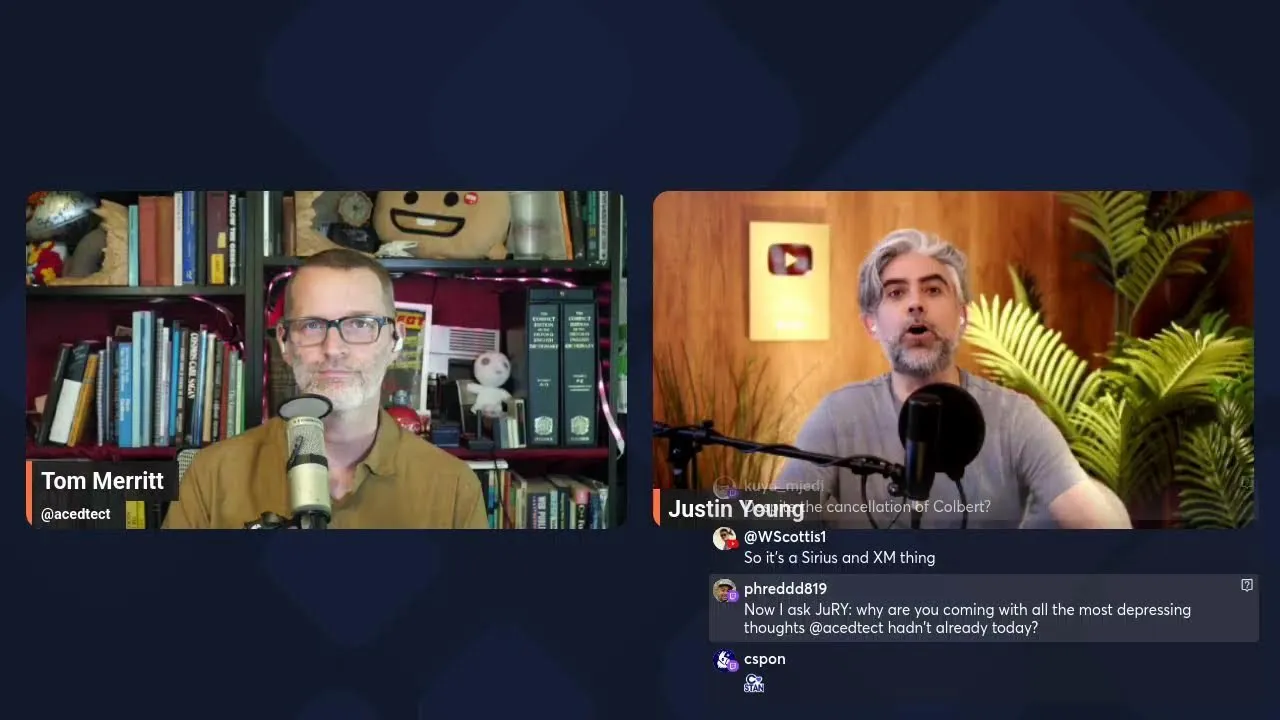
Sharma brings a pedigree of operational scaling, having served as COO for Instacart during its IPO and as VP of Product at Meta. Analysts suggest her appointment is intended to bridge the gap between Microsoft’s aggressive cloud ambitions and its traditional console user base. During the Daily Tech News Show broadcast, Tom Merritt noted that Sharma may be charged with bringing the public message back into focus, ensuring that Xbox hardware remains the "crown jewel" of a platform that is increasingly accessible across all devices.
"I think Asha Sharma is going to be smarter about taking care of the Xbox faithful... while they continue to evolve. She’s there to put the words in place to make it seem like Xbox doesn’t suck anymore."
The transition highlights the "schizophrenic" nature of current Xbox branding, which has vacillated between promoting hardware and telling users they do not strictly need a console to access the Game Pass library. Sharma's task will be to refine this identity as Microsoft navigates a post-hardware landscape.
Samsung Galaxy S26: Iteration Amidst Price Hikes
While Microsoft reorganizes its software and services, Samsung is doubling down on its flagship hardware, though with mixed results. The newly announced Galaxy S26 series has drawn criticism for what Rob Dunwood described as "pedestrian" upgrades. Notably, the S26 and S26 Plus models will see a $100 price increase, placing them at a higher price point than comparable iPhone models, despite utilizing the same camera sensors found in the S23 and S24 generations.
The S26 Ultra remains the standout in the lineup, featuring a new Privacy Display. This hardware-level security feature uses pixel orientation to prevent side-viewing, effectively building a privacy shield into the screen itself. Other specifications include:
- 60W Fast Charging: Capable of reaching a 70% charge in under 30 minutes.
- Material Reversion: A shift back to aluminum from titanium to improve heat dissipation and reduce manufacturing costs.
- Software Integration: Enhanced AI features via Perplexity for web search and Google Gemini as a functional agent.
Industry experts suggest Samsung’s lack of radical innovation in "candy bar" phones may indicate a shift in focus toward folding devices. As RAM and component prices continue to fluctuate, Samsung appears to be treating the S26 as a placeholder while awaiting the next major shift in mobile form factors.
Meta’s Messaging Consolidation and the Future of Messenger
Evidence is mounting that Meta is preparing to sunset Messenger as a standalone desktop experience. Following the discontinuation of the Messenger app for Windows and Mac, warnings have appeared on Messenger.com suggesting the web portal may also be shuttered in favor of integration within the main Facebook interface. This move is interpreted as a cost-cutting measure to divert resources toward Large Language Models (LLMs) and Generative AI.
With 1.3 billion users, Messenger remains a massive platform, but it often functions as a loss leader. By forcing users back to the Facebook app, Meta can increase ad impressions and engagement within its primary ecosystem. Simultaneously, Meta is rumored to be testing usernames for WhatsApp, which would remove the requirement for a phone number—the primary barrier currently preventing Messenger loyalists from migrating to the more robust WhatsApp platform.
"Meta is trimming costs everywhere it thinks it can to pour it all into LLMs. If they look at the usage numbers... they may say, that’s not worth the money we’re spending maintaining it."
Market Implications and Future Outlook
The simultaneous shifts at Microsoft, Samsung, and Meta signal a broader trend: the "commoditization" of hardware and the "centralization" of software services. For Microsoft, the goal is to decouple the Xbox brand from a $500 box and attach it to a universal service. For Samsung, the challenge is maintaining premium status in a market where Google’s Pixel and Apple’s iPhone are closing the gap on hardware quality and AI utility.
As Asha Sharma begins her tenure at Xbox, the industry will watch closely to see if she can maintain hardware sales while successfully transitioning the brand into a service-first entity. Meanwhile, Samsung must convince consumers that the S26’s iterative updates justify a higher entry price, or risk losing market share to more aggressive Android competitors. The next 12 to 18 months will likely determine whether the traditional console and "flat phone" markets can survive in their current forms or if they will be fully absorbed by the rising tide of AI and cloud-based ecosystems.