Table of Contents
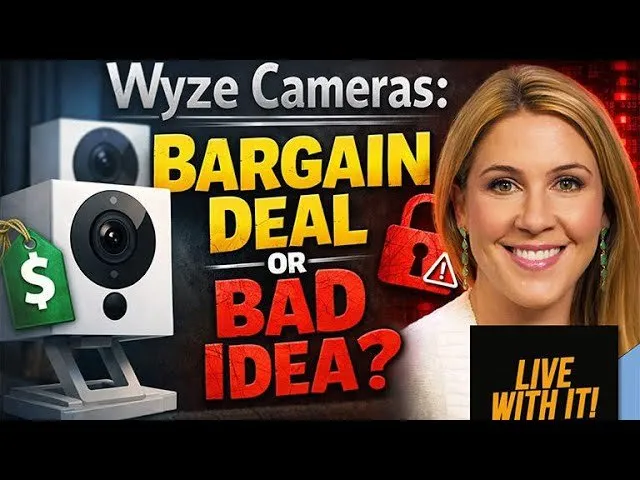
Smart home technology company Wyze has established a significant market foothold by offering feature-rich security cameras at a fraction of the cost of competitors like Ring or Nest. However, persistent concerns regarding data privacy protocols and shifting subscription models have led industry observers to classify the hardware as a viable solution for exterior security while strongly cautioning against its use inside private living spaces.
Key Takeaways
- Cost Efficiency: Wyze cameras provide 1080p recording, night vision, and local storage at entry-level prices ranging from $30 to $100.
- Privacy Warning: Due to a history of data breaches, experts recommend using these devices strictly for exterior monitoring and avoiding interior placement.
- Subscription Shift: Features that were originally free are increasingly moving behind paid cloud subscriptions, limiting the functionality of the base hardware.
- Modular Deployment: The system allows for flexible, wire-free installation suitable for renters, though battery life fluctuates significantly based on traffic.
The Economics of Budget Security
In the competitive landscape of IP-based Wi-Fi security, Wyze has differentiated itself through aggressive pricing and modular flexibility. Unlike hardwired systems that require professional installation or expensive base stations, Wyze allows consumers to mix and match individual units. The product line, which includes Pan & Tilt models, dedicated outdoor cameras, and standard fixed-lens units, features 1080p resolution and infrared (IR) LED night vision.
According to longtime tech analyst Roger Chang, who has field-tested the system for over five years, the company achieves these price points by minimizing backend infrastructure costs. However, the hardware has proven surprisingly robust. Chang noted that even non-exterior rated units mounted under eaves withstood years of exposure to humidity and temperature changes without failure.
The system's modularity appeals to users needing specific solutions, such as monitoring crawl spaces, garages, or package drop-off points. The cameras support local recording via SD cards, offering a redundancy layer if internet connectivity fails.
Privacy Concerns and Data Security
Despite the hardware value, the software ecosystem presents significant liabilities. Wyze has faced public scrutiny following multiple data breaches and security lapses, including incidents where users were inadvertently granted access to video feeds from cameras they did not own. This track record has forced a sharp distinction in how experts recommend the technology be deployed.
The consensus suggests a "sliding scale" of usage: the more sensitive the location, the less suitable a Wyze camera becomes. While the devices are effective for monitoring public-facing areas—such as driveways, trash receptacles, or front porches—they pose a risk when placed in bedrooms or living rooms.
"If you want to keep an eye on your kids inside, you want to just keep an eye on your living room, bedroom, whatever, do not use these cameras. The data breach issue is severe enough that I would feel uncomfortable recommending them for that purpose."
Chang emphasizes that users must operate with the assumption that their feed could potentially be viewed by others. For exterior security, where the expectation of privacy is already low, this risk is often viewed as an acceptable trade-off for the low cost of entry.
The Shift to Subscriptions
Beyond security, the Wyze value proposition has been complicated by changes to its business model. Early adopters were drawn to the ecosystem because it did not require a cloud service to function effectively. Over time, the company has walled off previously standard features behind subscription tiers.
Users relying solely on the hardware without a subscription may lose access to cloud storage and advanced detection features. Chang estimates that non-subscribers might miss out on 30% to 40% of the camera's potential functionality. This shift aligns Wyze more closely with competitors like Amazon and Google, eroding its "no monthly fee" advantage, though the initial hardware cost remains significantly lower.
Installation and Operational Realities
For consumers accepting the privacy trade-offs for exterior use, the operational experience varies based on placement. Battery-powered units are highly dependent on motion traffic. A camera facing a quiet door may last three months on a single charge, while a unit facing a busy street could drain in under a month due to constant motion triggering.
Wyze has attempted to mitigate these issues with new form factors designed for ease of use:
- Socket Mounts: Adapters that allow cameras to draw power directly from outdoor light fixtures.
- Window Mounts: Faceplates that allow cameras to be mounted inside glass looking out, protecting the device from theft and elements while utilizing indoor power.
- Solar Accessories: Panels designed to trickle-charge battery units in sun-exposed locations.
Market Outlook
As the smart home market matures, consumers are increasingly forced to weigh hardware costs against data privacy. Wyze remains a dominant player for budget-conscious buyers and renters who cannot run wires. However, the recurring security lapses suggest the brand is best utilized as a perimeter defense system rather than a comprehensive home monitoring solution.
Potential buyers should anticipate occasional maintenance, such as hard-resetting devices periodically, and should factor in the potential necessity of a subscription plan to unlock useful security features. As Wyze continues to expand its hardware ecosystem, the onus remains on the user to deploy the cameras in environments where data leakage would not constitute a personal crisis.