Table of Contents
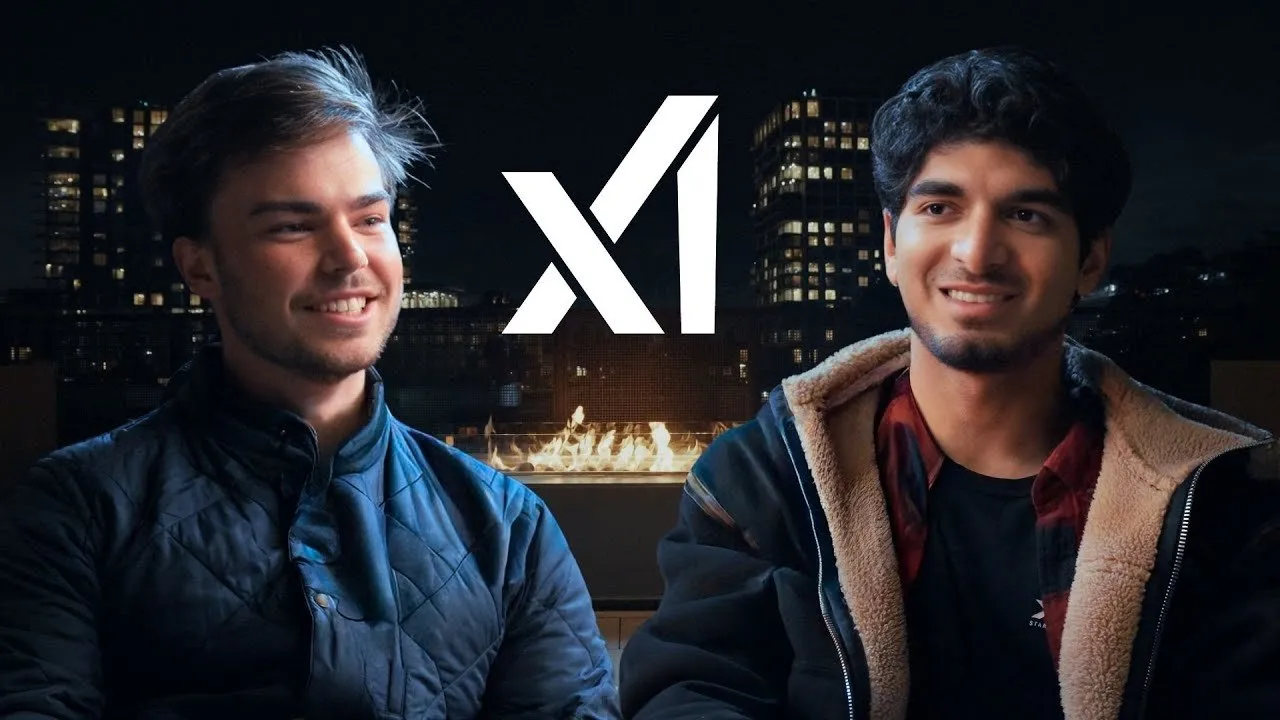
When Sulaiman Ghori joined xAI, his onboarding consisted of receiving a laptop, a badge, and zero instructions. There was no team assignment, no manager outlining a roadmap, and no artificial blockers. In most corporate environments, this would be a recipe for chaos. At xAI, it is the standard operating procedure for one of the fastest-growing technology companies in history.
xAI is not operating like a typical software startup. Born from the lineage of SpaceX and Tesla, it treats artificial intelligence as a hardware-constrained physics problem as much as a software challenge. From building the massive "Colossus" data center in a record-breaking 122 days to leveraging the idle compute power of millions of Tesla vehicles, the company is rewriting the playbook on infrastructure speed. Ghori, an engineer at xAI, reveals an internal culture where the only deadline is "yesterday" and where engineers can bet a Cybertruck on the success of a 24-hour training run.
Key Takeaways
- Speed is the only currency: xAI operates on compressed timelines, famously building the Colossus supercomputer cluster in 122 days by treating regulations and logistics as engineering variables to be optimized.
- Universal Engineering: The company maintains an extremely flat hierarchy where nearly every employee—including the sales team—writes code.
- Project Macrohard: xAI is building "human emulators" (digital Optimus robots) designed to automate repetitive computer tasks by mimicking human inputs rather than just processing text.
- The Tesla Compute Network: The company plans to utilize idle Tesla vehicles (Hardware 4) as a distributed cloud, potentially bypassing traditional GPU shortages and capital constraints.
- Management by Exception: Elon Musk’s leadership focuses on removing bottlenecks instantly ("unf*cking" problems) and setting timelines based on physical possibility rather than conventional wisdom.
The Engineering Culture of "No Blockers"
The defining characteristic of xAI’s internal culture is the complete absence of bureaucratic friction. In traditional tech giants, innovation often dies in committee meetings or middle-management reviews. At xAI, the hierarchy is ruthlessly efficient: individual contributors, a layer of co-founders/managers, and Elon Musk. This structure creates an environment where autonomy is absolute.
Ghori describes an atmosphere where permission is rarely required. If an engineer has an idea that improves a model or reduces latency, they can implement it, test it, and show it to leadership within the same day.
"No one tells me no. If I have a good idea I can usually go and implement it that same day and show it to Elon or whoever and we got an answer... The levers are extremely strong."
The Universal Engineer
Perhaps the most radical departure from Silicon Valley norms is the company's definition of an employee. In most organizations, roles are specialized: sales teams sell, product managers manage, and engineers code. At xAI, the distinction is blurred to the point of irrelevance. During his first week, Ghori sat next to a team member working on enterprise deals, only to discover that this "salesperson" was actively training a model. Everyone is an engineer because everyone is expected to understand the machine they are building.
This density of talent allows for a "war room" mentality. During critical pushes—such as model training surges—the company operates in 24-hour cycles. Feedback from users is digested overnight, bugs are squashed by morning, and new iterations are deployed daily. This iteration cycle is not measured in sprints or quarters, but in hours.
Infrastructure as the Primary Edge
While software talent is critical, xAI views hardware infrastructure as its true competitive moat. The prevailing philosophy is that software limitations are often artificial, while physical limitations are the only true boundaries. This "physics-first" approach drives their infrastructure build-out.
The Colossus Build
The construction of the Colossus data center serves as the company's flagship case study in speed. Conventional wisdom dictated a multi-year timeline for standing up a supercluster of that magnitude. The xAI team completed it in roughly four months. This was achieved by parallelizing every process—power acquisition, cooling installation, and racking—and by treating municipal permits and logistics as engineering problems to be solved rather than bureaucratic walls to wait behind.
To manage the volatility of training runs, which can swing power consumption by megawatts in milliseconds, xAI integrated massive battery packs directly onsite. Unlike generators, which have mechanical lag, batteries can smooth out the load instantly, protecting both the sensitive GPUs and the local municipal grid.
The Tesla Compute Advantage
One of the most significant revelations regarding xAI's long-term strategy is the integration with Tesla's ecosystem. As the company scales its "Macrohard" project (human emulation), the need for distributed computing grows exponentially. Rather than relying solely on building new data centers, xAI looks to the millions of Tesla vehicles sitting idle in driveways.
"We can run potentially our model... on the Tesla computer for much cheaper than you would in a VM on AWS or Oracle... That car computer is actually much more capital efficient and so it enables us to assume that we can deploy much, much faster at a much higher scale."
With millions of cars equipped with Hardware 4, networking, and power, the Tesla fleet represents a dormant supercomputer. By leasing compute time from owners while cars are charging, xAI can bootstrap a massive inference network without the capital expenditure of building physical server farms.
Project Macrohard: The Digital Optimus
While Large Language Models (LLMs) like Grok capture headlines, xAI is quietly developing a "human emulator" under the internal moniker Macrohard. The concept parallels Tesla’s Optimus robot: just as Optimus automates physical labor, Macrohard automates digital labor.
The goal is not just to reason about a task but to execute it. This involves an AI agent that can navigate a computer interface, use a mouse and keyboard, and interact with software exactly as a human would. This approach allows the AI to deploy into any existing software environment without requiring API integrations or custom code.
Efficiency Over Size
Contrary to the industry trend of building ever-larger reasoning models, xAI made a strategic bet early on to prioritize speed and efficiency. The hypothesis is simple: a human will not wait 10 minutes for an AI to perform a task that takes a human 5 minutes. However, if the AI is 100 times faster, the utility changes dramatically.
By focusing on smaller, highly efficient models, xAI can iterate faster. A smaller model means faster training runs, quicker feedback loops, and lower latency in production. This decision has allowed them to run dozens of experiments in parallel, testing novel architectures daily rather than monthly.
Leadership and "The Algorithm"
The culture at xAI is inextricably linked to Elon Musk’s management algorithm, famously honed at SpaceX. The process involves questioning every requirement, deleting unnecessary parts of the process, and only adding them back if absolutely necessary. This method is applied to everything from software stacks to facility leases.
Ghori notes that Musk’s feedback is distinctively binary: it is either high-level product direction or extremely low-level technical specifics (such as video encoder limits or packet latency). There is no "middle management" feedback. When a blocker arises, the solution is often a direct phone call to the relevant party to remove it instantly.
"With Elon companies, you can kind of just ask for responsibility and then you basically just live by the sword, die by the sword. If you get things done, then you can just ask for more responsibility."
This creates a high-stakes environment where ownership is fluid. An engineer might start the week working on iOS integration, move to backend infrastructure by Wednesday, and end the week debugging video encoders. Responsibility flows to those who solve problems, regardless of their official job title.
Conclusion
xAI represents a fusion of hardware-rich industrialism and software agility. By rejecting the standard timelines of Silicon Valley and adopting a "carnival company" mindset—where temporary permits and rapid prototyping are the norm—they have accelerated the pace of AI development. For engineers like Sulaiman Ghori, the appeal lies in the lack of constraints. In a world where regulatory and bureaucratic friction is increasing, xAI offers a glimpse into what is possible when the only limit accepted is the laws of physics.
![CAUTION: This Bitcoin TRAP Is Almost Set! [How I’m Playing It]](/content/images/size/w1304/format/webp/2026/03/bitcoin-price-trap-warning-market-analysis.jpg)