Table of Contents
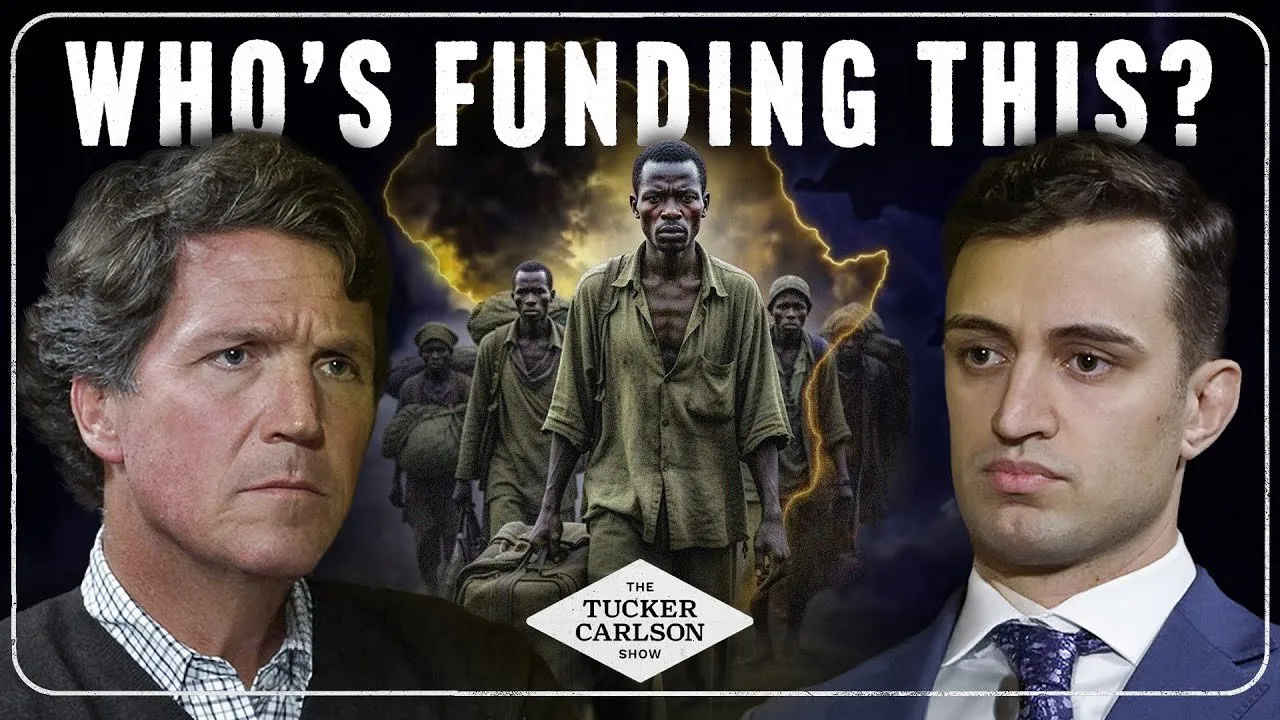
Illegal migration is frequently framed through the lens of humanitarian crisis or spontaneous movement, yet a deeper investigation suggests a more coordinated, industrialized operation. In a recent documentary project, two independent American filmmakers traced one of the world’s deadliest and most significant migration routes: the path from West Africa to Western Europe. Their journey, which spanned from Mauritania to the Canary Islands, and eventually to Paris and London, uncovered a complex web involving international NGOs, government corruption, and a distinct lack of assimilation that threatens the social fabric of the West. The findings challenge the standard narrative, suggesting that what is often depicted as a refugee crisis may be better understood as a structural dismantling of national borders facilitated by the very institutions tasked with protecting them.
Key Takeaways
- The Mauritania Hub: The West African nation of Mauritania has become the primary launchpad for migrants from across the Sahel and Maghreb regions heading toward the Spanish Canary Islands.
- Institutional Complicity: The investigation uncovered allegations that UN-affiliated workers and government officials are financially incentivized to maintain the flow of migrants rather than stop it.
- Violence and Assimilation: Unlike migration patterns observed in the Americas, the filmmakers documented high levels of hostility and violence in Europe, including a physical attack near the Eiffel Tower.
- The "Queer" Loophole: Specialized NGO facilities in France reportedly coach migrants to claim LGBTQ status to fast-track asylum applications, regardless of their actual orientation.
- Existential Threat: The documentary concludes that the demographic shift is not merely a policy failure but a form of "national suicide" facilitated by feckless politicians and corrupt incentives.
The Logistics of the Route: From West Africa to the UK
While American media focuses heavily on the southern US border, a parallel and perhaps more volatile crisis is unfolding in Europe. The route begins in Mauritania, an Islamic Republic in West Africa. This nation has evolved into a strategic funnel, collecting migrants from Sierra Leone, Senegal, and the broader Sahel region. From here, migrants launch boats toward the Canary Islands, a Spanish territory that serves as the gateway to the European Union.
Once on European soil, the movement is fluid and seemingly state-sponsored. Migrants are processed, often held in camps for months, and then flown—at government expense—to mainland Spain. From Madrid or Barcelona, the trail continues northward by train and bus into France and ultimately across the channel to the United Kingdom. This is not a clandestine underground railroad; it is a route operating in plain sight, facilitated by modern infrastructure.
The Economics of Migration: Corruption and Cash
One of the most startling revelations from the investigation is the financial machinery powering this mass movement. The filmmakers engaged with a United Nations worker in the Canary Islands who exposed the perverse incentives keeping the borders open. According to this source, the European Union provides billions of euros to member states like Spain to combat illegal migration. However, instead of utilizing these funds to halt the boats, officials allegedly skim vast sums while allowing the flow to continue.
The corruption is described as blatant and archaic. The investigation captured testimony claiming that funds are moved not just through wire transfers, but physically in "suitcases of cash" among top-level officials. This creates a scenario where solving the problem would effectively cut off a lucrative revenue stream for the host government.
"The Spanish government would not want for it to stop because every year the European Union gives more than three billion to Spain. Spain the government will take 1 billion in suitcase... So the suitcase on the table, that's why make it a game."
This admission suggests that the continued crisis is not a result of incompetence, but of a calculated business model where human trafficking generates profit for criminal organizations and state actors alike.
A Clash of Civilizations: Violence on the Ground
The investigation highlights a stark contrast between the migration demographics in the Americas versus those in Europe. Having previously trekked through the Darién Gap with South American migrants, the filmmakers noted that Latin American groups were generally cooperative and culturally contiguous with the West. In contrast, the demographic arriving in Europe is overwhelmingly comprised of military-age males from sub-Saharan Africa and the Middle East, often displaying significant hostility toward documentation.
The Paris Incident
The volatility of this demographic shift was demonstrated violently in Paris. While filming near the Eiffel Tower—historically the center of French culture—the filmmakers were attacked by a group of migrants. The assault, which involved physical violence and theft, occurred in broad daylight. Police response was described as negligible, with officers reportedly fearful that enforcing the law against protected migrant classes would result in their own prosecution or accusations of racism.
This incident serves as a microcosm for the broader security situation in European cities. Areas that were once safe cultural hubs have been transformed into zones of lawlessness, where native laws and social norms no longer apply.
The Role of NGOs and Legal Loopholes
Non-Governmental Organizations (NGOs) and international bodies like the International Organization for Migration (IOM) play a pivotal role in facilitating this journey. The investigation found that these organizations provide essential logistics, from "rape kits" and maps in the Darién Gap to legal aid and processing in Europe.
In France, the filmmakers discovered facilities run by charities specifically designated for "queer migrants." Interviews revealed that many economic migrants are aware that claiming LGBTQ status offers a fast track to asylum and protection from deportation. This creates a system where migrants from conservative Islamic nations falsely claim to be gay to exploit Western humanitarian protocols, with NGOs apparently willing to process them without rigorous verification.
The Trap of International Law
Much of this paralysis is rooted in outdated international frameworks, specifically the 1951 UN Refugee Convention and its 1967 Protocol. These laws, designed for a post-World War II era of displaced persons, are now being used to justify the mass intake of economic migrants who do not fit the traditional definition of refugees. Western leaders, bound by these treaties and fearful of political backlash, refuse to withdraw from agreements that no longer serve their national interests.
Conclusion: The Erasure of the West
The evidence gathered from Mauritania to Manchester paints a grim picture of Europe's future. The combination of falling native birth rates, mass importation of incompatible cultures, and a political class unwilling to enforce borders suggests an existential crisis. As the documentary frames it, this is not merely demographic change; it is the "end of Europe" as a distinct cultural and historical entity.
The governments of the West appear to be engaged in a form of managed decline, prioritizing international approval and short-term financial incentives over the safety and continuity of their own nations. Without a radical shift in policy and a willingness to confront the uncomfortable realities of integration and security, the transformation of the West remains not just a possibility, but a mathematically inevitable outcome.