Table of Contents
For decades, sports science operated under a "shrink it and pink it" methodology, assuming female physiology was simply a smaller version of male physiology. Today, the landscape is shifting. We are moving toward a nuanced understanding of how hormones, life stages, and metabolism interact to dictate health and performance outcomes for women.
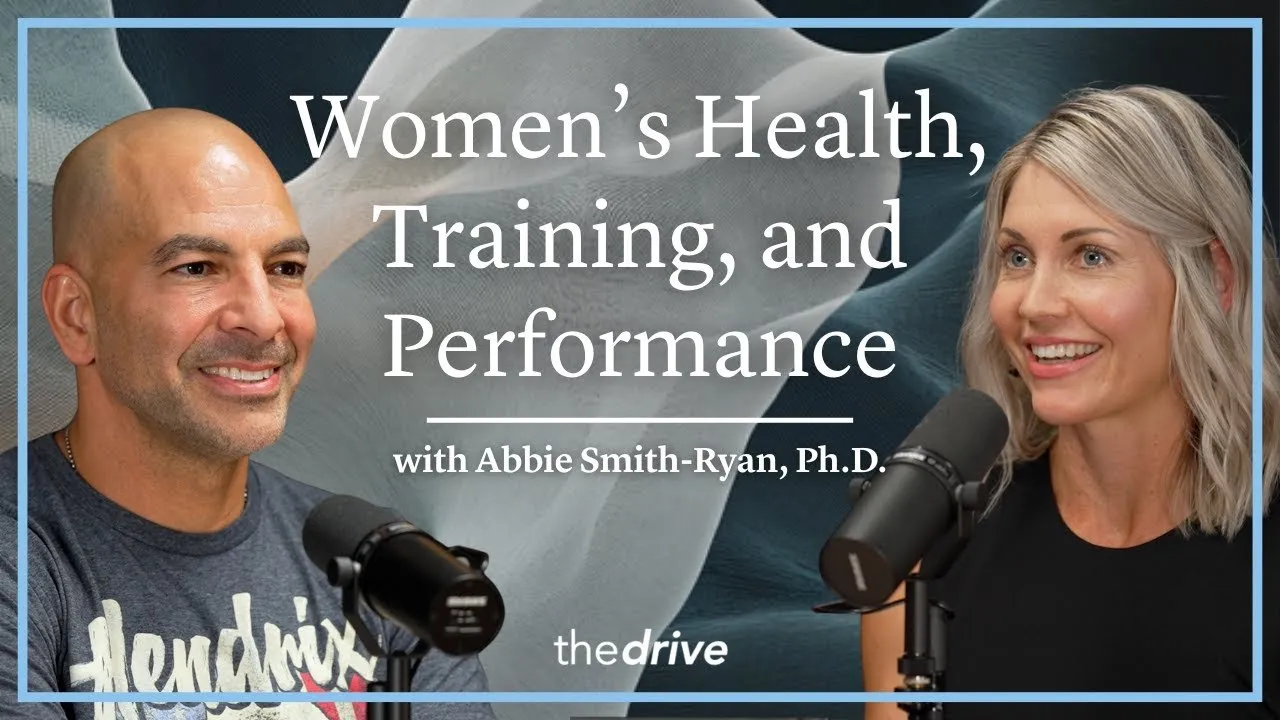
In a comprehensive discussion, Dr. Abby Smith-Ryan, a professor of exercise physiology and nutrition, breaks down the science of female training from puberty through post-menopause. Whether you are an athlete, a new mother, or navigating the metabolic shifts of perimenopause, understanding these biological underpinnings is essential for optimizing health span and body composition.
Key Takeaways
- Osteoporosis begins in childhood: Bone density peaks around age 19. Physical activity and proper fueling during puberty are critical for preventing frailty in old age.
- Cycle tracking empowers performance: While women can train at any time during their cycle, the luteal phase (pre-period) often brings higher metabolic needs, fluid retention, and protein breakdown, requiring nutritional adjustments.
- Perimenopause is a critical window: The transition into menopause is characterized by a loss of muscle quality and metabolic flexibility, making high-intensity training (HIIT) and heavy resistance training non-negotiable.
- Muscle protection is paramount with GLP-1s: Women using weight-loss drugs must prioritize high protein intake (1.6g/kg+) and resistance training to prevent dangerous muscle loss alongside fat loss.
- Intensity trumps volume for busy schedules: For women with limited time, succinct, high-intensity intervals and heavy lifting yield better metabolic adaptations than long, steady-state cardio.
The Foundation: Puberty and Bone Health
The trajectory of a woman's orthopedic health is largely determined before she leaves her teenage years. A critical concept in women's health is that osteoporosis is essentially a pediatric disease with geriatric consequences. Women reach their genetic ceiling for bone density at approximately age 19. From that point forward, the goal is maintenance.
For young girls in sports, the onset of menstruation is a pivotal biological marker. Unfortunately, it is often a time when girls drop out of sports due to body changes or a lack of understanding regarding their physiology. Dr. Smith-Ryan emphasizes that amenorrhea (the loss of a period) in young athletes is not a "badge of honor" but a dangerous signal of under-fueling relative to energy expenditure.
The Scoliosis Connection
Interestingly, research has highlighted a prevalence of spinal curvature in specific athlete populations.
"Every high jumper and every gymnast we scan has... not full-on scoliosis, but a spinal curve... which really demonstrates the point... that what we do with those young girls has a lifelong impact."
This structural adaptation underscores the necessity of multi-directional loading and resistance training early in life to support the skeletal system, rather than hyper-specialization in sports that may encourage asymmetric development.
Training Across the Menstrual Cycle
The menstrual cycle introduces hormonal fluctuations that affect metabolism, fluid balance, and recovery. However, the data suggests that women can perform at high levels during any phase. The goal of cycle tracking should not be to limit training, but to offer yourself grace and modify recovery strategies when necessary.
The Follicular Phase (Low Hormone)
In the first half of the cycle (starting day 1 of bleeding), estrogen and progesterone are low. During this phase, women typically experience:
- Higher pain tolerance.
- Greater ability to oxidize carbohydrates.
- Ideally, "peak" feelings of energy and performance.
This is an optimal time for high-intensity efforts and hitting personal bests.
The Luteal Phase (High Hormone)
After ovulation, progesterone rises. This phase is often associated with PMS symptoms, but significant physiological changes are occurring beneath the surface:
- Increased Metabolic Rate: Energy expenditure may rise by 200–300 calories per day.
- Protein Breakdown: Catabolic activity increases, meaning protein requirements go up.
- Fluid Retention: Progesterone can cause extracellular water retention (bloating).
Dr. Smith-Ryan suggests specific interventions for the luteal phase. Increasing protein intake is crucial to offset muscle breakdown. Additionally, creatine monohydrate can be particularly effective during this phase. By pulling water into the muscle cell (intracellular hydration) rather than letting it sit outside the cell (bloating), creatine can improve performance and reduce the sensation of "puffiness."
Pregnancy and Postpartum: The Athletic Event of Birth
The conversation around pregnancy fitness has shifted from "rest and be careful" to viewing childbirth as a major physiological feat that requires preparation.
"I believe birth is one of the most athletic events you'll do and you should train for it."
Training Through Pregnancy
Maintaining resistance training, particularly for the posterior chain (lats, glutes, hamstrings) and legs, prepares the body for the physical demands of labor and the mechanics of holding a newborn. While intensity may moderate, consistency remains key.
Postpartum Recovery
There is a misconception that pregnancy permanently alters a woman's body composition "set point." Dr. Smith-Ryan’s experience and research suggest that returning to pre-pregnancy body composition is achievable, though the timeline requires patience—often taking six months or longer. The focus during breastfeeding and early motherhood should be on nutrient density (omega-3s, protein) rather than caloric restriction, which can compromise recovery and milk supply.
Perimenopause: The Critical Window for Intervention
Perimenopause—the transition period before menopause typically occurring in a woman's 40s—is perhaps the most volatile and critical time for metabolic health. Research indicates that muscle quality changes drastically during this phase.
The "Ribeye vs. Filet" Analogy
As estrogen declines, women are susceptible to adipose tissue infiltration within the muscle. The muscle begins to look less like a lean filet mignon and more like a marbled ribeye. This marbling impairs the muscle's quality and its ability to contract efficiently. Furthermore, women often lose metabolic flexibility—the ability to efficiently switch between burning fats and carbohydrates.
The Solution: Intensity Over Volume
To counteract these changes, walking and light cardio are insufficient. The body requires a potent stimulus to maintain muscle quality and insulin sensitivity.
- Heavy Resistance Training: Essential to stimulate Type II muscle fibers, which are the first to atrophy with age.
- HIIT (High-Intensity Interval Training): Short bursts of near-maximal effort (e.g., 1 minute on, 1 minute off) can restore metabolic flexibility and improve mitochondrial function more effectively than steady-state cardio in this demographic.
GLP-1 Agonists and Body Composition
With the rise of GLP-1 agonists (like Semaglutide and Tirzepatide) for weight loss, a new challenge has emerged: the rapid loss of lean muscle mass alongside fat. When appetite is chemically suppressed, protein intake often plummets, leading to sarcopenia.
For women utilizing these tools, Dr. Smith-Ryan advises a rigorous protocol to protect health span:
- Prioritize Protein: Aim for 1.6g to 2.0g of protein per kilogram of ideal body weight. This is non-negotiable when total calories are low.
- Resistance Training: You cannot simply take the drug and eat less; you must provide a mechanical stimulus to the muscle to signal the body to hold onto it.
- Monitor Body Comp, Not Weight: Use DEXA scans or similar technology to ensure that the weight being lost is adipose tissue, not vital organ and skeletal muscle tissue.
Practical Strategies for the Time-Crunched Woman
Most women do not have unlimited hours to train. For the busy professional or mother with only ~3 hours per week to dedicate to exercise, Dr. Smith-Ryan outlines an effective "minimum effective dose" protocol.
The 3-Hour Weekly Protocol
If you have three hours a week, the split should prioritize intensity:
- Session 1 & 2 (Resistance): Two 30-45 minute full-body lifting sessions. Focus on compound movements (squats, hinges, pushes, pulls). Minimize rest times to keep heart rate elevated.
- Session 3 (HIIT): One 20-30 minute session of high-intensity intervals. A proven protocol is 10 rounds of 1 minute hard / 1 minute easy. The "hard" effort must be intense enough that you cannot sustain it for longer than a minute.
- Session 4 (Low Intensity): Any remaining time can be used for Zone 2 cardio or general movement, but do not sacrifice the weights or intervals for this if time is tight.
Supplements for Women
While whole food is primary, specific supplements can support female physiology across the lifespan:
- Creatine Monohydrate: 5g daily (or up to 10g for brain health/perimenopause). Supports energy, hydration, and cognitive function.
- Omega-3 Fatty Acids: Helps manage inflammation, particularly during the luteal phase and perimenopause.
- Magnesium & Vitamin D: Critical for bone health, hormonal regulation, and sleep quality.
Conclusion
The narrative that women should "lift light to tone" or avoid high-intensity work is outdated and scientifically inaccurate. Whether you are navigating the hormonal shifts of puberty, pregnancy, or menopause, the evidence points toward lifting heavy, fueling adequately with protein, and embracing intensity.
As Dr. Smith-Ryan notes, it is never too late to start. The human body retains the ability to adapt, build strength, and improve metabolic health at any age. By moving away from generic advice and applying female-specific physiology, women can take control of their health span and performance for the long term.