Table of Contents
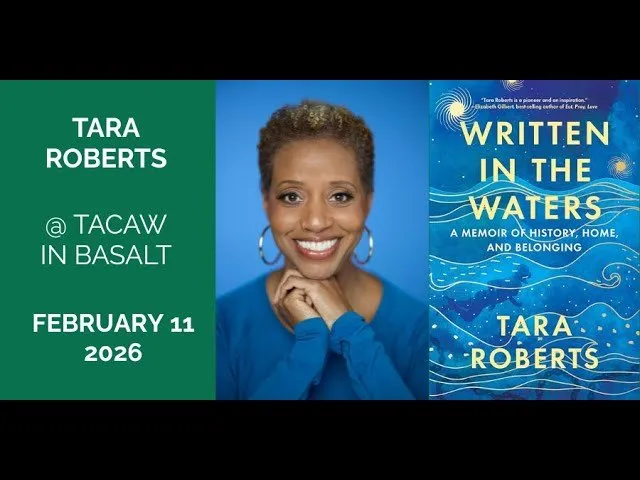
On a snowy evening in Aspen, National Geographic explorer Tara Roberts stood before a crowded theater to share a journey that began not in the water, but in a museum. A self-described "sci-fi fantasy girl" from landlocked Atlanta, Roberts was never a scuba diver or a history buff. However, a single photograph of Black women in wetsuits at the National Museum of African American History and Culture sparked a seven-year odyssey. Today, as an explorer-in-residence and author of Written in the Waters, Roberts is redefining how the world remembers the transatlantic slave trade by shifting the focus from trauma to agency, discovery, and profound global healing.
Key Takeaways
- Humanizing the Middle Passage: By searching for and documenting slave shipwrecks, divers are transforming faceless statistics into stories of individual human beings.
- A Global Responsibility: The transatlantic slave trade is not just Black history; it is the foundation of the modern world, influencing trade routes, wealth, and cultural exchange.
- The Power of Agency: Shifting the narrative from pain to "honoring and healing" allows descendants and the public to engage with history through a lens of empowerment.
- A Massive Uncharted Legacy: Out of an estimated 1,000 wrecked slave ships, fewer than 20 have been properly documented, leaving a vast amount of history yet to be recovered.
The Catalyst: From a DC Desk to the Deep Sea
In 2016, Roberts found herself feeling "off-purpose" in a standard nonprofit role in Washington, D.C. At the time, national conversations around race were fracturing the American consciousness, and she felt a calling to contribute to a deeper healing. The turning point came during a slow walk through the Smithsonian. On the second floor, a small archival space featured a snapshot of Black women on a boat, looking joyous and invincible in their diving gear.
This image resonated with her childhood dreams of heroes on quests, reminiscent of Madeleine L’Engle’s A Wrinkle in Time. Discovering that these women were part of a group called Diving with a Purpose (DWP), Roberts realized they were real-life adventurers on a mission to change the "kingdom" of history. Despite having no background in diving, she felt an immediate, spiritual pull to join their ranks and document their work.
"Ask them for permission to tell the story. Ask them to go before you."
The Scale of the Silent Deep
To understand the magnitude of this work, one must look at the staggering numbers that define the transatlantic slave trade. Roberts highlights two specific statistics that contextualize her mission: 12,000 ships transported 12.5 million Africans to the Americas. Notably, while most students can name the Titanic or the Mayflower, few can name a single ship that carried enslaved people across the Atlantic.
The Human Toll of the Crossing
The second statistic is even more sobering: approximately 1.8 million Africans died during the Middle Passage alone. This figure excludes those who perished during the inland march to the coast or after arrival. For Roberts, the lack of memorialization for these nearly two million souls felt like a missing chapter in human history. She argues that these people were more than "cargo"; they were poets, mathematicians, mothers, and sons whose stories were buried under the waves.
Diving with a Purpose: Mapping Memory
The work of documenting these wrecks is a rigorous, scientific endeavor involving underwater archaeology mapping. Roberts joined a diverse community of divers—ranging from 16 to 86 years old—including engineers, pilots, and yoga teachers. Together, they volunteer their time to support professional archaeologists in the painstaking process of measuring and documenting the remains of ships on the ocean floor.
The Shift to Audio Storytelling
Recognizing that a short blog post could not capture the gravity of the transatlantic trade, Roberts transitioned to long-form storytelling. This led to the creation of the National Geographic podcast, Into the Depths. Through audio, she was able to capture the vibrant, diverse voices of the global diving community and the "songs" of the ancestors. This immersive approach allows the public to feel the motion of the boat and the silence of the water, making the distant past feel immediate and personal.
"I hold their stories in my arms. Stories from the depths of my ocean."
The Sao Jose Paquete de Africa: A Case Study in Healing
One of the most powerful examples of this work is the discovery of the Sao Jose Paquete de Africa, which wrecked off the coast of Cape Town, South Africa, in 1794. The ship was carrying over 400 people from the Makua ethnic group in Mozambique. Half of them drowned in the shark-infested waters of the Cape of Good Hope, while the survivors were sold into slavery.
The Soil Ceremony
When the Slave Wrecks Project identified the wreck, they didn't just record the data; they reached out to the Makua descendants. In a moving act of reconciliation, a Makua chief gave the team a vessel filled with soil from their ancestral land. He requested that it be sprinkled over the wreck site so his people could finally "sleep in their own land."
When the soil was poured into the sea by a team of African, American, and South African divers, the effect was transformative. Witnesses reported that as the ceremony concluded, the turbulent waves calmed and the sun emerged from the clouds. Roberts notes that such ceremonies help move the narrative through pain toward a sense of completion and peace.
"My people can sleep in their own land."
A Foundation for the Modern World
Roberts asserts that the transatlantic slave trade shaped the very foundation of the world we inhabit. It created the trade routes, the geopolitical powers, and the cultural intertwining of Europe, Africa, and the Americas. Because this history is so deeply woven into our global infrastructure, understanding it is essential for understanding our collective identity.
By bringing these stories "up from the depths," Roberts and her colleagues are reclaiming agency. They are not waiting for institutions to prioritize this history; they are doing it themselves. This work offers a roadmap for understanding our collective heritage and poses a vital question: if we see how we are all connected by this history, will we feel more responsible for one another in the present?
Conclusion: The Legacy for the Next Generation
The mission is far from over. With nearly 1,000 shipwrecks still lost to time, Roberts continues her work as a National Geographic explorer-in-residence. Her focus has recently shifted toward younger generations, including her own nieces, whom she has already introduced to the world of scuba diving. By replacing "yes I can" with "yes we will," she is ensuring that the history of the 12,000 ships is never again treated as a mere footnote. Through exploration and storytelling, the silence of the Atlantic is finally being filled with the names and memories of those who were lost.

![Is it Really Worth Holding Altcoins in 2026? [The Truth]](/content/images/size/w1304/format/webp/2026/02/is-holding-altcoins-in-2026-worth-it.jpg)