Table of Contents
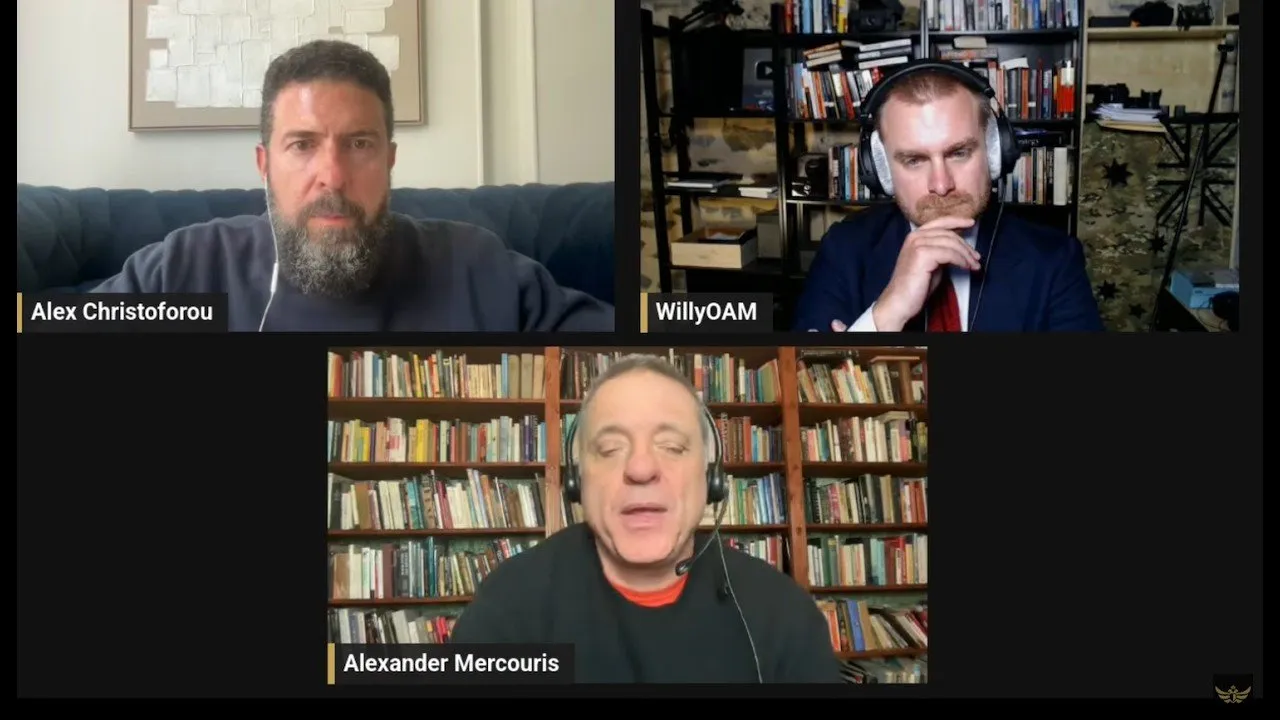
As global tensions escalate from the plains of the Donbass to the strategic waters of the Arabian Sea, the international order appears to be shifting under the weight of "war clouds." In a recent comprehensive discussion, independent journalist Willy OAM joined Alexander Mercuris to deconstruct the current state of global conflict. Their analysis suggests that the era of Western-led ideological diplomacy is being forcibly replaced by a cold, hard return to realpolitik and battlefield attrition. From the limitations of drone warfare to the "geopolitical bankruptcy" of overextended empires, the conversation highlights a world where the sword once again precedes the pen.
Key Takeaways
- Battlefield Reality Dictates Diplomacy: Peace treaties are merely codifications of the reality already established by military force; the "pen" cannot negotiate a better deal than the "sword" has carved.
- The Theory of Geopolitical Bankruptcy: Just as in financial law, strategic collapse happens slowly at first, then all at once, as powers overextend their resources across multiple fronts like Ukraine, Iran, and Taiwan.
- The Disconnect in European Leadership: Many EU leaders have abandoned traditional realism for ideological wish lists, ignoring the fundamental Clausewitzian principle that war is politics by other means.
- The Myth of China’s Aggression: Much of China’s strategic growth is reactive—developing domestic industries like semiconductors and GPS in response to Western exclusion rather than proactive military expansion.
- The Soft Power Deficit: The United States is experiencing a historic low in soft power, often using "punishment" rather than "attraction" to maintain alliances, while competitors like China leverage economic incentives.
The Sword and the Pen: Why Diplomacy Follows Force
A recurring theme in the discussion is the fundamental misunderstanding of how wars end. Willy OAM argues that the disparity in battlefield power between Russia and Ukraine makes an immediate negotiated settlement unlikely. In historical conflicts, diplomatic outcomes almost always reflect the physical control of territory and the exhaustion of resources. This perspective aligns with the classical theories of Carl von Clausewitz, who famously posited that war is an extension of politics.
"The sword carves out what the pen will sign at the end."
The current impasse stems from a refusal by Western mediators to acknowledge this reality. While the European Union often presents "wish lists" based on moral or ethical frameworks, the Russian side operates on a realist framework where military gains are used as political leverage. Without a shift on the battlefield, the "pen" remains powerless to alter the trajectory of the conflict. The sword, as Willy notes, transcends the subjective ethics of modern states.
The Attrition Crisis and the "Theory of Bankruptcy"
Analyzing the specific data points of the Ukraine conflict, the discussion points toward a massive disparity in industrial and human depth. While media narratives often focus on territorial exchanges, attritional warfare is measured by the destruction of state potential. Willy highlights the loss of self-propelled guns (SPGs) and the increasing reliance of Ukraine on conscripted soldiers compared to Russia’s volunteer force as critical indicators of long-term sustainability.
The Role of Drone Warfare
Drones have fundamentally leveled the battlefield, making traditional armored assaults "one-way trips." However, Willy cautions that drones are effectively a highly efficient form of artillery rather than a replacement for strategic depth. If a state becomes over-reliant on a single technology—especially one vulnerable to electronic warfare—they risk a sudden collapse when that advantage is neutralized.
Strategic Depth and Financial Analogies
Alexander Mercuris, drawing on his background as a bankruptcy lawyer, notes that states, like companies, do not go bankrupt overnight. They "juggle assets" and move resources to hide the impending failure until they hit a cliff. This "geopolitical bankruptcy" is currently visible as the U.S. attempts to manage three separate crises—Ukraine, the Middle East, and the Asia-Pacific—with finite bandwidth and aging naval assets.
European Disconnect and the Poison of Propaganda
One of the most striking aspects of the current crisis is the lack of realism among European leaders. Leaders in France, Germany, and the Baltic states often speak of "victory" and "91 borders" as if they were achievable through sheer will, disregarding the physical requirements of the battlefield. This ideological fervor often ignores the ancient laws of blood and power that have historically governed European statecraft.
"Propaganda must support military operation. It can't be the reverse."
Propaganda is a necessary tool of war, but it becomes "poison in the well" when leaders start believing their own narratives. For instance, the constant refrain that Russia is "running out of missiles" or "out of tanks" creates a false sense of security that prevents necessary strategic pivots. When reality eventually asserts itself, the resulting disillusionment can lead to internal unrest and the collapse of public support.
China: Reactive Strategy vs. Western Framing
Willy OAM recently spent time in China, speaking with soldiers, professors, and citizens to get a firsthand look at the "future struggle." He argues that China’s movements are often framed as offensive threats by the West when they are actually highly reactive. For example, the development of a domestic semiconductor industry was not an unprovoked economic attack, but a necessary survival response to being barred from Western chips.
China views war and peace as a holistic, spiritual cycle of "ebbs and flows." Unlike the Western focus on short-war thinking and precision strikes, the Chinese leadership is comfortable with strategic outcomes that take 100 years to manifest. This long-term perspective, combined with their focus on "all under heaven," makes them a passive but incredibly resilient player on the global stage. Framing every Chinese economic success as a military threat may be a strategic error that pushes the world closer to an "extinction-level event."
The Looming Shadow of Iran and Imperial Overstretch
The conversation shifts to the massive American armada currently gathering near Iran. Reportedly, 41% of the deployable U.S. Navy is now concentrated in the Arabian Sea. This concentration of force highlights the danger of imperial overstretch. If the U.S. commits its fleet to a strike on Iran, it leaves its interests in the Asia-Pacific and the Mediterranean dangerously exposed.
This overextension is a symptom of a declining hegemon trying to be strong everywhere at once. The "soft power" of the United States has also been severely damaged. While the U.S. uses sanctions and tariffs to punish non-compliance, China is using "attraction"—lifting tariffs on African states and investing in infrastructure. This shift in the "net figure of power" suggests that while America remains the world's most powerful military, its ability to maintain a global consensus is rapidly evaporating.
"The sword predates and transcends the pen."
Conclusion: The Necessity of a Realist Peace
The "war clouds" gathered today are the result of a decades-long departure from realist diplomacy. Whether in Ukraine or the Middle East, the survival of states and their people must become the supreme law (Salus populi suprema lex). Prolonging conflicts for ideological "wet dreams" in ivory towers only risks the total demographic and economic destruction of the nations involved.
Ultimately, the path forward requires a return to realpolitik. This includes the difficult task of re-engaging with adversaries like Russia to balance the rise of China and recognizing that military force has limitations in a digital, drone-saturated age. As the "sword" continues to carve the new map of the 21st century, the hope is that the "pen" will eventually sign a peace that prioritizes human survival over imperial pride.