Table of Contents
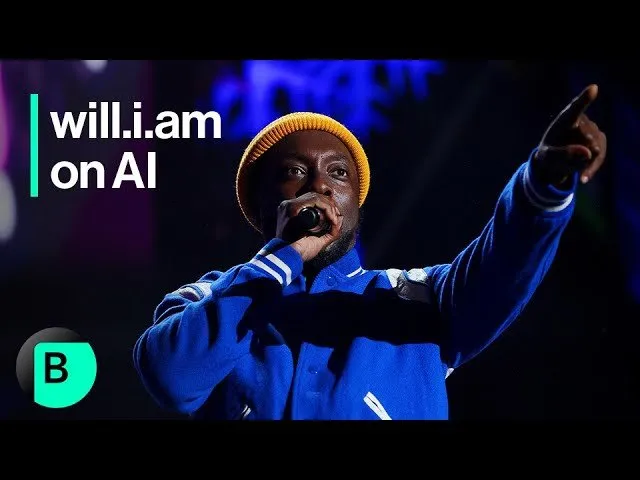
Musician and technology entrepreneur will.i.am envisions artificial intelligence as the catalyst for a new "Renaissance," projecting a future where the technology empowers "hyper-creatives" rather than replacing them. Speaking on the evolving landscape of generative AI, the Black Eyed Peas founder argued that while artists face copyright challenges, white-collar professions—specifically within finance and law—face a more immediate existential threat from automation than musicians.
Key Points
- Creative Renaissance: will.i.am defines the current era as the "age of the hyper-creative," comparing the potential of AI to the historical Renaissance.
- Theory Over Data: Future AI models may bypass copyright issues by training on fundamental music theory rather than existing audio catalogs.
- White-Collar Risk: The artist predicts that professions relying on memory and logic, such as accounting and law, are more vulnerable to disruption than creative arts.
- Universal Data Rights: He calls for urgent governance not just for artists, but to protect the data rights of all individuals, including interviewers and corporate employees.
- The "Organic" Premium: As synthetic media saturates the market, human-made content and "lived experiences" will likely command a premium value similar to organic food.
The Evolution of Creative Rights
As governments, including the United Kingdom, consider copyright law adjustments to facilitate AI model training, the music industry remains divided. While artists like Damon Albarn and Annie Lennox have protested the uncompensated use of their work, will.i.am suggests the technology is evolving beyond the need to scrape existing song libraries.
He acknowledges that artists have a fundamental right to control their likeness and output, particularly regarding commercial licensing for corporate or political use. However, he warns that the technical capabilities of generative AI are shifting from mimicry to theoretical application.
"We're at a point where they don't have to train on their music... The models are going to get so sophisticated that it's going to train on theory. Songs can be broken down and put to predictions based on theory."
While licensing remains a viable immediate solution for compensating artists, will.i.am expressed concern regarding valuation. Drawing a parallel to the streaming era, he noted that platforms like Spotify have historically undervalued music rights, a pattern that could repeat if AI licensing deals are not negotiated with precise valuations of the intellectual property involved.
White-Collar Disruption and Universal Governance
Moving beyond the entertainment sector, will.i.am argued that the conversation regarding AI displacement is too narrowly focused on the arts. He posits that the mechanics of business—specifically roles centered on logic, regulation, and mathematics—are far easier for AI agents to replicate than the nuances of artistic expression.
"I'm more worried about my accountant than I am my drummer. I'm more worried about my lawyer," he stated, emphasizing that industries built on "memory and numbers" face a multi-hundred-billion-dollar disruption from AI agents and co-pilots.
Consequently, he advocates for broad regulatory guardrails. The issue, he argues, is not the technology itself but the business models deploying it. He calls for immediate governance to protect "human data practices" across all sectors, from human resources to journalism.
The Future of "Organic" Content
Looking toward the next decade, will.i.am predicts a market bifurcation between AI-generated and human-created content. He utilized the analogy of a supermarket, where consumers distinguish between standard produce and "organic" options. In the future entertainment landscape, the "organic" label—denoting human origin—will serve as a differentiator.
"It'll be on us, the consumer, to identify what is synthetic... and what is human made. There can be a premium in terms of the human experience in this new world."
While acknowledging that AI bands and synthetic performers will likely achieve popularity and commercial success, he maintains that the "lived experience"—the soul and emotion derived from human existence—cannot be coded. This human element will ensure the survival of musicians and storytellers, even as they write songs questioning the changing world around them.
As the technology matures, the onus will likely shift to consumers to value and support human-centric work, potentially leading to new labeling standards that distinguish between algorithmic perfection and human artistry.