
Table of Contents
The role of the primary care physician is on the brink of a radical transformation. As artificial intelligence advances, the traditional model of visiting a doctor’s office for initial symptoms is being challenged by a data-first, diagnostic-centric approach. Simultaneously, across the Pacific, Japan is experiencing a startup renaissance, shifting from a culture of lifetime employment to one of deep tech innovation and "Japanese dynamism."
In a recent discussion in Tokyo, Jason Calacanis sat down with investors Fred Almeida and Max Weiss to explore the intersection of AI healthcare, geopolitical shifts, and the burgeoning Japanese venture capital landscape. The conversation, which culminated in a high-stakes pitch competition, offered a glimpse into how technology is reshaping not just medicine, but the global economic order.
Key Takeaways
- AI as Primary Care: Future healthcare models will likely utilize AI as the first point of contact, directing patients to diagnostics before they ever see a human doctor.
- The Diagnostic Shift: By prioritizing testing over office visits, the medical industry can align incentives to catch diseases earlier and reduce administrative burnout for physicians.
- Japan’s Startup Evolution: A cultural shift is occurring in Japan where younger generations are rejecting traditional corporate safety in favor of entrepreneurship and deep tech.
- The "English Allergy": Japanese startups possess world-class technical talent but often struggle with global expansion due to a cultural fear of failure and language barriers.
- Hybrid Team Models: The most successful modern startups in Japan are combining local technical discipline with Western audacity and sales strategies.
The Inevitable Rise of the AI Doctor
The current healthcare model, particularly in the United States and Japan, is often criticized for being reactionary and inefficient. Fred Almeida, an investor and entrepreneur deeply focused on AI and autonomous systems, argues that the system is fundamentally backwards. Currently, patients visit a doctor to report symptoms, only to be sent away for tests, necessitating follow-up visits. This process is driven by insurance incentives rather than patient outcomes.
Almeida’s thesis is that AI is poised to disrupt this workflow entirely.
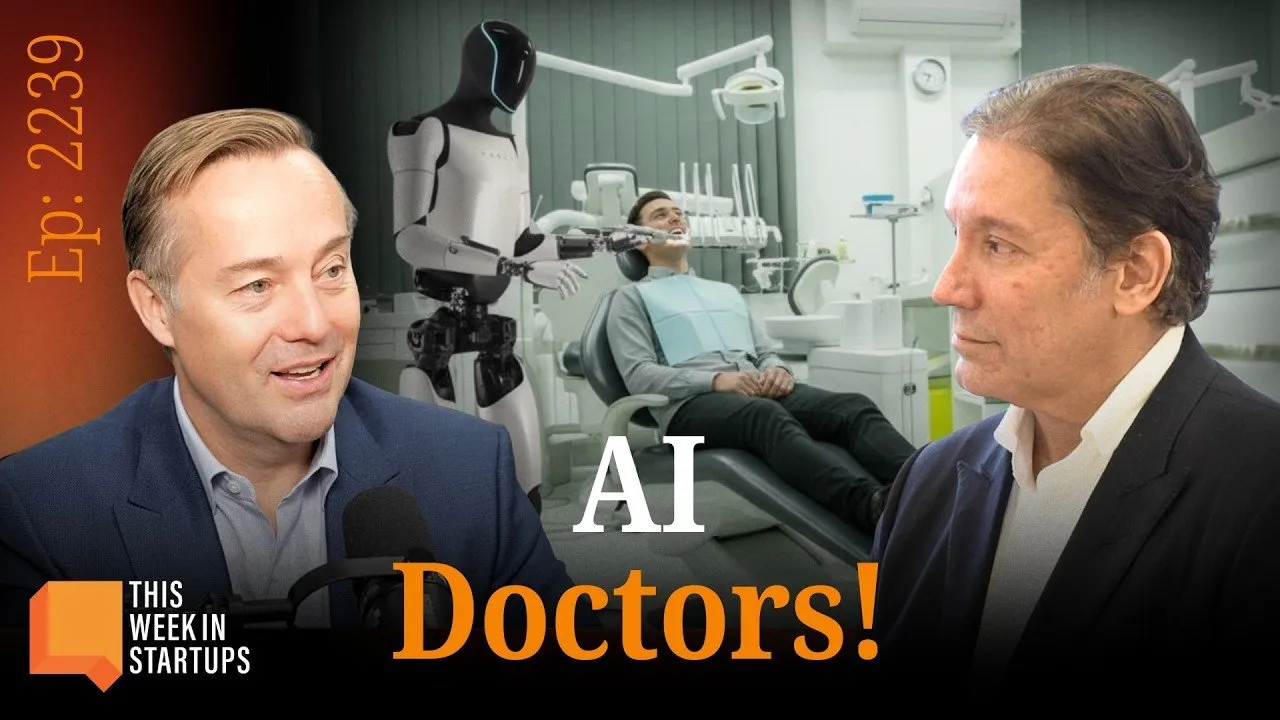
"I actually think that the future of where this is going to go is that the AI will become your doctor in a few more years. It'll be your primary care doctor. And then you'll just go to diagnostic tool sets."
Flipping the Diagnostic Model
In the proposed AI-first model, a patient would input their symptoms into an advanced AI system. The system, capable of differential analysis often exceeding human accuracy, would immediately direct the patient to a diagnostic clinic for specific blood work, swabs, or imaging. The human doctor enters the loop only after the data is collected.
This approach solves several critical issues:
- Efficiency: It eliminates the "wasteful" first visit where no data is available to make a decision.
- Early Detection: By lowering the friction to access diagnostics, diseases like cancer can be caught at Stage 1 rather than later stages.
- Doctor Satisfaction: Physicians can focus on "high-level" work rather than paperwork and insurance pre-authorizations, addressing the massive burnout rates seen in the profession.
By treating the doctor like a "Formula 1 driver"—supported by a pit crew of AI automation and streamlined diagnostics—the healthcare system can maximize the limited supply of medical talent available in aging populations.
Japan’s "Year Zero" for Startups
While AI reshapes healthcare, Japan is undergoing a significant economic and cultural shift. Max Weiss of Pacific Bay Capital describes the current moment as a potential "Year Zero" for a new era of Japanese entrepreneurship. Historically, the country’s economy was defined by the safety and prestige of working for massive multinational corporations. However, that preference has flipped significantly over the last five years.
Japanese Dynamism and Deep Tech
Unlike the software-heavy focus of Silicon Valley, Japan’s hidden strength lies in "atoms" rather than "bits." The country retains a stronghold on materials science, semiconductors, and robotics. Weiss notes that Japan holds near-monopolies on certain tools and materials required for global semiconductor production.
This focus aligns with a concept Weiss terms "Japanese dynamism"—a push toward economic security and resilience in sectors like aerospace, defense, and energy. With geopolitical tensions rising in the region, there is a growing internal recognition that Japan must bolster its own defense capabilities and technological sovereignty.
Overcoming the "Genten Shugi" Culture
Despite the technical prowess available in Tokyo, significant cultural barriers remain for Japanese startups aiming to scale globally. Weiss and Almeida discussed the concept of genten shugi, a philosophy where individuals are judged not by their accomplishments, but by their mistakes.
"It's this deeply ingrained [idea that] your mistakes define you... The opposite of America where we're like, 'You've screwed up so many times. What are you doing next?'"
The Hybrid Team Opportunity
This risk aversion contributes to what is locally known as an "English allergy"—a physical reluctance to engage in English-speaking business contexts due to a fear of making errors. This hampers the ability of Japanese founders to sell to global markets.
The solution emerging in Tokyo is the "hybrid team." By pairing Japanese technical leadership (CTOs and researchers) with American or Western business executives, startups can leverage the best of both worlds: Japanese discipline and technical precision combined with Western aggressiveness and salesmanship. This model also allows foreign talent to enjoy Japan’s high quality of life and safety while helping local companies break out of the domestic market.
Innovation in Action: The Pitch Competition
To illustrate the diversity of the current ecosystem, five founders presented their startups, ranging from B2B SaaS to consumer social apps. The pitches highlighted the split between safe, revenue-generating bets and high-risk, high-reward consumer plays.
The Investor Favorites: B2B and Supply Chain
Investors focused heavily on businesses solving tangible, immediate problems. Alt Source Global, founded by Maya, emerged as a top pick for the investors. The platform uses AI to provide risk analysis and intelligence for procurement teams, helping manufacturers identify reliable suppliers.
The appeal of Alt Source Global lies in its relevance to Japan’s manufacturing strengths and the global necessity of supply chain resilience. As Almeida noted, finding the right suppliers is a universal pain point in hardware and medical fields, making this a highly investable, scalable solution.
Similarly, Air Test, an AI-powered quality assurance (QA) platform, drew interest for its ability to automate website testing. While it faces competition from major tech incumbents, the utility of the product offers a clear path to revenue.
The "Outlier" Bet: Consumer Social
While the investors leaned toward B2B stability, the standout pitch for sheer narrative power was Random Chat (pitched by Gigi). Addressing the epidemic of loneliness, the app allows users to chat anonymously without profiles, eventually revealing their identities only after a connection is established.
While consumer social apps are notoriously difficult to monetize and scale compared to B2B software, they represent the "venture style" bets that can yield massive returns. The founder’s deep understanding of the "cold start" problem in social interactions—where people are too intimidated to create profiles—demonstrated the kind of unique insight that often defines unicorn companies.
Conclusion
The convergence of AI-driven healthcare and a revitalized Japanese startup ecosystem suggests a future where efficiency and deep technology take center stage. Whether it is an AI system managing patient diagnostics or a Tokyo-based startup solving global supply chain fractures, the common thread is a move toward resilience and optimization.
For investors and founders alike, the opportunities lie in bridging gaps—whether that is the gap between symptoms and diagnosis, or the cultural gap between Japanese engineering and the global market.

%20%7C%20E2239)