Table of Contents
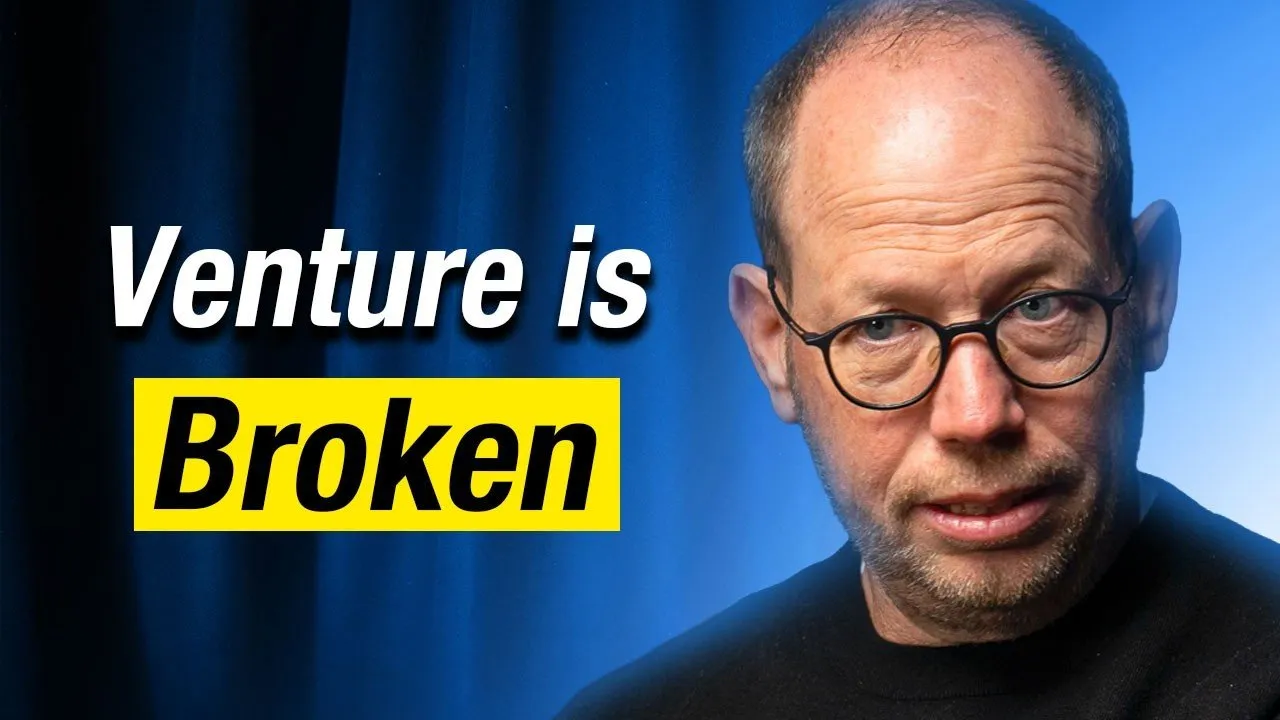
In the high-stakes world of venture capital, the narrative surrounding startup success often gets clouded by traditional metrics. For early-stage investors, particularly in specialized sectors like cybersecurity, the obsession with margins and rigid growth formulas can be a distraction from the reality of the game. Gili Raanan, founder of Cyberstarts and a veteran investor with a track record of identifying decacorns, suggests that venture capital is not a science—it is a game of probability, grit, and, most importantly, recognizing the exceptions to the rule.
Key Takeaways
- The Venture Gamble: Early-stage investing is inherently uncertain; returns are not distributed equally, and investors should abandon the expectation of guaranteed success.
- The Trap of Entry Prices: Inflated valuations in current markets mean that capital efficiency is more critical than ever, as the statistical likelihood of reaching unicorn status remains slim.
- Growth as DNA: Exceptional businesses demonstrate rapid growth as part of their organizational "DNA," driven by product-market fit rather than just marketing spend.
- The Role of Secondaries: Employee liquidity programs are essential in modern venture capital to retain top talent as companies stay private for longer periods.
The Reality of Modern Venture Economics
There is a growing concern that the venture business model is facing a catastrophic imbalance. With entry prices ballooning to 100x or 150x ARR, the math is increasingly stacked against the investor. Raanan argues that if you look at the incoming stream of startups versus the actual exit numbers, the market is not balanced. A massive influx of capital is flowing into the ecosystem, yet the historical success rate of turning early-stage companies into unicorns remains remarkably low.
Challenging the "Boomer" Narrative
Critics might argue that larger market caps for incumbents like CrowdStrike or Palo Alto Networks justify paying premium prices today. However, Raanan maintains that while the potential for massive outcomes is real, investors must remain super realistic about the long-term impact of high entry prices. Even in a massive market like cybersecurity, where 350 to 400 new teams are funded annually, the statistical reality is that only a tiny fraction will achieve outsized success.
"The venture business as a whole doesn't work. It shouldn't work. Returns distribution are not divided equally between players, otherwise it would be too easy."
Evaluating Growth and Product-Market Fit
For Raanan, growth trajectory and velocity are the most reliable indicators of a healthy business. When a company demonstrates consistent, rapid growth, it usually signals that the organization has hit a rhythm that is difficult to disrupt. He notes that while investors often look for "up and to the right" consistency, the reality is that great companies often zig and zag before finding their stride.
The "Science of Exceptions"
Startups often plateau when their initial market turns out to be a niche. Success, therefore, depends on a company’s ability to pivot—to reinvent its product or market vision when growth slows. Raanan points to companies like Island, which essentially defined a new market for the enterprise browser, as examples of how high-growth businesses succeed by creating demand where incumbents previously saw none.
Defocusing Founders: The Myth of Over-Capitalization
A common critique of modern venture capital is that too much money causes founders to lose focus—hiring too aggressively or expanding into geographies prematurely. Raanan is largely unbothered by this, viewing capital as a necessary cushion rather than a source of distraction. He argues that if a business has true product-market fit, having extra liquidity in the bank is a safety net, not a mandate to become sloppy.
"I'm not in a business of babysitting founders. We trust them to build an important company, and I don't buy into the idea that you are going to get lazy because you have a cushion in the bank."
The Strategic Importance of Secondaries
As companies stay private for longer, the traditional path to liquidity via IPO has shifted. For many, an IPO is now a branding event rather than a true liquidity event. Consequently, secondaries have become a critical tool for retention. By implementing recurring liquidity programs, firms can allow early employees—whose wealth is often entirely tied to the company’s equity—to diversify their holdings without leaving the firm. This keeps the most talented engineers and product managers incentivized and focused on the long-term mission.
Conclusion
The venture landscape is undoubtedly shifting, with old playbooks like the "Rule of 40" or standard margin expectations being challenged by new realities, particularly in AI and cloud-native markets. Despite the complexity, the core of the business remains unchanged: it is about identifying exceptional teams and having the conviction to stick with them through the inevitable volatility. As Raanan suggests, while it is wise to learn from the veterans, success ultimately requires the courage to trust one's instincts in an unpredictable market.