Table of Contents
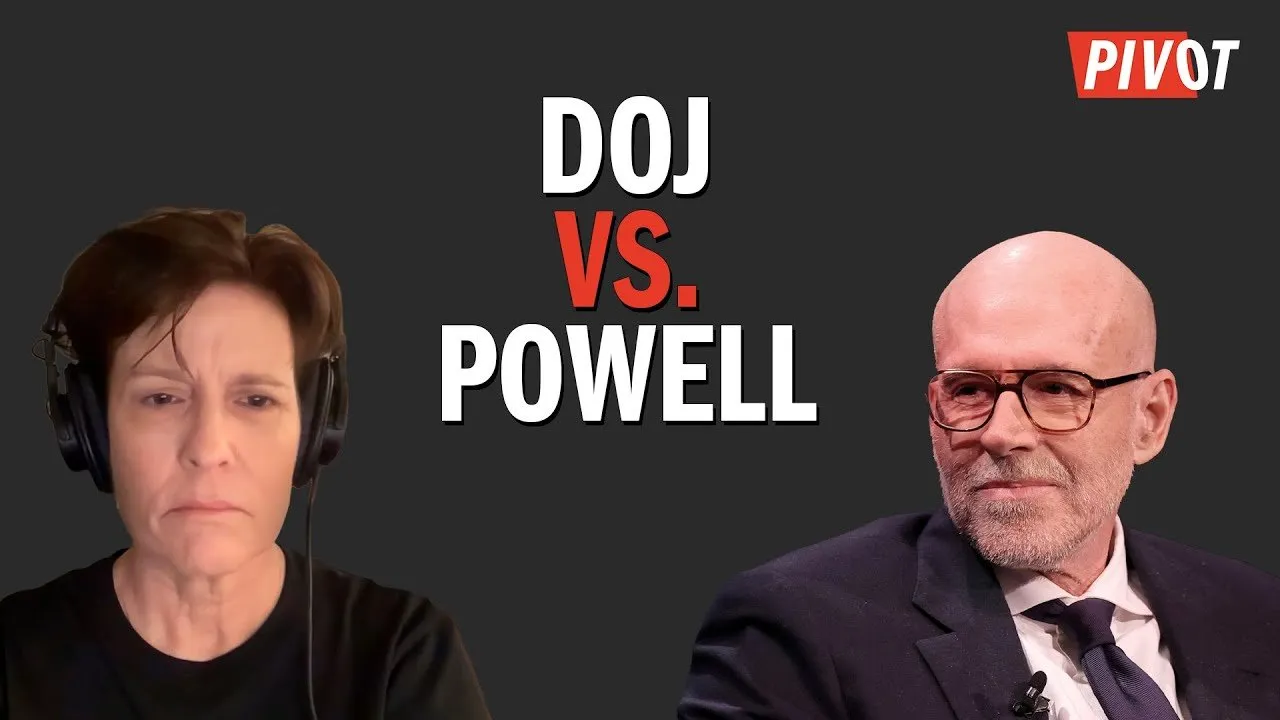
In this week’s breakdown of Pivot, Scott Galloway returns to the microphone—sporting a "refreshed" look courtesy of lower lid blepharoplasty—to join Kara Swisher in dissecting a volatile week in finance and geopolitics. While the hosts opened with banter about the booming male cosmetic surgery market, the conversation quickly turned to critical issues shaking the foundations of American institutions: a Department of Justice investigation into the Federal Reserve, the complex economics of Venezuelan oil, and the escalating tensions in Iran. Below, we explore the key insights from their analysis of how political pressure is colliding with economic reality.
Key Takeaways
- The Fed Under Fire: The DOJ’s investigation into Jerome Powell is widely viewed by markets not as a legal inquiry, but as a political maneuver to force his resignation from the Board of Governors to influence interest rate policy.
- Oil Economics vs. Political Will: Despite administrative pushes to reinvest in Venezuela, major oil executives consider the region "uninvestable" due to heavy crude extraction costs and a history of asset seizure.
- Regime Change in Iran: Galloway argues that the current geopolitical climate offers a high-ROI opportunity for the West to support regime change in Iran, potentially unlocking significant advancements in women's rights and regional stability.
- The Failure of Wealth Taxes: As California proposes a billionaire tax, historical data from Europe suggests such measures often lead to capital flight rather than increased revenue, prompting calls for alternative taxation methods like an exit tax.
The Battle for Federal Reserve Independence
The Department of Justice has launched a criminal investigation into Federal Reserve Chair Jerome Powell, ostensibly regarding renovation costs at the central bank’s headquarters. However, the timing and nature of the inquiry have led analysts and market watchers to interpret this as a direct challenge to the Fed's institutional independence.
Market Reactions and Political Motivations
Prior to Powell’s public defense, prediction markets indicated a 15% probability of his resignation. Following his video statement—where he framed the investigation as a threat to evidence-based monetary policy—that probability dropped to 5%. The consensus among investors is that Powell effectively stabilized the narrative by highlighting the dangers of political interference.
The core friction lies in the divergent goals of the executive branch and the central bank. Presidents, constrained by term limits and the need for public approval, often prefer lower interest rates to stimulate short-term economic activity—a "sugar high" for the economy. In contrast, an independent Fed is tasked with the long-term health of the currency, often necessitating unpopular decisions to curb inflation.
"The threat of criminal charges is a consequence of the Federal Reserve setting interest rates based on our best assessment of what will serve the public rather than following the preferences of the president." — Jerome Powell
The Strategy Behind the Pressure
While Powell’s term as Chair ends in May, his term as a Governor extends through January 2028. The analysis suggests that the administration’s goal is not merely to replace him as Chair, but to pressure him into resigning from the Board entirely. As a Governor, Powell would retain significant influence over the Federal Open Market Committee (FOMC). If he remains, his voice could anchor the board against aggressive rate cuts that risk reigniting inflation, countering the administration's desire for looser monetary policy.
Geopolitics and Energy: Venezuela and Iran
The conversation shifted to the intersection of US foreign policy and global energy markets, highlighting a disconnect between political rhetoric and economic feasibility.
The "Uninvestable" Venezuelan Oil Sector
President Trump has expressed a desire to rebuild Venezuela’s oil industry, reportedly suggesting a $100 billion investment. However, executives from major oil companies like Exxon have publicly pushed back, labeling the country "uninvestable" under current conditions. Several economic factors drive this hesitation:
- Heavy Crude Economics: Venezuela sits on massive reserves, but it is largely heavy crude, which requires expensive chemical processing to extract and refine.
- Market Prices: With oil trading around $62 per barrel and extraction costs for heavy crude hovering between $70 and $80, there is no profit margin to justify the risk.
- Sunk Costs: Major corporations have previously lost billions in Venezuela due to asset seizures, making them wary of returning without ironclad guarantees.
From a strategic standpoint, the US interest in Venezuela is less about acquiring oil—the US is currently energy independent—and more about controlling the flow of energy to rivals. By managing Venezuelan exports, the US can potentially exert pressure on China, which relies heavily on imports.
The Case for Intervention in Iran
Amidst reports of internet blackouts and violent crackdowns on protesters in Iran, the discussion turned to the potential for US intervention. Galloway presented a hawkish argument for supporting regime change, citing the current vulnerability of the Iranian government following Israeli strikes on air defenses.
The argument posits that the US military, having demonstrated significant reach with the recent capture of Nicolás Maduro, is uniquely positioned to provide air support and intelligence to Iranian protesters. Proponents believe that toppling the current regime could serve as a massive "unlock" for the Middle East, restoring a civilization with deep cultural ties to the West and ending a system of gender apartheid. However, critics warn of the risks of nation-building and the potential for a quagmire similar to previous conflicts in the region.
Silicon Valley and the Billionaire Wealth Tax
In California, a proposed tax on billionaires has sparked a quiet exodus of tech elites and the formation of opposition groups. The proposal aims to levy a one-time tax on individuals with assets exceeding $1 billion. While the intent is to address income inequality, the efficacy of such a policy is under scrutiny.
The Mobility of Capital
Historical precedents in Europe paint a bleak picture for wealth taxes. Countries including France, Sweden, Austria, and Denmark have repealed similar laws after finding that they led to capital flight and reduced overall tax revenue. Billionaires are highly mobile; when faced with punitive taxation based on assets rather than realized gains, they often relocate to jurisdictions with more favorable tax codes.
A more effective alternative discussed involves reforming the tax code to focus on when gains are recognized. Currently, wealthy individuals can move to zero-tax states immediately before selling assets, bypassing taxes that would fund the infrastructure (like California’s university system) that helped create their wealth. An "exit tax" or a modified Alternative Minimum Tax (AMT) that ties capital gains to the location where the value was created could theoretically capture revenue without driving away the tax base.
The "Moral Color Code" in Foreign Policy
During the "Wins and Fails" segment, a significant observation was made regarding Western activism and media coverage. There appears to be a "moral color code" dictating the level of outrage regarding human rights abuses.
The observation highlights a disparity: conflicts where the oppressors are perceived as white often garner massive media attention and activist mobilization. Conversely, atrocities committed by non-white regimes against their own populations—such as the gender apartheid in Iran or humanitarian crises in Sudan—often fail to generate comparable levels of protest or coverage in the West. This selective activism, critics argue, results in a moral paralysis that abandons vulnerable populations in the Global South.
Conclusion
From the marble halls of the Federal Reserve to the streets of Tehran and the boardrooms of Silicon Valley, this week highlighted the tension between ideological goals and structural realities. Whether it is a President trying to dictate interest rates or a state government attempting to tax mobile wealth, policymakers are finding that institutions and markets have mechanisms to resist brute force. As the political landscape shifts, the resilience of these institutions—and the "uninvestable" nature of bad policy—remains the ultimate check on power.