Table of Contents
Apple has fundamentally reshaped its hardware lineup with a series of aggressive pricing and performance updates, headlined by the introduction of a $600 MacBook "Neo." This strategic shift aims to capture the entry-level market while simultaneously delivering significant performance gains to its professional-grade Mac and display offerings.
Key Points
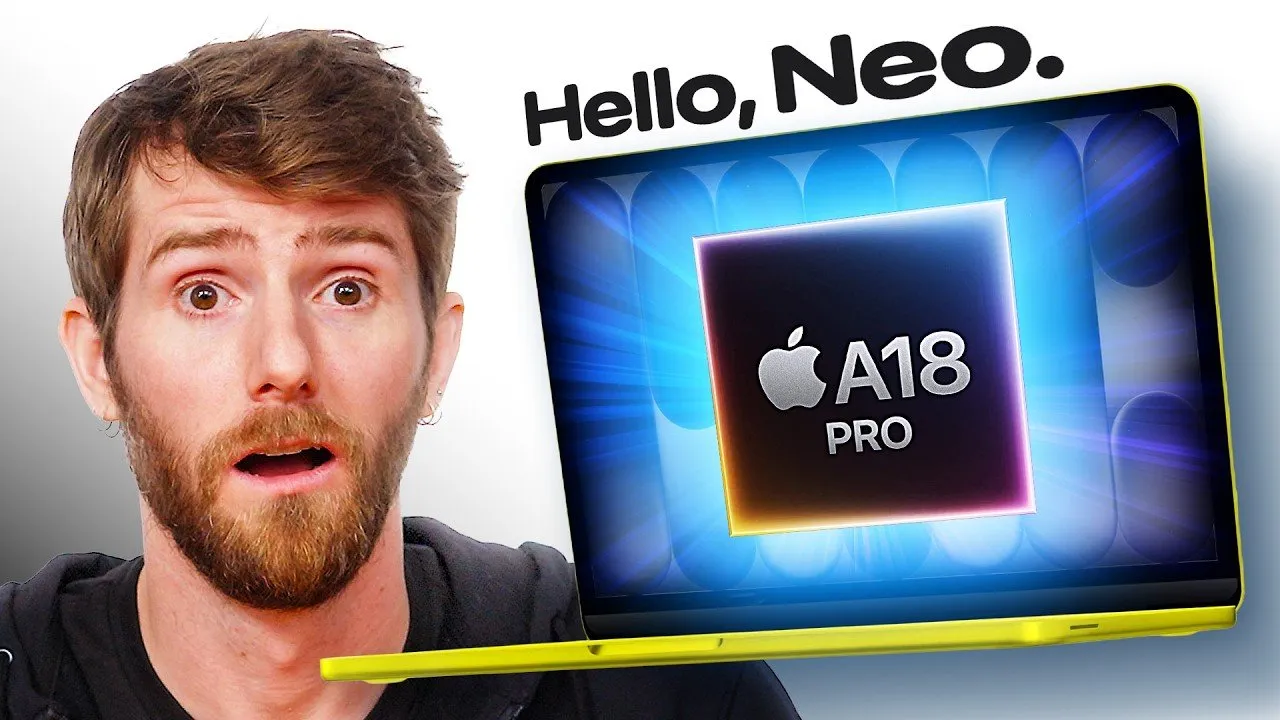
- The MacBook Neo: A new $600 entry-level laptop featuring an A-series chip, aluminum chassis, and 11-hour battery life, targeting educational and casual users.
- Professional Display Refresh: The new Studio Display XDR arrives at a price point $2,000 lower than its predecessor, featuring miniLED technology and 120Hz refresh rates.
- Expanded Mobile Portfolio: The iPhone 17e maintains a $599 price point while doubling base storage, alongside a refreshed iPad Air with increased unified memory.
- Silicon Evolution: New M5 Pro and M5 Max chips feature 18 CPU cores and enhanced neural processing units (NPU) to bolster on-device AI capabilities.
The MacBook Neo: Reaching the Entry Level
The standout announcement is the MacBook Neo, a machine designed to replace aging devices for casual users while competing directly with the value-oriented Chromebook market. By utilizing A-series silicon, Apple has successfully created a fanless, lightweight machine that handles web browsing, messaging, and AI-driven image processing without the cost of the more powerful M-series processors.
While some critics point to the 8GB of non-upgradable RAM as a limitation, proponents argue this configuration is sufficient for its target demographic. The inclusion of a 1080p webcam, spatial audio, and an aluminum chassis—rather than plastic—sets a high bar for budget hardware. As noted in the announcement, the device’s efficiency is further bolstered by a 36Wh battery that supports 11 to 16 hours of usage, easily supplemented by portable, modular battery banks.
"Apple is claiming 11 hours of mixed use and up to 16 hours of battery life. Not to mention that it runs without a cooling fan. And because it uses their lower powered A series silicon, it probably straight up doesn't even need a fan in order to maintain full performance."
Performance Gains and Professional Upgrades
Beyond the budget tier, Apple has overhauled its high-end computing stack with the M5 Pro and M5 Max processors. These chips employ a fusion architecture designed to improve GPU performance and memory throughput. The integration of 18 CPU cores represents a significant jump over the previous generation, ensuring that professional workflows—such as video editing and high-end computation—remain competitive.
The company also addressed the display market with the new Studio Display XDR. By introducing a miniLED panel with 2,300 dimming zones and 2,000 nits of peak brightness in HDR, Apple has democratized features previously locked behind much higher price tags. The shift to Thunderbolt 5 connectivity across the pro-lineup signifies a transition toward higher bandwidth for external peripherals and multi-monitor setups.
Market Strategy and Long-term Implications
Apple’s ability to hold prices steady—and in some cases, increase value by doubling storage—amidst a broader industry struggle with volatile memory (NAND/DRAM) pricing is notable. Analysts attribute this resilience to Apple's massive purchasing power and long-term supply chain commitments. By refreshing the iPhone 17e and iPad Air with better modems and expanded memory, Apple is effectively shielding its ecosystem from the inflationary pressures affecting the wider PC and mobile markets.
The focus on on-device AI, powered by enhanced neural engines across the new product line, indicates that Apple is prioritizing privacy and latency by keeping as much processing as possible local to the hardware. This vertical integration continues to be a cornerstone of their competitive advantage.
Consumers can expect these devices to begin hitting retail channels immediately, with education-specific discounts likely to accelerate the adoption of the MacBook Neo in public school districts. Looking forward, the success of these value-oriented products will depend on whether Apple can maintain these price points if the current data center and AI-driven hardware demand continues to strain the global silicon supply chain through 2026.