Table of Contents
Nvidia’s surprise announcement of DLSS 5—the latest iteration of its AI-driven upscaling technology—has ignited a firestorm of criticism within the gaming community. Unveiled at the company's GTC event, the technology promises to use neural network mapping at the pixel level to deliver unprecedented photorealism. However, early demos have been widely panned for producing "uncanny" character models and over-processed lighting that many players feel distorts the original artistic intent of developers.
Key Points
- DLSS 5 introduces neural network mapping designed to enhance lighting and textures, but early demonstrations have sparked concerns over unnatural character facial features.
- Analysts suggest the backlash is premature, noting that the technology is in early development and that games were not originally designed to support it.
- Industry observers warn that the technology could lead to the homogenization of game art styles and exacerbate concerns regarding AI's impact on human artists and development budgets.
- Nvidia maintains that DLSS 5 is an optional feature intended to offer developers more creative flexibility and performance gains, rather than a mandatory replacement for traditional assets.
Early Reactions and Technical Controversy
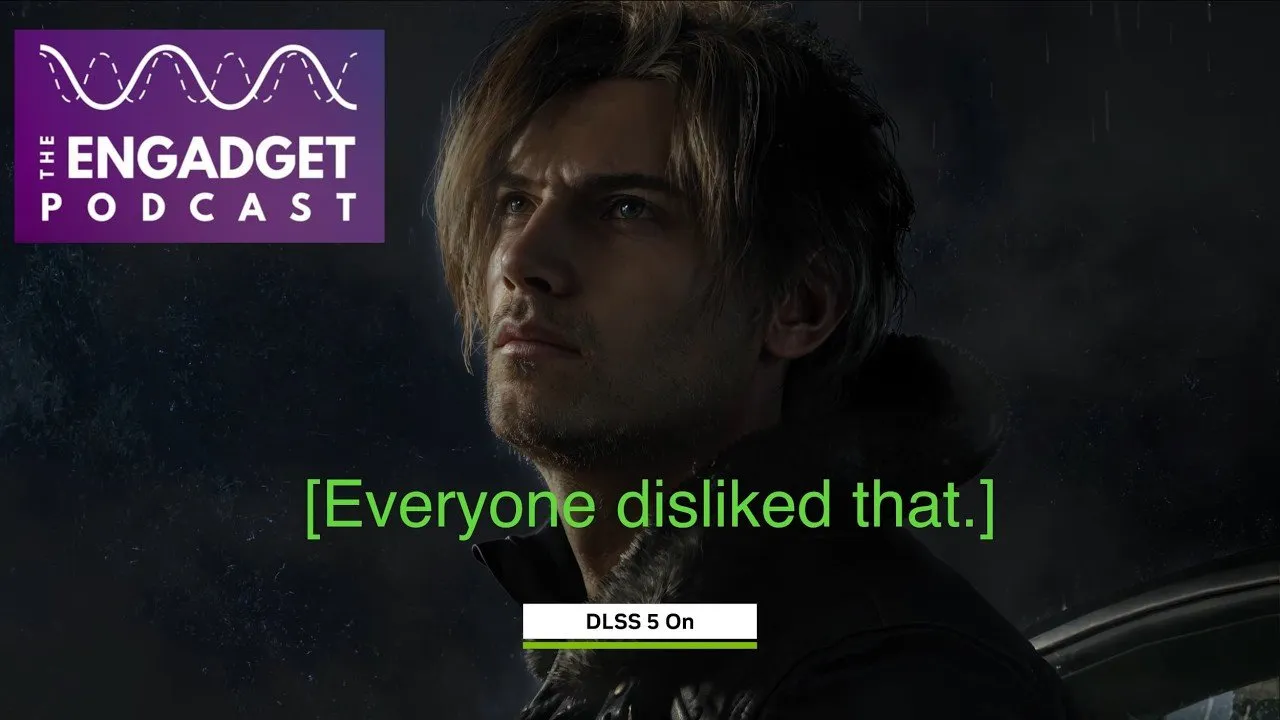
The immediate negative response was largely driven by a demo featuring Resident Evil Village, where the character Grace appeared significantly altered—complete with stylized makeup and textures that clashed with her established character design. During the Engadget Podcast, industry analyst Anchel Sag of More Insights and Strategies noted that while the visual results are jarring, they are likely a product of applying new technology to legacy models.
"I would say that like I totally understand where people are coming from if all that they've seen were like those first two images... when I was asking for details on things, they're like, 'It's not done yet.' We're not ready yet," said Sag.
The core issue, according to Sag, is that developers are attempting to apply neural rendering to assets that were never built with these specific AI models in mind. When models are not designed for such deep post-processing, the result can often look like an "uncanny" filter rather than a faithful enhancement of the game’s environment.
Implications for Developers and the Industry
Beyond the immediate visual critique, the announcement has prompted a broader debate about the future of game development. Some users have expressed concern that studio executives may view DLSS 5 as a cost-saving measure, potentially outsourcing the detail work of asset creation to hardware-based AI rather than traditional art teams. This sentiment echoes ongoing fears across the creative industries regarding the role of generative AI in replacing human labor.
However, proponents argue that the technology could serve as a valuable tool for indie developers. By enabling smaller teams to reach higher visual fidelity with less manual overhead, DLSS 5 could theoretically lower the barrier to entry for high-quality game production. The divide remains stark: while executives see a path to better bottom lines, artists are concerned that the automation of artistic expression could lead to a soulless "homogenization" of the medium.
The Path Forward for DLSS 5
Nvidia is expected to provide further details on the technology this fall. Experts emphasize that because DLSS 5 is an optional, driver-level, or developer-enabled feature, it will not fundamentally strip away the ability for gamers to play titles as the developers intended. As the technology moves from early demonstration to commercial integration, the industry will be watching closely to see if Nvidia can refine the algorithms to respect original art direction.
For now, the backlash serves as a signal that the audience—and the developers themselves—remain deeply protective of the human touch in gaming. Whether the final version of DLSS 5 will overcome this initial hurdle of public perception depends on how well Nvidia balances its push for "photorealism" with the creative integrity that defines the modern gaming landscape.