Table of Contents
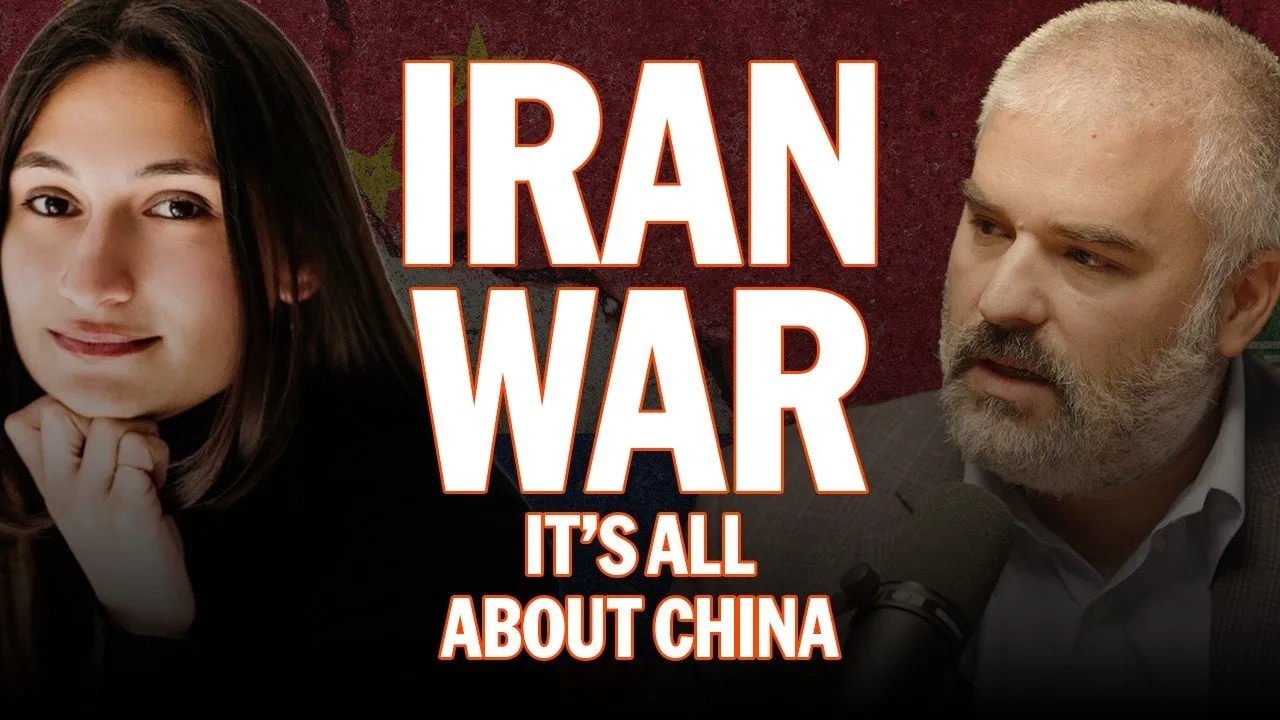
The recent military actions involving the United States and Israel against Iran have sparked intense global debate. While many observers characterize these operations as the U.S. acting solely on behalf of Israeli interests, a more strategic reality lies beneath the surface. Current geopolitical shifts suggest that America is engaged in a calculated effort to protect its own global standing, specifically regarding its primary systemic adversary: China.
Key Takeaways
- Iran has evolved into a critical strategic asset for China, acting as a forward base that threatens American oil supplies and naval mobility.
- The U.S. national security strategy identifies Iran as a key component of a broader effort to dismantle China’s anti-American alliance network.
- Israel acts as a force multiplier, providing the local intelligence and tactical capability that allows the U.S. to project power without bearing the full burden of regional costs.
- Failing to recognize the China-centric nature of these conflicts leads to a misunderstanding of U.S. foreign policy and fosters a dangerous culture of conspiracy-driven politics.
The Strategic Realignment: Iran as a Chinese Proxy
Over the last several years, Iran has systematically integrated itself into China’s strategic architecture. Faced with intense sanctions and pressure from both Washington and Jerusalem, Tehran has turned to Beijing as its primary patron. This is not merely a diplomatic partnership; it is a profound shift that poses a direct, kinetic threat to American interests.
Most notably, the transfer of advanced military hardware—including Chinese-made hypersonic missiles capable of hitting U.S. naval assets—has transformed Iran into a significant obstacle to American power projection. By positioning itself in the Straits of Hormuz, Iran now holds the capability to disrupt roughly 25% of the world's oil supply. This creates a reciprocal threat: just as the U.S. can monitor and restrict China’s access at the Straits of Malacca, China now utilizes Iran to hold Western energy security hostage.
"Iran has made itself a forward weapon against American power in the Middle East, in a very strategic place in the Middle East."
Why the U.S. Cannot Explicitly Name the Target
Critics often ask why high-ranking U.S. officials avoid explicitly labeling the conflict as a campaign against Chinese influence. The answer lies in the delicate art of statecraft. By keeping the stated objectives focused on regional security—such as curbing Iranian proxies or immediate threats to U.S. assets—the administration provides China with a "de-escalation ramp."
The Benefits of Strategic Ambiguity
Publicly framing this as a direct war against Chinese proxies could force a premature, large-scale confrontation that neither side is prepared to manage. Furthermore, by allowing regional allies like Israel to take the lead in specific tactical strikes, the U.S. maintains a degree of plausible deniability. This approach prevents the conflict from spiraling into an uncontrollable global escalation, ensuring that the primary goal—neutralizing the threat—remains achievable without triggering a wider, unintended war.
The Role of Alliances in Modern Warfare
Israel’s participation in this conflict is often misinterpreted as the "tail wagging the dog." However, viewing the situation through the lens of a "force multiplier" offers a more accurate assessment. Israel possesses the local intelligence, the willingness to absorb risk, and the operational capability to perform complex strikes that the U.S. might otherwise have to execute alone.
A Template for Future Conflicts
This model of cooperation provides a blueprint for how the United States might handle future confrontations in the Pacific, such as a potential defense of Taiwan. If the U.S. can cultivate allies who act as independent, capable, and integrated partners, it becomes significantly more difficult for a competitor like China to isolate American forces. The U.S.-Israel partnership here is a testing ground for maintaining global influence in an era of great-power competition.
"Israel is willing to have its people on the ground in danger, to put its intelligence services on the ground at America's service in this cause."
The Limits of the Chinese and Russian Security Umbrella
A striking takeaway from the current tensions is the absence of concrete support from Iran’s purported allies. Despite signing significant defense and economic agreements, both China and Russia have remained largely silent. Beijing’s refusal to defend its Iranian partner demonstrates a fundamental weakness in the anti-American alliance network.
China relies on Iranian oil to keep its industrial base afloat and to build its own strategic reserves. Yet, when faced with the prospect of a direct clash with American power, China’s support has been nonexistent. This has sent a clear message to other nations in Africa, Latin America, and beyond: relying on Chinese security guarantees for protection against the United States is a strategic gamble that may leave them isolated when the pressure mounts.
"Russia and China are not allies that you can depend on. This is part of the American message."
Conclusion
Reducing these complex geopolitical maneuvers to simple tropes about influence or conspiracy not only ignores the stated national security objectives of the United States but also degrades the quality of public discourse. When nations adopt a mindset where they are never responsible for their own failures—blaming global "others" rather than addressing their own strategic errors—they inevitably invite decline.
The reality is that U.S. interests and Israeli regional objectives are currently aligned on a shared path. This is not about one nation controlling the other; it is about two sovereign actors navigating a high-stakes, multi-layered game of global strategy. Understanding this distinction is vital for anyone who wishes to predict the future of the Middle East and the broader contest for global hegemony.