Table of Contents
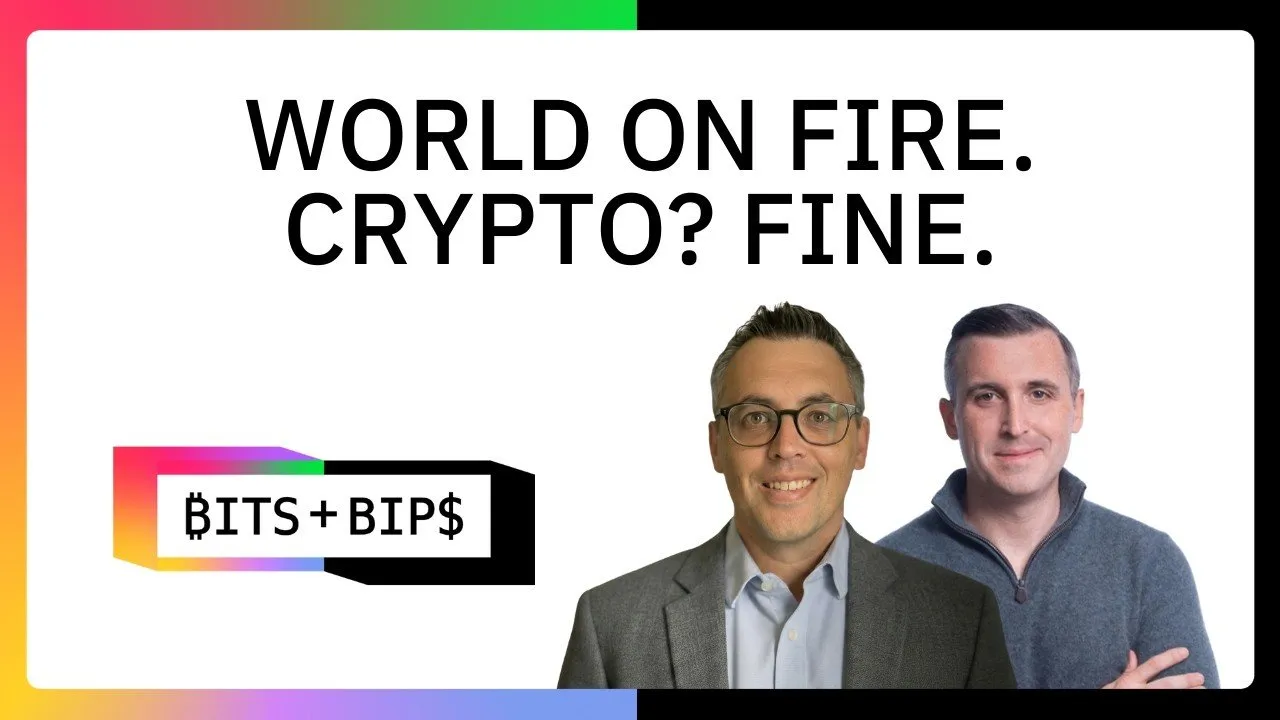
The current global economic landscape is defined by heightened uncertainty. From escalating tensions in the Middle East to shifting monetary policy expectations at the Federal Reserve, investors are navigating a precarious environment. Despite the volatility spilling over into traditional equity markets, the crypto ecosystem has shown surprising resilience. In this analysis, we examine why many institutional observers remain bullish on the long-term outlook for digital assets even as short-term geopolitical risks loom large.
Key Takeaways
- Long-term Resilience: Bitcoin and crypto have demonstrated relative strength during recent geopolitical flare-ups, suggesting a maturing, long-term investor base.
- Macroeconomic Fragility: Concerns over stagflation, driven by rising oil prices and supply chain risks, continue to place pressure on global equity markets.
- Policy Uncertainty: Market participants are struggling to price in the impact of potential Federal Reserve rate changes under incoming leadership and the evolving status of international trade tariffs.
- Structural Evolution: Institutional adoption of tokenized assets and stablecoin demand continue to provide fundamental support for the crypto sector, regardless of short-term price action.
Geopolitical Tensions and Market Stability
The recent escalation of conflict between the U.S. and Iran has sent ripples through global markets. With oil prices climbing and global equities exhibiting fragility, many investors are searching for a safe haven. Notably, Bitcoin has not followed a perfectly linear path, but its ability to hold steady while equity futures traded down suggests that the "seller exhaustion" phenomenon may be at play.
"I think it’s positive that maybe it [Bitcoin] did have that correlation or traded that way... it implies to you that there aren't necessarily a lot of sellers left." — Rob Hadick, General Partner at Dragonfly
The duration of this conflict remains the primary variable. Initial market optimism suggested a swift resolution, but revised timelines from government officials have extended the window of economic risk. If the conflict results in sustained disruptions to oil production or shipping routes in the Strait of Hormuz, the probability of a stagflationary environment increases, further complicating the outlook for traditional risk assets.
The Fed, Inflation, and Interest Rate Confusion
Market participants are currently grappling with contradictory signals from the bond market. While the U.S. dollar has strengthened, Treasury yields have exhibited confusing behavior, reflecting the market's inability to reconcile inflation fears with the expectation of future rate cuts.
A central figure in this confusion is the transition of leadership at the Federal Reserve. Observers are attempting to gauge whether upcoming leadership will maintain a hawkish stance or succumb to political pressure to stimulate growth. This ambiguity makes it difficult for traders to anchor their long-term expectations, leading to the erratic market swings seen following even minor news reports.
Institutional Adoption and Structural Growth
While the near-term presents significant hurdles, the long-term thesis for the crypto ecosystem remains robust. Much of this confidence stems from the institutional plumbing being built beneath the surface. Developments in tokenized assets and the persistent demand for stablecoins indicate that real economic activity is increasingly migrating on-chain.
The Case for Tokenization
Current methods for accessing on-chain assets often rely on "SPV wrappers," which can be clunky and difficult to scale. However, the move toward natively issued, on-chain financial instruments represents a major shift. By removing the layers of traditional broker-dealers, the industry is paving the way for more efficient, transparent market structures that are less susceptible to the limitations of traditional financial hours and clearing processes.
Managing Risk in a Volatile Environment
For investors attempting to protect their portfolios, the current advice often emphasizes a multi-layered approach. The discrepancy between short-term "downside protection" (seen in options markets) and long-term "structural bullishness" reflects a divide between day traders and long-term capital allocators.
Investors are advised to look beyond the "noise" of daily news cycles. While the S&P 500 might face a correction if inflation persists and growth slows, the underlying value proposition of decentralized networks continues to grow. Success in this environment requires distinguishing between the structural health of the core crypto market and the speculative nature of the "long tail" of alt-tokens, which may lack fundamental revenue streams or sustainable market structures.
Conclusion
While the confluence of geopolitical conflict, shifting monetary policy, and corporate layoffs creates an undeniably challenging short-term environment, the crypto ecosystem remains remarkably resilient. Institutional interest, coupled with the ongoing technological maturation of on-chain assets, suggests that digital currencies are becoming an increasingly integral part of the global financial architecture. Investors who maintain a long-term perspective, rather than reacting to every fluctuation in the news cycle, are likely to be best positioned as the current market uncertainty eventually subsides.