Table of Contents
The artificial intelligence boom is often framed through the lens of algorithmic breakthroughs and LLM benchmarks, but behind the digital curtain lies a massive, capital-intensive physical reality. As hyperscalers and startups alike scramble for compute, the financial structures powering this buildout have come under intense scrutiny. Critics have pointed to the billions of dollars in debt secured by GPUs as a sign of a speculative bubble, yet for those at the center of the trade, the math tells a different story.
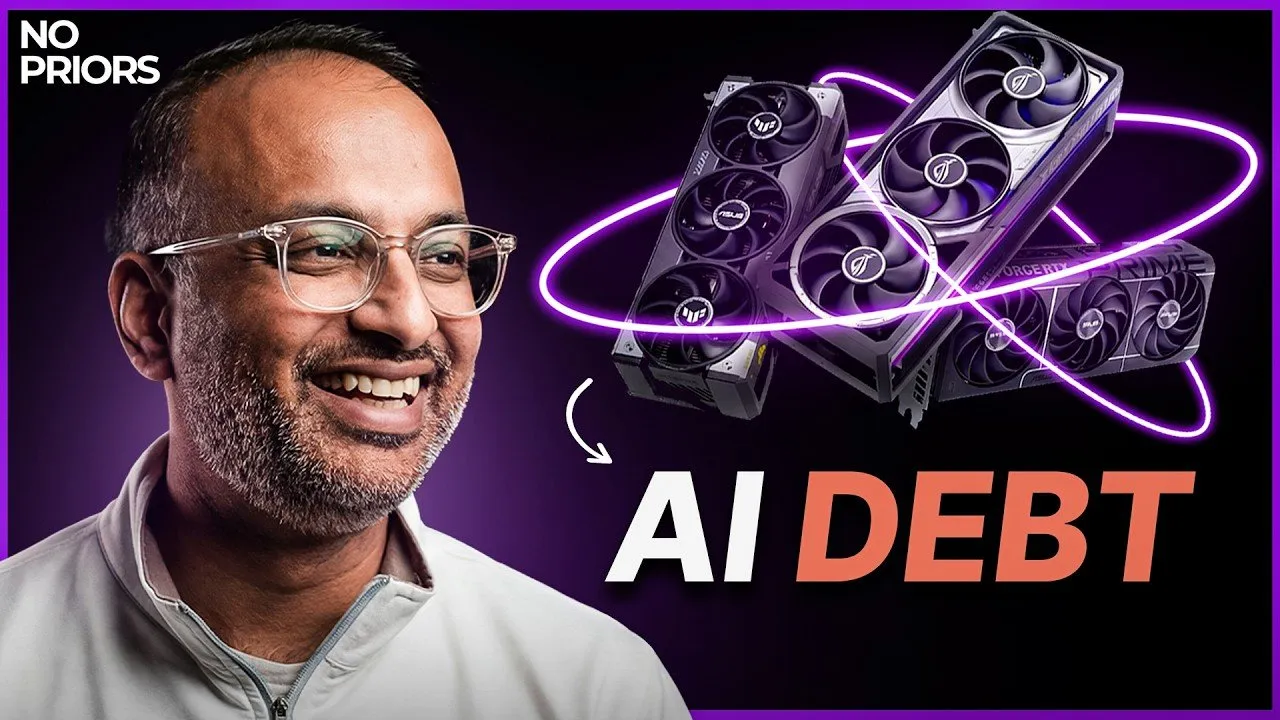
In a recent episode of the No Priors podcast, Neil Tuari of Magnetar Capital joined host Sarah Guo to pull back the curtain on the multi-billion dollar AI infrastructure buildout. Magnetar, a $22 billion alternative asset manager, has been a key player in financing the hardware that makes modern AI possible. From their early involvement with CoreWeave to navigating the current energy crisis, Tuari explains why the shift toward asset-heavy investing is a structural necessity for the next decade of technology.
Key Takeaways
- Debt Structure Matters: GPU-backed debt is primarily secured by long-term "take-or-pay" contracts with investment-grade counterparties, not just the depreciating hardware itself.
- Bottlenecks are Shifting: The primary constraint on AI scaling is no longer just chip supply; it has moved to "on-the-ground" infrastructure like power, structural steel, and skilled labor.
- The Inference Transition: As the market moves from training to inference, compute needs are becoming more distributed, focusing on memory throughput and latency rather than just raw processing power.
- Energy Innovation: Solving the power problem requires better storage and distribution of "stranded power" rather than just building new generation plants.
The Logic Behind Billions in GPU Debt
The headlines regarding "GPU debt" often characterize the practice as highly risky, comparing it to using a rapidly depreciating used car as collateral for a massive loan. However, Tuari clarifies that the underlying financial engineering is much more robust. The primary collateral in these structures is often not the GPU itself, but the contracted cash flows from massive, stable entities like Microsoft or Meta.
The Role of Take-or-Pay Contracts
Most of these multi-billion dollar debt facilities are structured around five-year contracts. These agreements ensure that the borrower (the cloud provider) is paid regardless of how much compute is actually used, provided the capacity is available. This guaranteed revenue allows the debt to be fully amortized over the life of the contract.
The GPUs themselves were actually like the second or tertiary level of collateral... The primary collateral was the contracted cash flows from investment grade counterparties.
This structure allows companies to scale without the massive dilution that would come from raising pure equity for hardware. By the time the hardware has significantly depreciated, the debt is often already paid off, leaving the provider with a high-margin, "paid-for" asset that can still run inference or less demanding workloads.
Beyond Silicon: The New Physical Bottlenecks
While the "chip famine" of 2023 dominated the conversation, the industry is now hitting walls that cannot be solved by simply ramping up TSMC production. Tuari identifies a triad of constraints: power, people, and physical materials. Even if a provider has 100,000 H100s, they cannot generate revenue if they cannot plug them in.
The Shortage of "Boring" Infrastructure
The timeline for building a data center is increasingly dictated by the lead times for industrial components. Tuari notes that the current hurdles include:
- Structural Steel: Shortages in the basic materials needed to build the shells of massive data centers.
- Substation Transformers: Long lead times for the electrical equipment needed to interface with the grid.
- Skilled Labor: A critical lack of electricians and specialized engineers capable of building high-density power infrastructure.
As a result, the competition has shifted from who can buy the most chips to who can secure a site with an existing grid interconnect. This has led to a "bring your own capacity" model where developers use a mix of solar, natural gas turbines, and battery storage to bridge the gap while waiting for utility companies to catch up.
The Shift from Training to Inference
The industry is currently transitioning from an era dominated by model training to one focused on inference—running the models for end-users. This shift changes the requirements for the underlying hardware. While training requires massive, monolithic clusters, inference is often a memory throughput problem rather than a pure compute problem.
Distributed Compute and AI Factories
Tuari expects the rise of "AI Factories"—smaller, dedicated clusters located closer to the end-user or even on-premise for large corporations. Unlike training clusters, which might consume 150 megawatts in a single location, inference clouds are often distributed into 5-megawatt chunks across multiple data centers. This decentralized approach helps manage latency and makes it easier to find power in a strained grid environment.
Inference is a lot more complex than I think initially thought... it’s not as simple as training a model and then it’s easy to inference.
This distribution requires sophisticated software layers to manage reliability. When compute is spread across different geographies and hardware types, ensuring a seamless user experience becomes a technical challenge that goes beyond just the hardware itself.
Physical AI and the Return of Asset-Heavy Investing
For the past decade, venture capital has been obsessed with "asset-light" software-as-a-service (SaaS) models. However, Tuari argues we have entered a new era of capital intensity. This is most evident in the burgeoning field of physical AI, where robotics and autonomous systems require the same creative financing as GPU clouds.
The Convergence of Software and Hardware
The failures of robotics companies in the 2010s often stemmed from the difficulty of scaling hardware when the software was too rigid. Today, general-purpose AI models allow hardware to be more flexible. This change is making robotics an attractive target for debt financing once again. If a robotics startup has a contract with an investment-grade buyer to automate a warehouse, they can raise debt against those contracts just as CoreWeave did with GPUs.
This shift represents a fundamental change in how technology companies are built. Founders must now be as proficient in managing balance sheets and energy procurement as they are in writing code.
The Future of the Software Market
The public markets have recently seen a rotation out of traditional software names, fueled by fears that AI will cannibalize existing SaaS platforms. While Tuari acknowledges that certain sectors are at risk, he argues that the "hammer being hit across all names" is likely an overreaction. The value of established software often lies in its deep integration into enterprise systems, which is harder to displace than a standalone tool.
However, the "cost of goods sold" (COGS) for software companies has changed forever. Compute is now the highest line item for most AI-native application companies. To maintain margins, these companies are increasingly looking to own their own infrastructure rather than just renting it from the big three cloud providers. This "sovereignty" over compute is becoming a key competitive advantage.
Conclusion
The narrative that billions in GPU debt represents a reckless gamble overlooks the sophisticated contract structures and the insatiable demand for intelligence. As we move further into the AI era, the distinction between a "tech company" and an "industrial company" is blurring. Success in the next decade will be defined by the ability to bridge the gap between digital potential and physical reality—securing the power, the steel, and the capital necessary to turn silicon into value.
For more insights into the world of AI infrastructure, visit No Priors to explore further episodes and transcripts.