Table of Contents
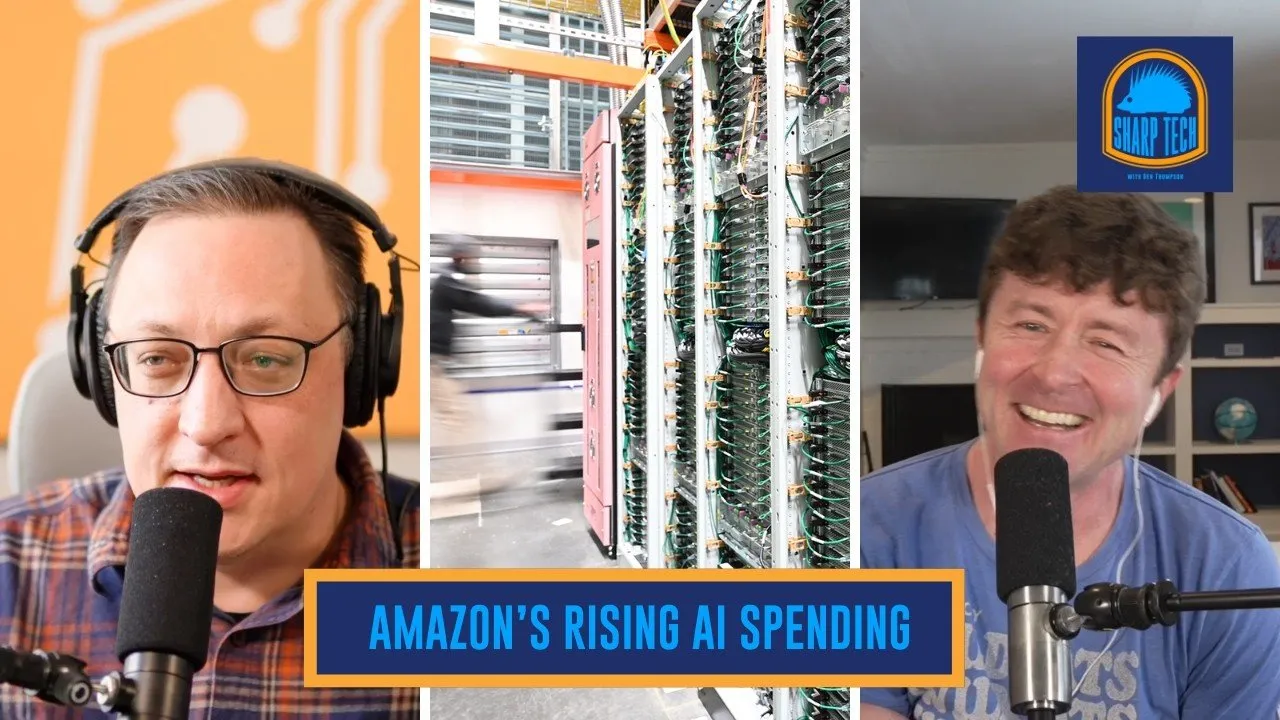
Amazon is aggressively scaling its investment in artificial intelligence infrastructure to safeguard its most profitable business units against a shifting technological landscape. The strategy involves a dual-track approach: purchasing high-end hardware to meet immediate enterprise demand while doubling down on proprietary silicon to secure a long-term cost advantage over cloud rivals Google and Microsoft. As AI-driven search threatens to disrupt the traditional e-commerce advertising model, Amazon’s shift in capital expenditure reflects a defensive necessity to preserve the margins of its Amazon Web Services (AWS) division.
Key Points
- Advertising Vulnerability: Amazon’s retail profitability is largely driven by its advertising business, which faces existential risks as AI-powered research tools bypass traditional search-and-click results.
- Cloud Margin Protection: AWS remains Amazon’s primary high-margin engine, necessitating massive spending to ensure customers do not migrate to Google Cloud Platform (GCP) or Microsoft Azure for AI workloads.
- Proprietary Silicon Strategy: Long-term dominance depends on Trainium and Graviton processors, which allow Amazon to offer "good enough" performance at a lower price point than competitors reliant on external vendors.
- Short-term Nvidia Pivot: After potentially underspending on Nvidia hardware, Amazon is ramping up purchases to maintain its leading-edge capabilities and prevent customer churn.
The Advertising Profit Engine at Risk
While often viewed primarily as a retailer, Amazon’s internal economics reveal that its retail profitability is underpinned by its multibillion-dollar advertising business. In the current ecosystem, Amazon leverages a "pay-to-play" search model where a significant portion of search results are sponsored. However, the rise of Large Language Models (LLMs) threatens this flow. If consumers shift toward using AI agents for product research and recommendations, they may bypass the Amazon.com search interface entirely, eroding the company’s ability to monetize search intent through ads.
According to analysis from Sharp Tech, this disruption places Amazon in a more precarious position than its peers. While Meta and Google have distinct advertising moppets, Amazon’s retail margin is almost entirely dependent on its ad revenue. If fewer users start their shopping journeys at the Amazon search bar, the company loses its most effective lever for maintaining retail profitability.
Custom Silicon and the "Good Enough" Thesis
To counter these shifts, Amazon is leaning into its historical strength: operational efficiency and cost leadership. The company’s long-term cloud strategy relies on its proprietary Nitro system and custom ARM-based Graviton processors. By incentivizing customers to use Trainium for AI training and Inferentia for deployment, Amazon aims to become the low-cost provider in the market.
"Amazon part of what they're betting on is that most people who need AI capacity and workload capacity are not going to be needing leading edge transformative performance. In that scenario, Amazon is going to be able to serve good enough performance cheaper and at a higher margin than any of their competitors."
This "models-as-a-service" approach via Amazon Bedrock allows the company to abstract the underlying hardware. For many enterprise clients, the specific processor matters less than the total cost of ownership and the ease of integration within their existing AWS ecosystem. This positioning allows Amazon to act as the "renter in the middle," capturing margins by optimizing the stack from the silicon up.
Addressing the Nvidia Shortfall
Despite its focus on custom chips, Amazon has recently acknowledged a need to increase spending on Nvidia H100s and next-generation Blackwell chips. Industry analysts suggest that Amazon may have initially underinvested in leading-edge GPUs, favoring its optimization playbook too early in the AI cycle. Because the performance gains between AI chip generations are currently astronomical—reminiscent of the 1980s and 90s CPU booms—optimization cannot yet replace raw power.
By increasing its Nvidia spend now, Amazon is ensuring it does not lose "leading edge" customers to Microsoft or Google. Unlike Microsoft, which has faced criticism for diverting Azure capacity to its own internal projects, Amazon positions AWS as a neutral infrastructure provider that does not compete with its customers for hardware supply. This neutrality, combined with a renewed commitment to high-end hardware, is designed to keep the world’s largest enterprises locked into the AWS ecosystem.
Moving forward, Amazon must successfully navigate the transition from this expensive "Nvidia era" to a future where its own silicon can handle the majority of mainstream AI workloads. The company's ability to maintain AWS's 30-40% margins while subsidizing a potentially disrupted retail ad business will depend on how quickly it can scale its internal hardware solutions without falling behind in raw performance.