Table of Contents
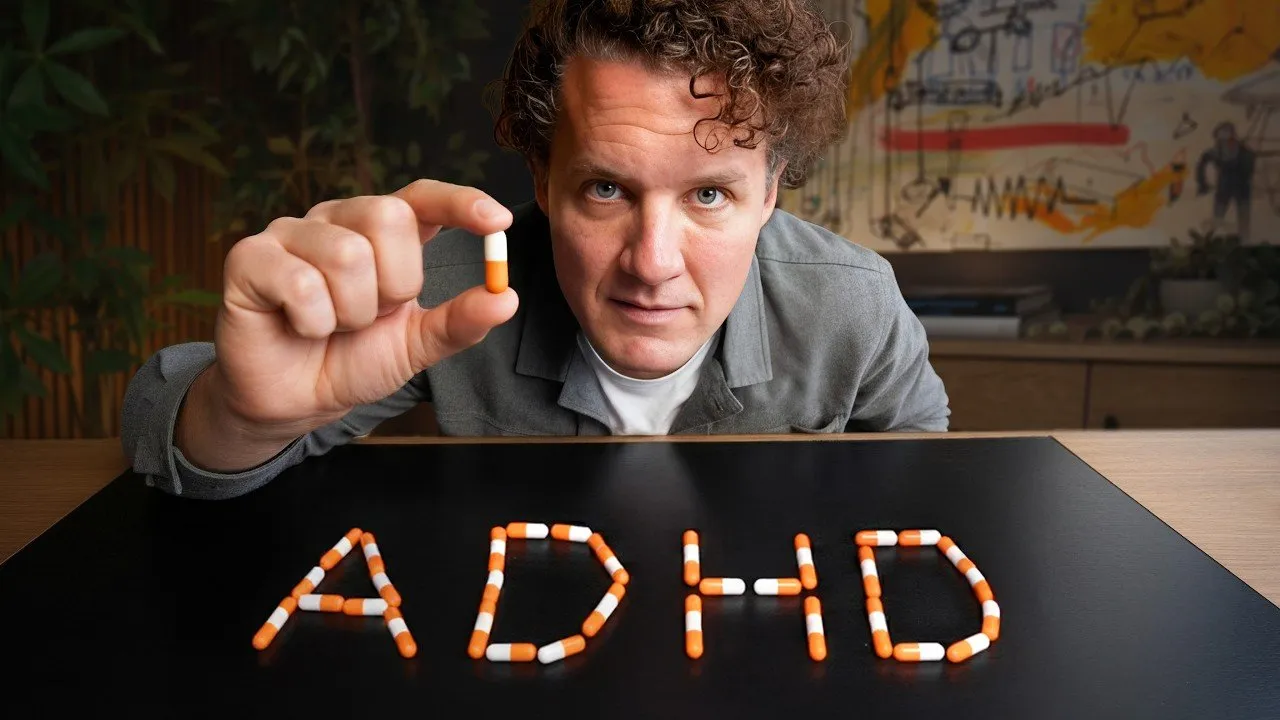
At fifteen, I was the poster child for teenage dysfunction. My grades were failing, my room was a disaster, and I spent my nights lost in video games, sleeping through half my classes. When I was finally diagnosed with ADHD and put on medication, it felt like a miracle. My grades soared, the mess disappeared, and I could finally sit through a lecture without wondering if fish get thirsty. But as my productivity spiked, something else vanished. My sense of humor, my creativity, and my unique perspective on the world went flat. I had traded my spontaneity for metrics. It wasn't until a teacher asked me, "Are you sure this is worth it?" that I began to realize a profound truth: our biggest handicaps are often secretly our biggest strengths, and trying to "fix" ourselves might mean destroying the very things that make us exceptional.
Key Takeaways
- The Paradox of Traits: The best thing about a person is almost always also the worst thing about them; you cannot extract the genius from the dysfunction.
- Environment Over Diagnosis: Many "disorders" are simply natural human variations that become liabilities only when placed in restrictive environments, like modern school systems.
- Management vs. Fixing: The goal of self-improvement should not be to "cure" your inherent nature but to build "guardrails" that leverage your strengths while mitigating your downfalls.
- The Trade-off Principle: Every exceptional talent comes with an inherent cost; success in one area often necessitates a lack of balance in others.
The Semmelweis Paradox: Genius as a Double-Edged Sword
To understand why our flaws are often tied to our greatness, we can look at the tragic story of Ignaz Semmelweis. In 1847 Vienna, mothers were dying of "childbed fever" at a horrific rate in the doctor’s ward, while the midwives’ ward remained safe. Semmelweis, a man described as stubborn, disagreeable, and obsessive, eventually discovered the cause: doctors were performing autopsies and then delivering babies without washing their hands.
He instituted a simple protocol of washing hands in a lime solution, and death rates plummeted from 18% to under 2%. Yet, the medical establishment didn't hail him as a hero. They were offended by the implication that they were killing their patients. Because Semmelweis lacked diplomacy and was prone to calling his colleagues "murderers," he was eventually ostracized and died in a mental institution.
The Inseparability of Character
The very traits that allowed Semmelweis to solve a mystery others ignored—his refusal to fit in and his obsessive focus—were the same traits that made him impossible to work with. This is the fundamental trade-off of the human personality. You cannot have the breakthrough scientist without the "impossible" colleague. They are the same person. Whether it is the artist whose sensitivity creates masterpieces but makes daily life painful, or the entrepreneur whose drive builds empires but destroys their personal life, the "good" and "bad" are chemically bonded.
The Environmental Trap: When a Asset Becomes a Diagnosis
The way we view mental health is often dictated by culture rather than objective science. History is full of "disorders" that were actually just social inconveniences. In the 19th century, "drapetomania" was the "disorder" of enslaved people wanting to escape, and "hysteria" was the diagnosis for women who were "disobedient" to their husbands. Today, we look at these as absurd, yet we rarely question our current categories.
ADHD has likely existed for the entirety of human history. For tens of thousands of years, the distractible, novelty-seeking brain was an asset—these were the hunters and explorers who noticed the rustle in the bushes or the shift in the wind. The problem isn't the brain; it’s the environment. We built schools that require children to sit still and focus on singular tasks for hours. Suddenly, a brain designed for exploration became "disordered."
"The question isn't whether your brain is normal. The question is whether you're in an environment that lets your brain be an asset."
The Cost of "Sanding Down" Personality
When we medicate or "fix" the parts of ourselves that don't fit into a specific environment, we risk losing the extremities of our personality that lead to excellence. I found that while medication made me a better student, it made me a worse human. Once I entered the real world and chose a career that rewarded high-risk, novelty-seeking, and "weird" perspectives, my ADHD wasn't a handicap anymore—it was the engine of my success.
The Prison of Intensity: The Michael Jordan Example
Even when a trait leads to world-class success, it remains a double-edged sword. Michael Jordan is arguably the greatest basketball player of all time, driven by a competitive intensity that was nearly sociopathic. This trait made him a legend, but it also made him a nightmare to be around. His teammates, coaches, and even his family often struggled to handle his relentless nature.
The tragedy of this kind of "superpower" is that it doesn't have an off-switch. Years after retirement, Jordan was reported to be compulsively playing Candy Crush for hours, obsessed with having the highest score in the world. The intensity that built his legacy became a prison once he no longer had a court to channel it into. This illustrates a vital truth: the talent that makes you special is often the same extremity that causes your deepest problems.
The "Fixing" Delusion vs. The Power of Guardrails
For decades, I fell into the "self-help trap." I read every book and tried every meditation technique, convinced that I could "optimize" myself into a person who didn't struggle with boredom or distraction. I assumed something was broken and needed repair. But after years of trying to "heal" my way into being "normal," I realized that my high school teacher was right to ask if it was worth it.
The goal shouldn't be to change who you are, but to successfully manage who you are. Instead of trying to eliminate the extremes of your personality, you must build a life that leverages them while protecting you from their worst effects.
Building Sustainable Systems
I realized I don't need to be "fixed"; I need guardrails. My mind, left to its own devices, would stay up all night researching obscure trivia or binging video games. To counter this, I’ve developed systems that channel my ADHD into productive outlets while minimizing the damage of my impulsivity. This means:
- Choosing work that inherently requires novelty and creativity.
- Creating external structures to manage the "monotony of existing."
- Accepting that I will always struggle with certain things, rather than feeling like a failure when I do.
Conclusion: Are You Asking the Right Question?
We spend so much of our lives trying to fit into boxes that weren't built for us. We measure our worth by metrics—grades, clean rooms, productivity—without asking what those metrics are costing us. The traits that make you "inconvenient" or "distractible" are often the very same traits that make you a "one of one" in the right setting.
The most important work you can do isn't sanding away your edges to fit in. It is understanding the inherent trade-offs of your character. It is finding an environment that maximizes your potential rather than your liabilities. Good grades and a tidy life are fine, but before you sacrifice your weirdness and your creativity to get them, you have to ask yourself: Are they worth it?