Table of Contents
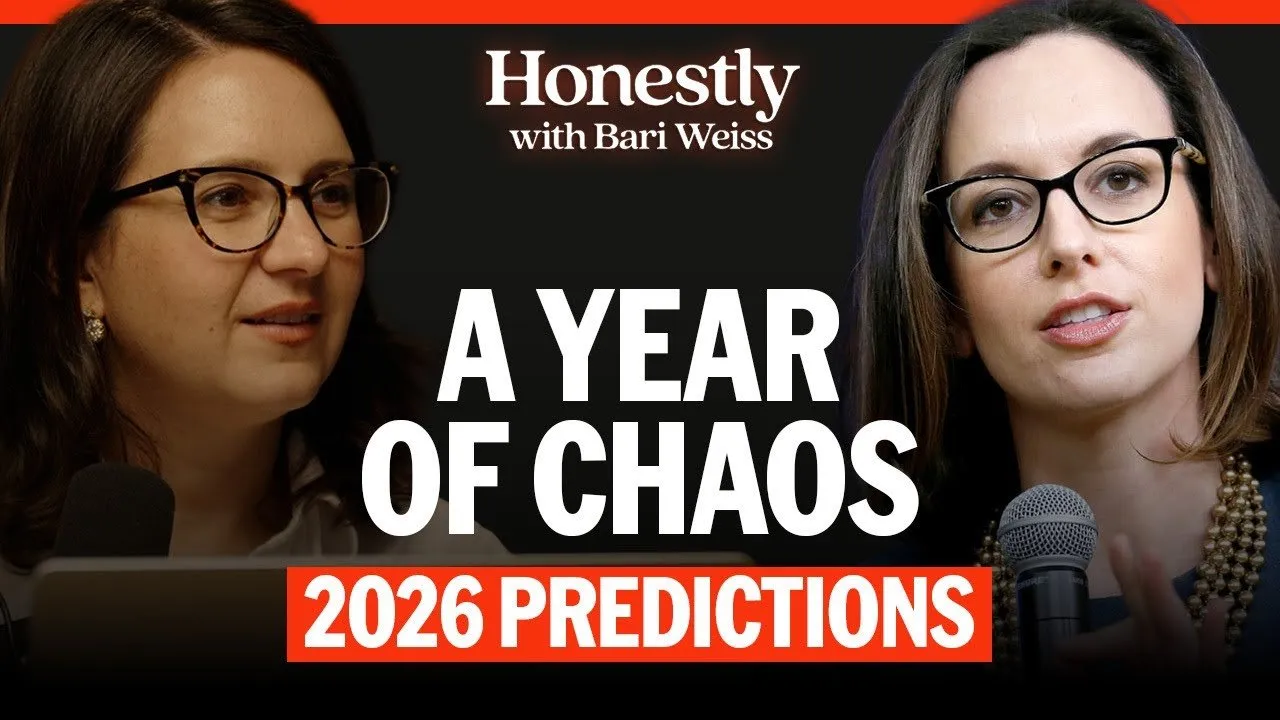
As the political landscape shifts toward the midterm elections of Trump’s second term, analysts and insiders are looking beyond the daily headlines to understand the structural changes reshaping Washington. Former Trump Justice Department official and legal commentator Sarah Isgur offers a critical look at the state of the presidency in 2026. Her insights reveal an administration defined not just by its policies, but by a profound constitutional tug-of-war, a potential looming personnel crisis, and a Republican party grappling with its own identity.
From the consolidation of executive power to the chaotic "turkey drop" of cabinet officials, the second half of this term promises to be volatile. Isgur’s analysis suggests that while the executive branch has grown more powerful vertically, it may ultimately prove legally and politically fragile without the support of Congress.
Key Takeaways
- Executive Overreach: The defining feature of the second term is the "vertical consolidation" of power within the executive branch, bypassing a dormant Congress.
- The "Turkey Drop": A wave of high-level firings is predicted for late 2026, with Attorney General Pam Bondi likely on the chopping block in favor of more radical loyalists.
- Legislative Fragility: despite holding power, the administration's reliance on Executive Orders rather than legislation risks creating an "inconsequential" legacy that can be wiped out by the next president.
- The Death of Parties: The midterms highlight a breakdown in party infrastructure, with elections now driven by individual influencers and personality cults rather than coalition building.
- Succession Dilemma: JD Vance faces a precarious path; attempting to step into the spotlight too early could invite retaliation from a president unwilling to accept "lame duck" status.
The Consolidation of Vertical Power
According to Isgur, the most significant—and perhaps most troubling—development of the administration’s second act is the aggressive consolidation of control over the executive branch. This goes beyond standard governance; it represents a shift toward a "vertical" power structure where the President exerts direct influence over hiring, firing, and spending, effectively sidelining the legislative branch.
This dynamic is fueled by a Congress that has largely abdicated its responsibilities. Isgur notes that while lawmakers focus on social media engagement and performative politics, they have handed over vast swathes of authority to the White House. This dormancy allows the executive to fill the vacuum, creating a system where the President acts as judge, jury, and executioner regarding federal regulations and enforcement.
The Precedent of Ignoring Law
A stark example of this overreach is the administration's handling of the TikTok ban. Despite legislation passed by Congress and signed by a previous president, the law has essentially been ignored.
"The thing that keeps me up at night is that it's been approximately 342 days since the TikTok ban was supposed to go into effect. And we have a president blatantly ignoring a law that was passed by Congress... That is a really bad precedent."
This blatant disregard for statutory law signals a dangerous erosion of separation of powers. Whether one agrees with the specific policy regarding TikTok is irrelevant; the structural damage lies in the Executive’s ability to simply "shrug off" congressional mandates. Isgur argues that this is not solely a Trump phenomenon but a symptom of a trend started by previous administrations—citing Obama’s "pen and phone" strategy and Biden’s student loan actions—which has now escalated to new heights.
The Role of the Supreme Court
The counterweight to this expansion of power rests with the Supreme Court. Isgur predicts that this judicial term will be defined by the "structural constitution." The Court is under pressure to clarify the non-delegation doctrine—essentially ruling that Congress cannot vaguely hand over its powers to the President. If the Court steps in, it could force Congress to speak clearly when authorizing executive action, potentially curbing the administration's ability to act unilaterally on issues ranging from environmental regulations to trade tariffs.
The Paradox of an Inconsequential Presidency
Despite the projection of strength and the consolidation of executive authority, there is a paradox at the heart of Trump's second term. Isgur predicts that, historically speaking, this administration could end up being one of the most ineffective and inconsequential in American history.
The reasoning lies in the method of governance. By choosing to govern almost exclusively through Executive Orders rather than negotiating legislation with Congress, the administration is building a legacy on sand. Executive Orders are transient; they can be rescinded on Day One of the next presidency. Without passing durable laws, there is no permanent structural change that outlasts the man himself.
Furthermore, signs of "lame duck" status are creeping in earlier than expected. Following off-cycle elections and minor political skirmishes, Republicans in Congress have begun pushing back against the President, sensing a waning of his political "juice." When a leader is no longer on the ballot, fear dissipates, and political capital evaporates quickly.
Personnel Shake-Ups: The "Turkey Drop" Prediction
One of the anomalies of the current term has been the surprising stability of controversial cabinet members. Figures who were expected to last only weeks are still in office. However, Isgur forecasts a major shake-up in 2026, likening it to a collegiate "Turkey Drop"—the moment around Thanksgiving when relationships suddenly end en masse.
The Attorney General on the Hot Seat
Specific attention is drawn to the Department of Justice. Isgur suggests that Attorney General Pam Bondi has lost the President's ear, eclipsed by other figures within the department like Ed Martin. In this administration, proximity and influence are paramount, and losing the President’s favor is a prelude to an exit.
The Confirmation Crisis
The hesitation to fire officials earlier likely stems from a logistical nightmare: replacement. If the President fires a cabinet secretary, he faces a Senate confirmation process that may not be compliant. The alternative—relying on "acting" officials via the Vacancies Reform Act—is facing stiff resistance in the courts.
"If he fires someone, who can he actually get confirmed to replace that person? ... Or is he going to try to do these actings that we've seen through the vacancy reform act that the courts have been shutting down?"
The administration is likely waiting for legal clarity on these temporary appointments before executing a mass purge of the cabinet.
The 2026 Midterms and the Death of Party Structure
Looking toward the 2026 midterms, the political parties themselves appear to be crumbling. Isgur argues that the United States no longer has functioning political parties in the traditional sense. Campaign finance reforms and the rise of social media have gutted the centralized power structures that once enforced discipline and strategy.
The result is a chaotic environment driven by individual incentives. Candidates are no longer interested in coalition building or legislative majorities because those structures offer little personal reward. Instead, politics has become a pursuit of viral fame and fundraising.
Realignment vs. Redistricting
This chaos is exacerbated by ill-timed redistricting efforts. Strategists are redrawing maps based on outdated assumptions during the fastest voter realignment in modern history. As the Republican coalition becomes increasingly working-class and multicultural, and the Democratic base becomes wealthier and more educated, traditional geographic strongholds are flipping.
In the Senate, focus remains on Texas, where the potential matchup between Republican Ken Paxton and a far-left Democrat like Jamie Crockett serves as a metaphor for the current era: a choice between alleged corruption on one side and ideological extremism on the other, leaving moderate voters with nowhere to turn.
The Fight for Succession
As 2028 looms, the shadow war for the future of the Republican Party has already begun. The primary conflict is shaping up between Vice President JD Vance and established figures like Ted Cruz. However, the path for Vance is treacherous.
Donald Trump has made it clear he has no intention of fading quietly into a lame-duck presidency. If Vance attempts to assert himself as the heir apparent too early—announcing a run or overshadowing the President—he risks immediate political retaliation. Trump’s incentive is to maintain relevance and dominance, which conflicts with Vance's need to establish a distinct identity.
On the Democratic side, the leadership vacuum is equally pronounced. With traditional hierarchies dissolved, the "face" of the party is up for grabs, fluctuating between established but uncharismatic figures and charismatic but radical local leaders. This leadership void complicates their ability to capitalize on Republican infighting during the midterms.
Conclusion
Sarah Isgur’s analysis paints a picture of a political system in transition. Donald Trump’s second term is not merely a continuation of the first, but an escalation of executive power that exposes deep flaws in the constitutional separation of powers. Trump, Isgur argues, is the symptom rather than the cause—the culmination of decades of congressional atrophy and executive expansion.
As 2026 approaches, the nation faces a dormant Congress, a consolidating Executive, and a judiciary poised to intervene. Whether this leads to a constitutional correction or further erosion of norms remains the defining question of the next two years.