Table of Contents
The gap between the Jesus of history and the Christ of faith is a subject that has occupied scholars for centuries. When we peel back the layers of church tradition, later theological developments, and artistic representations, we are often left with a figure who is far more enigmatic—and perhaps more human—than the one preached from modern pulpits.
In a candid exploration of the New Testament, we must confront difficult questions: Did Jesus actually claim to be God? Was he wrong about the end of the world? And how does a rigorous historian reconcile the messy, contradictory nature of ancient texts with personal faith? By examining the earliest sources with a critical eye, we discover a Jewish prophet who defies easy categorization, challenging both the skeptic and the fundamentalist.
Key Takeaways
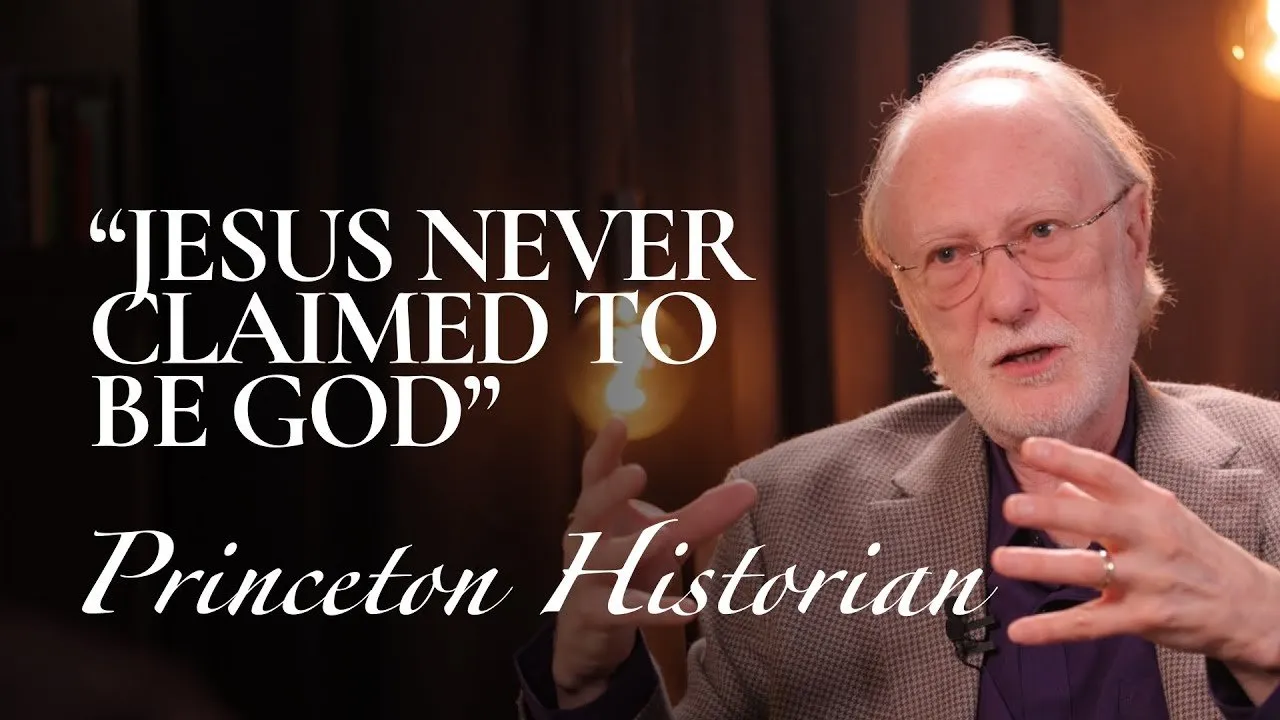
- The Evolution of Divinity: Explicit claims of deity, such as "Before Abraham was, I am," appear only in the Gospel of John, which is likely a later theological development compared to the earlier Synoptic Gospels (Matthew, Mark, and Luke).
- The Apocalyptic Prophet: Historical evidence suggests Jesus expected the end of the world to occur within his generation, a prophecy that did not come to pass in the way he anticipated.
- Resurrection Phenomenology: The disciples' experiences of the risen Jesus share characteristics with other cross-cultural "veridical visions," such as the Tibetan "rainbow body" phenomenon or modern bereavement visions.
- Faith Beyond Certainty: Historical criticism reveals a messy, non-uniform tradition, suggesting that faith does not require absolute historical certainty but rather a trust in the ultimate goodness of God.
Did Jesus Claim to be God?
One of the most contentious issues in biblical scholarship is the development of Christology—the study of who Jesus was. A careful reading of the gospels reveals a distinct evolution in how Jesus is portrayed, moving from a Jewish messianic figure in the early texts to a pre-existent divine being in the later ones.
The Synoptics vs. The Gospel of John
The vast majority of explicit claims to deity are found in the Gospel of John. Here, we encounter the high Christology familiar to modern Christianity, with statements like "I and the Father are one." However, the picture in the Synoptic Gospels—Matthew, Mark, and Luke—is strikingly different. In these earlier accounts, Jesus is reticent about his identity, often commanding people to be silent about his miracles (the "Messianic Secret").
The historian argues that the Gospel of John is a later, more theological reflection. Textual analysis suggests that John likely knew of Matthew and Luke and expanded upon their themes. For example, Matthew portrays Jesus as a "New Moses," teaching from a mountain. John seems to take these redactional elements and develop them into long, homily-like discourses. If Jesus had truly made explicit claims to deity during his ministry, it is historically improbable that the writers of Matthew, Mark, and Luke would have omitted them, only for them to surface decades later in John.
The "Platypus" Problem
If Jesus did not go around claiming to be Yahweh, who did he think he was? The historical Jesus likely viewed himself as the "Messiah-in-waiting" and the "Son of Man" depicted in Daniel 7—a figure central to the coming judgment. He possessed a high self-conception, placing himself at the center of God's eschatological plan, yet he distinguished himself from God the Father.
This ambiguity created a theological puzzle for the early church. The historian compares the early Christians’ dilemma to British scientists discovering the platypus: an animal with a beak like a duck, fur like a mammal, and venom like a reptile.
"The early Christians were faced with a platypus... it had characteristics of a mammal, it had characteristics of a bird. It had characteristics of a reptile, so it can't be... That's the problem you have with these christological debates and it's why you have them to begin with because there are passages in which Jesus is God... and then he grew in wisdom and in stature."
Because the texts themselves are narratives rather than systematic theologies, they preserve conflicting traditions. This necessitated centuries of debate, culminating in the Councils of Nicaea and Chalcedon, to hammer out a unified doctrine from a diverse set of initial beliefs.
The Problem of the "Failed" Prophecy
Perhaps the most uncomfortable conclusion for believers is the recognition that Jesus may have been mistaken about the timing of the apocalypse. The historical evidence strongly suggests that Jesus was an apocalyptic prophet who believed the Kingdom of God would arrive immediately.
"This Generation Will Not Pass"
Jesus explicitly states in the gospels that "this generation will not pass away until all these things have taken place." While apologists have spent centuries reinterpreting "generation" to mean "race" or "kind," or arguing that the prophecy was fulfilled spiritually at the Resurrection or the destruction of Jerusalem in 70 AD, the most natural reading is that Jesus expected the end within the lifetime of his contemporaries.
This aligns with the broader context of the New Testament. Paul, the earliest Christian source, clearly expected the parousia (second coming) to happen in his lifetime. John the Baptist was a prophet of imminent judgment. It is historically consistent that the figure standing between them—Jesus—shared this view.
The Problem of Evil with a Time Stamp
How does a believer reconcile the idea of a divine figure being wrong? The historian reframes this not as a "failure" that disproves the faith, but as a variation of the "problem of evil."
The problem of evil asks how a good, all-powerful God can allow suffering. The "delay of the parousia" asks why God has not yet intervened to fix the world. Eschatology is essentially the hope that God will solve the problem of evil. The fact that it hasn't happened yet is a mystery, but it is not necessarily a negation of God's existence or goodness. The early church coped with this delay not by abandoning the faith, but by "historicizing" the prophecies—seeing the Resurrection as the first fruits of the end—and "internalizing" them, viewing judgment and eternal life as present spiritual realities.
Resurrection: Visions and Cross-Cultural Parallels
When approaching the Resurrection, the historian must weigh probabilities. The standard skeptic’s view—hallucination or theft of the body—is challenged by the robust nature of the accounts, which include the empty tomb, multiple sightings by different groups, and the conversion of skeptics.
Parallels in Paranormal Phenomena
Interestingly, the phenomenology of the Resurrection appearances has parallels in other cultures and times. The historian points to the "Eastern Airlines 401" crash in the 1970s, where multiple credible witnesses reported seeing the ghosts of the flight crew. Similarly, Tibetan Buddhism contains the tradition of the "rainbow body," where high-level practitioners are said to shrink or vanish at death, leaving behind physical remnants like hair or nails.
These comparisons are not meant to debunk the Resurrection but to provide a category for understanding it.
"I don't find anything quite like what I find in early Christianity... but I want to understand. So most people who compare what's going on with Jesus... they just mean hallucinations and it's a way of dismissing things. And I occupy a weird space because I don't believe all visions are hallucinations in the derogatory sense."
By studying "veridical visions"—visions that seem to convey reality—we can see that the disciples' experiences, while unique in their impact, fit within a broader pattern of human spiritual experience. This suggests that reality is stranger and more porous than a materialist worldview allows.
The Historian and the Citadel
How does one live as a believer while acknowledging contradictions, failed prophecies, and the messy evolution of dogma? The historian distinguishes between the "Citadel" of orthodoxy and the explorer who roams outside the walls.
Many Christians live inside the Citadel, protected by the walls of apologetics and systematic theology. The critical historian, however, lives in the open field. They explore other traditions, ask uncomfortable questions, and let the data lead where it may, even if it contradicts the established creed.
The Liberation of Uncertainty
Far from being destructive, this approach can be deeply liberating. It frees the believer from the anxiety of needing to prove every biblical line is historically literal. It allows for a faith that is rooted in the "gist" of Jesus—his life, his death, and his teachings on love—rather than in a fragile house of cards that collapses if one contradiction is found.
Ultimately, the historian adopts a posture of humility. We cannot know everything. The ancient texts are not perfect records, but they preserve the memory of a figure who transformed history. Faith, in this view, is not about possessing absolute knowledge, but about trusting in the character of God.
"I believe in God and I believe that God is good. And with those two things, I can do anything... I believe that God has to win. Now, I don't know what that looks like... but I believe that God has to win and that God will win."
Conclusion
The quest for the historical Jesus reveals a figure who is both familiar and foreign. He was a first-century Jewish prophet who expected the end of the world, yet whose ethical teachings transcend time. He was a man who likely did not call himself God, yet whose followers experienced him as the divine Lord after his death. By embracing the tension between history and theology, we move beyond a brittle, defensive faith toward one that is resilient, honest, and open to the mysteries of the divine.