Table of Contents
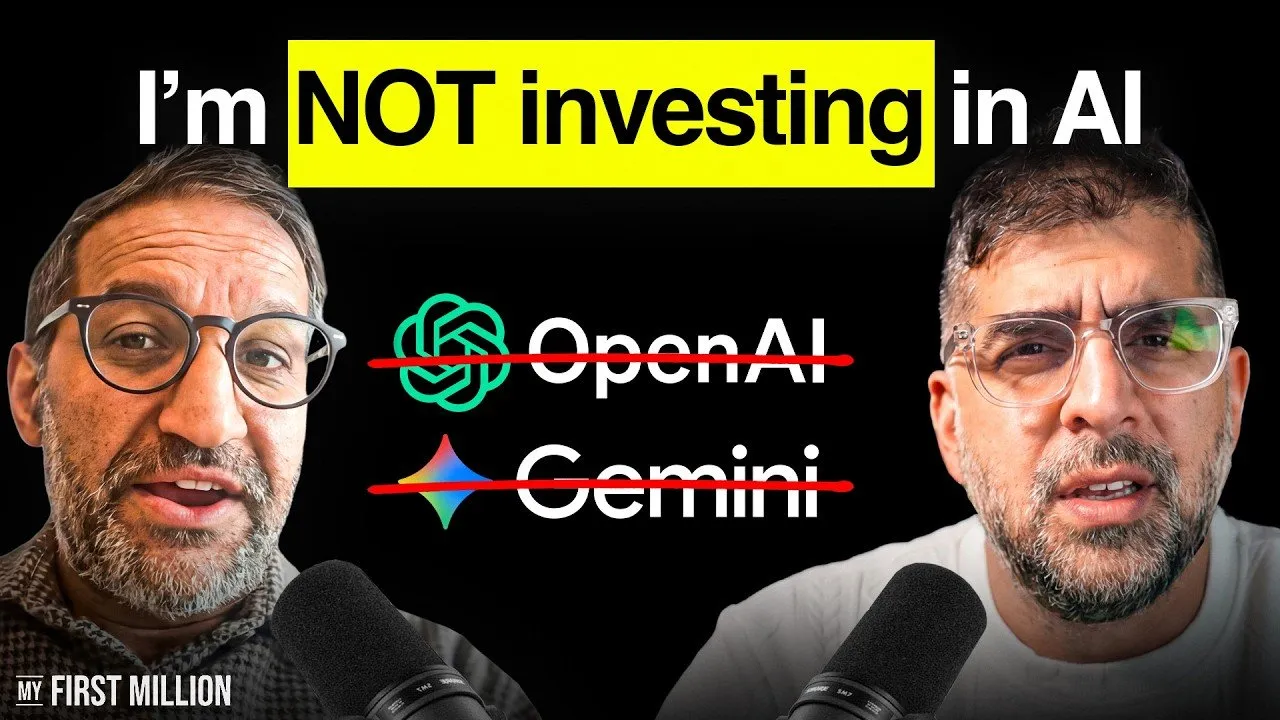
Success in venture capital isn't just about picking winners; it is about understanding the fundamental physics of risk, leverage, and timing. When managing a $450 million fund, the perspective shifts from linear growth to power-law dynamics. In a recent deep dive, seasoned tech investor Sheel Mohnot shared his framework for navigating the investment landscape of 2026, the psychological hurdles of asymmetric risk, and why the most successful entrepreneurs are those who take simple ideas to their absolute limits.
Key Takeaways
- Asymmetric Risk is the Ultimate Lever: Understanding that downside is capped while upside is infinite allows for aggressive, life-changing bets.
- The "Yacht" Theory of Networking: Creating high-leverage social assets—like dinner parties or niche content—builds "inbound luck" and compounding relationships.
- AI is a Battle for Context: The winners in the AI race will be those who own the most personal and enterprise context, potentially cannibalizing traditional SaaS models.
- Take Ideas to the Limit: Success often comes from doing the "obvious" thing with a level of seriousness and scale that competitors aren't willing to match.
The Psychology of Asymmetric Investing
Most people are trained to think linearly: one hour of work equals one hour of pay. However, the world of venture capital and high-stakes poker operates on asymmetry. When an investor puts $3 million into a startup, the maximum loss is that $3 million. The potential gain, however, can be $300 million or more. This 100x return profile "breaks the brain" of those accustomed to traditional wages, yet it is the primary driver of wealth in the modern economy.
The Power Law in Life
This principle extends beyond bank accounts. Portfolio theory suggests that out of hundreds of investments, only about ten will drive the vast majority of returns. Similarly, in life, a handful of relationships, skills, or opportunities will generate 90% of your joy and success. The strategy is simple: increase your "surface area" by saying yes to more things, knowing that you are simply filtering for the outliers that truly matter.
"I could only lose $3 million. I could gain $300 million. The downside is capped, but the upside is asymmetric."
"Building Your Own Yacht" – The Art of Networking
Sheel discusses an obscure but powerful concept called "Building Your Own Yacht." Historically, figures like Aristotle Onassis used literal yachts to bypass social hurdles. When a guest steps onto your turf, social proof is established, and the law of reciprocity kicks in. In the digital age, you don't need a physical boat to achieve this effect.
Creating Little Yachts
A "yacht" is any asset that creates inbound luck. This can include:
- Dinner Parties: Hosting people at your home creates a deeper bond than meeting at a loud restaurant.
- The "Jam Pad" Strategy: Like Travis Kalanick in the early days of Uber, turning your home into a hub for interesting people creates a constant flow of new ideas.
- Niche Content: Newsletters, podcasts, and social media presence serve as digital yachts that establish credibility before you ever hop on a Zoom call.
The AI Landscape: A Race for Context
As we look toward 2026, the AI race is less about who has the fastest model and more about who owns the user's context. While OpenAI, Google (Gemini), and Anthropic (Claude) are currently neck-and-neck, the long-term winner will be the one that acts as a true "Chief of Staff."
Consumer vs. Enterprise Battles
Google has the advantage of owning your email and calendar context. OpenAI has the first-mover advantage with consumer habits. Meanwhile, Anthropic is carving out a massive niche in the enterprise space, particularly in legal and research sectors. One notable shift is the "Last Mile Problem." For an AI business to be defensible, it must solve specific domain workflows—like healthcare compliance or legal nuances—that a generalized model might ignore.
The Cannibalization of SaaS
There is a growing suspicion regarding the future of traditional SaaS giants like Salesforce or Adobe. If a generalized AI model can generate images, manage CRM data, and write code natively, do we still need specialized "seats" in a software subscription? Critics argue that many existing software companies are currently being "eaten" by the very models they hoped to integrate.
The "New Model" Panic
As Sam Altman once suggested, developers should be wary of building features that a simple model update could swallow. The companies most at risk are those that function merely as a "wrapper" for AI. The survivors will be those with deep integrations into a company’s system of record and those that maintain a "human in the loop" for high-stakes decisions.
"There are some companies that get excited when a new model launches, and others that are terrified because their entire business just got swallowed."
Historical Blunders and the Innovator’s Dilemma
To understand where to invest in 2026, we must look at the "worst" decisions in business history. These often stem from a fear of cannibalizing an existing business. Kodak invented the digital camera but suppressed it to save film sales. Excite passed on buying Google for $750,000 because they wanted users to stay on their search page longer to see ads.
SoftBank and the $100 Billion Mistake
A more modern example is SoftBank’s decision to sell its 5% stake in NVIDIA to plow money into WeWork. This serves as a cautionary tale about the dangers of over-leveraging into "vibe-based" businesses while exiting companies that provide the fundamental infrastructure of the future. Success requires the discipline to hold onto compounding assets even when the next "shiny object" appears.
Taking Ideas to the Limit
One of the most effective strategies for 2026 is taking a simple, existing idea and executing it with extreme seriousness. This is the "Mr. Beast" or "Andreessen Horowitz" model. Everyone knew YouTube challenges were popular, but Mr. Beast built the world's largest soundstages to do them better. Everyone knew VCs should blog, but Andreessen Horowitz spent tens of millions to build a media empire that rivaled traditional news outlets.
The Longevity and Health Frontier
Look at Brian Johnson and the "Project Blueprint" movement. Bio-hacking and the "quantified self" were niche communities for decades. Johnson took the idea to the limit by tracking every single biomarker and turning himself into a public experiment. By taking a fringe idea to its logical extreme, he created a massive, polarized brand that dominates the longevity conversation. Investors in 2026 should look for the "limit-testers"—those who aren't just participating in a trend but are defining its boundaries.
Conclusion
Investing in 2026 requires a blend of high-tech intuition and old-school relationship building. Whether it is through creating "little yachts" to attract talent or identifying the vertical AI solutions that solve the "last mile" problem, the fundamentals remains the same: seek asymmetry. By avoiding the trap of the innovator's dilemma and focusing on assets that compound—be they relationships or software—investors can position themselves on the right side of the power law.