Table of Contents
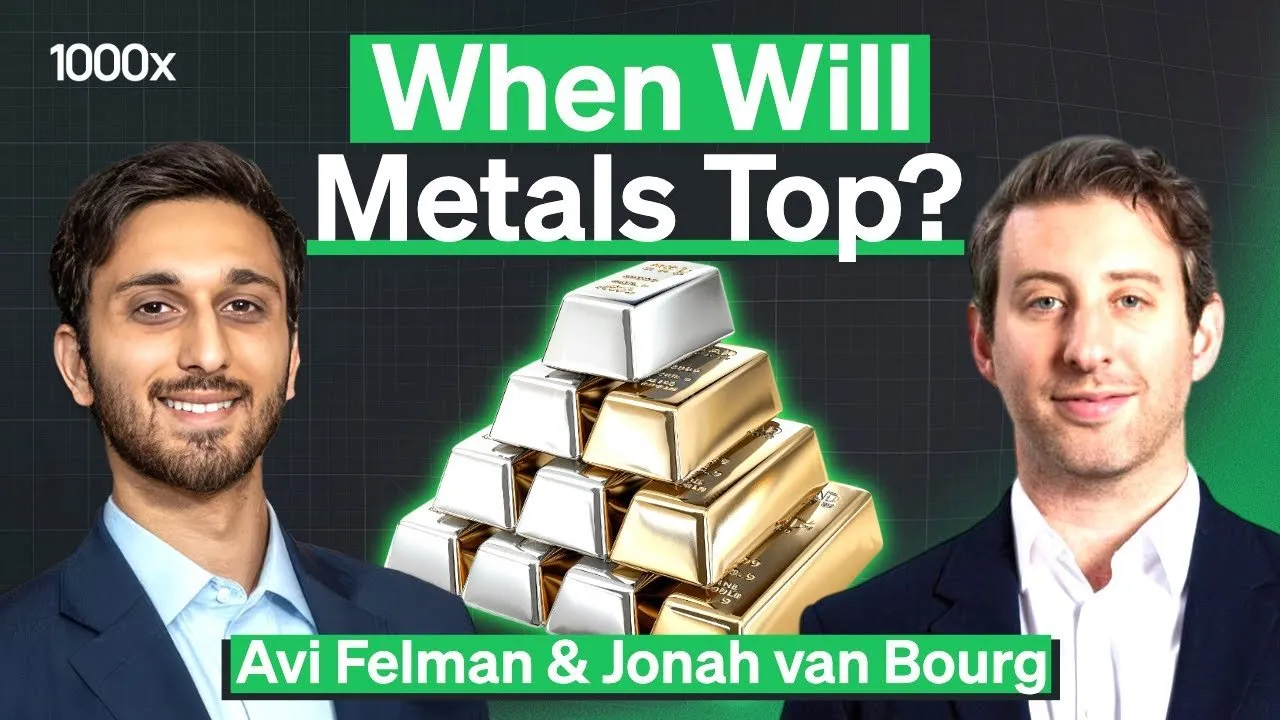
The recent price action in the commodities market has left investors oscillating between euphoria and "fear of missing out" (FOMO). We are witnessing a generational run in metals, with silver nearly doubling in a short window and gold putting in candles that defy typical volatility standards. The current market structure resembles a classic cryptocurrency cycle: the major asset (gold) rallies, followed by the secondary asset (silver), eventually triggering a run on "altcoins" (platinum, palladium). However, while the charts look parabolic, the underlying drivers suggest we may be nearing a dangerous inflection point for retail traders chasing the heat.
Key Takeaways
- Retail FOMO is driving the current peak: The recent explosion in silver and gold prices is characteristic of a blow-off top driven by late-arriving retail capital and CTA momentum strategies.
- Geopolitics fuels the Super Cycle: The long-term bull case for metals is rooted in a fracturing global order where nations are hoarding resources and diversifying away from US Treasuries.
- Strategy over Speculation: While precious metals are currently trading assets, strategic commodities like Uranium, Copper, and Rare Earth Minerals offer a stronger multi-decade investment thesis based on national security and industrial needs.
- No rotation into Bitcoin yet: Contrary to popular crypto-native beliefs, profits from the gold rally are unlikely to flow immediately into Bitcoin due to distinct investor demographics.
The Retail Frenzy and CTA Momentum
The metals market is currently experiencing a "God candle" event. Silver, in particular, has seen a run-up of nearly 50% in recent months, a move that feels disconnected from immediate industrial demand and more aligned with speculative mania. This phenomenon is often described as the "eighth or ninth inning" of a rally.
In commodities, high prices are frequently the solution for high prices. As values soar, new supply comes out of the woodwork, and momentum eventually stalls. The current surge is a mix of three specific factors:
- Sovereign Accumulation: Central banks buying gold to shore up reserves.
- CTA Buying: Commodity Trading Advisors (algos) chasing the trend above moving averages.
- Retail Panic: Individual investors FOMOing into silver and secondary metals.
"The way that you successfully trade the eighth or the ninth inning of any commodities blowoff top is by having some sort of tether... linking you to a thesis."
Without a structural thesis, investors buying at these levels are simply "top blasting"—hoping to sell to a greater fool before the reversal. The involvement of CTAs is particularly critical; these systematic funds go maximum long when prices are above key moving averages (50, 100, 200-day). However, when the music stops and prices dip below those averages, these funds flip short simultaneously, often resulting in violent corrections.
Geopolitics: The Engine of the Super Cycle
While the short-term price action in silver screams "bubble," the long-term thesis for commodities remains robust. We are transitioning from a unipolar world dominated by the United States to a multipolar, fractured global order. In this environment, trust erodes, and sovereign nations become territorial over resources.
The Reserve Currency Shift
For decades, US Treasuries were the default risk-free asset. However, as the geopolitical landscape shifts—accelerated by events like the conflict in Ukraine—central banks are diversifying. They require a non-sovereign asset to anchor their currencies. Gold fulfills this role effectively. This is not a short-term trade for central banks; it is a strategic realignment of national balance sheets.
This creates a bifurcation in the metals market:
- Gold: A monetary asset being hoarded by states.
- Silver: Predominantly a retail and industrial asset, lacking the same geopolitical tailwinds as gold.
Strategic Commodities vs. Shiny Objects
Investors must distinguish between buying "shiny rocks" due to momentum and investing in strategic assets necessary for national security. If you are investing in a non-revenue-producing hard asset, there must be a "super cycle" thesis behind it.
Uranium, Copper, and Rare Earth Minerals (REMs) fit this description perfectly. As the world fractures into spheres of influence, countries must secure their own energy independence (nuclear/uranium) and technology supply chains (copper/REMs). These assets have structural demand drivers that exist independently of retail speculation.
"I think that the move in metals generally is a multi-decade long thesis... the world will continue to become more territorialized."
While silver may be overextended, a pullback in strategic assets represents a buying opportunity. The United States and its allies are likely to increase investment in domestic mining and processing to reduce reliance on foreign adversaries. This makes ETFs focused on rare earth metals or uranium miners compelling for a 5 to 10-year horizon.
The Bitcoin Correlation Myth
A common question among digital asset investors is whether the liquidity from the gold rally will rotate into Bitcoin. The data suggests the answer is no.
Gold and Bitcoin currently serve different masters. The buyers driving gold to all-time highs are central banks and older demographics (Boomers) seeking safety. Bitcoin remains a risk-on asset for younger generations (Millennials, Gen Z). The rotation from gold to Bitcoin is a generational phenomenon that will play out over decades, not weeks.
Furthermore, Bitcoin is currently languishing in a choppy market structure. While gold has been breaking out since mid-2024, Bitcoin has struggled to maintain momentum. However, for the patient investor, Bitcoin arguably offers a better risk-adjusted return over a long time horizon compared to buying gold at record highs. The upside of a digital, transportable store of value in a digital age remains technically superior to physical bullion, despite current price action.
The Evolution of "Crypto" to Fintech
Beyond market cycles, the blockchain industry is undergoing an identity shift. The term "crypto" is becoming as antiquated as saying one works in "internet" or "computer." The technology is being subsumed into the broader financial technology (fintech) sector.
The future of the space lies in two distinct buckets:
- Memes and Speculation: A specialized, localized form of gambling that will always exist.
- Tokenized Equity: Revenue-producing companies utilizing blockchain rails for efficiency.
Eventually, successful tokens will look like programmable equity. They will offer legal rights, revenue share, and governance, stripping away the vagueness of utility tokens. Until then, the market remains bifurcated between high-utility infrastructure (stablecoins, settlement) and pure speculative instruments.
Conclusion
The metals market is flashing warning signs of a short-term top, driven by retail exuberance and algorithmic trend following. While the multi-decade thesis for commodities is valid, investors should be wary of chasing parabolic moves in silver and gold. Instead, the smart money is likely waiting for corrections to accumulate assets with genuine geopolitical utility—uranium, copper, and strategic minerals.
In a world defined by resource scarcity and fractured alliances, your portfolio should reflect the reality of national security needs, not just the momentum of the crowd.

![Fidelity Just EXPOSED Crypto's Biggest Secret [Not What You Think]](/content/images/size/w1304/format/webp/2026/02/fidelity-2026-crypto-outlook-revenue-sharing.jpg)