Table of Contents
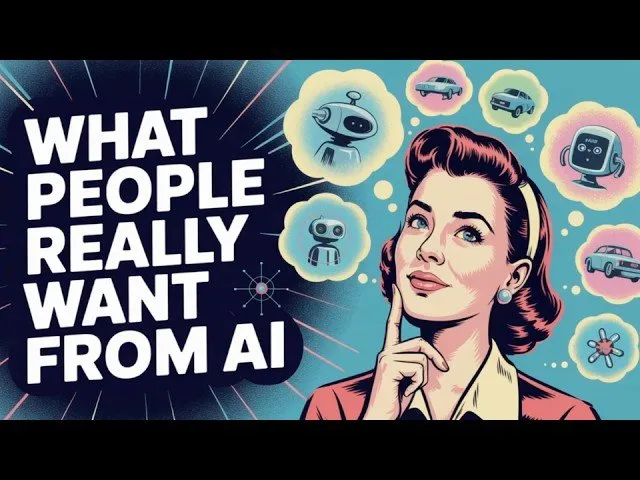
A massive, global study conducted by Anthropic reveals that user attitudes toward artificial intelligence are defined by nuance rather than polarized camps. By interviewing 81,000 people across 159 countries, the research highlights that individual hopes for AI—such as professional excellence and personal time freedom—are often inextricably linked to specific, grounded fears regarding reliability and job security.
Key Findings from the Anthropic Study
- Dual Nature of AI Sentiment: Hope and alarm are not divided into separate groups; instead, they coexist as internal tensions within individual users.
- Top Aspirations: The most cited goal for AI adoption was professional excellence (18.8%), followed by personal transformation (13.7%) and life management (13.5%).
- Primary Concerns: Respondents ranked unreliability (26.7%) as their top worry, followed by concerns over job displacement (22.3%) and loss of human autonomy (21.9%).
- Economic Impact: Independent workers, including entrepreneurs and freelancers, reported real economic gains from AI at more than triple the rate of institutional employees.
- Bridging the Gap: While 81% of respondents confirmed that AI has already delivered on their visions, those benefits are primarily grounded in tangible experience, whereas expressed harms remain largely hypothetical.
The Intertwining of Personal and Professional Goals
While early responses to the study often focused on productivity, deeper analysis reveals that professional goals are frequently a proxy for personal well-being. Many participants articulated a desire for "professional excellence" not for the sake of the work itself, but to secure more time for family, health, or personal enrichment. As the report notes, users often view AI as a tool to alleviate current life burdens, effectively allowing them to "win back time" from professional obligations.
This dynamic extends to societal expectations as well. The research found that desires for "societal transformation"—such as AI-driven cancer detection or equitable access to education—are frequently rooted in the personal histories of the respondents, including experiences with chronic illness or the desire to bypass educational barriers in lower-income regions.
What people want from AI and what they fear from it turned out to be tightly bound. — Anthropic Research Findings
The Tension Between Utility and Risk
The study identifies a significant divergence between media-driven narratives and the lived experiences of users. While mainstream discourse often centers on existential risk, copyright disputes, or harm to children, those concerns appeared in the "long tail" of the survey data, representing low single-digit percentages of total responses.
Instead, users are focused on concrete, day-to-day interactions. For many, AI acts as a "cognitive partner," offering 24/7 availability for learning and research synthesis. Yet, this utility carries risks. Participants highlighted the tension of becoming overly reliant on the technology, fearing cognitive atrophy—the loss of independent critical thinking skills—as a direct consequence of their increased dependence on AI systems.
Methodology and Future Implications
The study’s scale was made possible by using a version of Claude to conduct the interviews, a methodology that has sparked debate within the research community. Proponents argue that AI-led interviewing eliminates human interviewer bias and allows for unprecedented global, multilingual consistency. Conversely, critics, such as UC Berkeley professor Abashek Nagaraj, suggest that because the sample is comprised of Claude users, the findings may reflect a specific demographic rather than a universal cross-section of global sentiment.
Despite these critiques, the findings suggest a shift in the landscape of AI policy and public discourse. As the technology continues to integrate into professional and personal life, the focus is likely to move away from hypothetical doomsday scenarios toward the practical, messy reality of balancing human agency with machine efficiency. Moving forward, observers should expect continued research into how these "tensions of light and shade" evolve as AI adoption moves from early adopters to the broader public.