Table of Contents
CES 2026 has concluded in Las Vegas, defining the year ahead with a marked shift toward ambient computing, advanced robotics, and the integration of generative AI into consumer hardware. Beyond the show floor, major industry players including Universal Music Group, Microsoft, and Nvidia announced significant strategic pivots regarding artificial intelligence and platform governance, signaling a complex year ahead for the intersection of technology, commerce, and regulation.
Key Developments
- UMG x Nvidia Partnership: Universal Music Group has shifted from litigation to collaboration, partnering with Nvidia to launch "Music Flamingo," an AI model trained on UMG’s licensed catalog.
- Hardware Innovation: CES highlighted "invisible" tech, including the Mui Board wooden controller, alongside rollable OLED laptops from Lenovo and advanced health-tracking devices.
- Platform Policy Changes: YouTube now allows users to filter out Shorts following reports of high volumes of AI-generated low-quality content, while X (formerly Twitter) faces government scrutiny over its AI image generation safeguards.
- Geopolitical Tech Impact: Internet connectivity in Iran has dropped to near-zero levels amid protests, with reports of Starlink signals being actively jammed.
CES 2026: Ambient Computing and Robotics
The hardware showcased at this year’s Consumer Electronics Show emphasized devices that blend seamlessly into the home environment or enhance physical interaction through robotics. A standout in the ambient computing category was the Mui Board. Originally announced in 2019, the device is now shipping as a smart home controller disguised as a natural wood slab. It features a concealed touch display with Matter support, designed to eliminate screen fatigue by appearing as furniture until activated.
In the health technology sector, Mirror Ultra 4 introduced a new approach to at-home diagnostics. The device utilizes a urinalysis stick plugged into an egg-shaped hub to track fertility and general health metrics, moving clinical-grade testing into the consumer bathroom.
Robotics and gaming hardware also saw significant evolution:
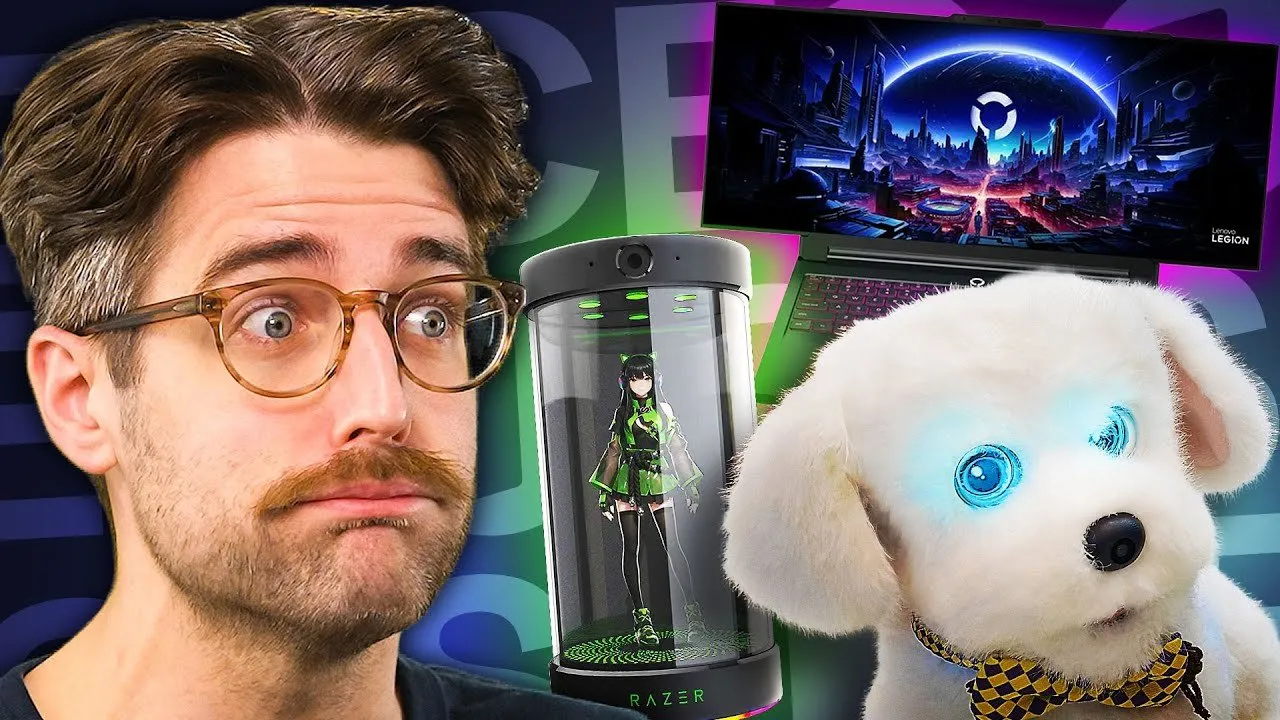
- Lenovo: Unveiled a Legion gaming laptop featuring a rollable OLED display that physically extends outward to create an ultrawide screen ratio optimized for immersive gaming.
- Razer: Expanded its "Project Ava" AI ecosystem, introducing holographic avatars and a concept gaming chair with full-body haptics designed to synchronize physically with in-game actions.
- Eovac: Debuted an AI-powered robot dog focused on companionship rather than utility, utilizing advanced behavioral algorithms to elicit emotional responses from owners.
- Automotive: Kawasaki is moving its robotic quadruped "horse" into full production, while Donut Lab showcased solid-state batteries for the Verge TS Pro electric motorcycle.
Strategic Shifts: UMG Partners with Nvidia
In a significant reversal of its recent legal strategy, Universal Music Group (UMG) announced a partnership with Nvidia. After spending the previous two years litigating against AI firms like Anthropic, Suno, and Udio for copyright infringement, UMG will now provide its vast catalog to train Nvidia's new "Music Flamingo" model.
According to the announcement, Music Flamingo distinguishes itself from competitors by its ability to analyze long-form audio tracks up to 15 minutes in length, understanding complex chord progressions and cultural context. To mitigate backlash from the creative community, the companies plan to launch artist incubators in London and Los Angeles. These hubs aim to allow musicians to assist in designing the very tools trained on their work.
Platform Governance and Market Movements
Major tech platforms implemented significant changes regarding content moderation and commerce this week.
YouTube and Content Filtering
YouTube has updated its search filters to allow users to exclude "Shorts" entirely from results. This move follows internal reports indicating that approximately 21% of videos shown to new users consist of mass-produced, AI-generated content. The platform still lacks a mandatory labeling system for AI content, leaving algorithmic filtering as the primary tool for users seeking human-generated long-form video.
Microsoft and Automated Commerce
Microsoft introduced "Copilot Checkout," a feature allowing its AI chatbot to execute purchases across Shopify, Stripe, and PayPal on behalf of the user. While promising convenience, the feature has raised security concerns regarding AI "hallucinations" and unauthorized spending. Notably, Shopify merchants are enrolled automatically, requiring them to opt-out if they do not wish to participate.
Regulatory Clash at X
X (formerly Twitter) attempted to curb the generation of non-consensual explicit imagery by restricting its Grock AI image generation tools to premium subscribers. However, critics note that the underlying "Grock Imagine" feature remains accessible, merely removing the chat interface entry point for free users. The UK government has condemned the platform's handling of the issue.
"The move is insulting to victims... [and] disgracefully unlawful." — Keir Starmer, Prime Minister of the United Kingdom, discussing potential regulatory actions against X.
Global Infrastructure and Hardware Outlook
On the geopolitical front, network monitoring firms report that Iran has disconnected from the global internet following calls for nationwide protests. The blackout involved the withdrawal of IPv6 routes and a throttling of traffic to 1% of normal levels, mirroring tactics used during the 2019 unrest. Reports indicate that Starlink satellite signals, previously used to bypass censorship, are also being jammed.
Finally, regarding component markets, Nvidia declined to announce RTX50 Super GPUs at CES. Industry analysts suggest this decision stems from a lack of competitive pressure from AMD in the high-end GPU sector, allowing Nvidia to focus on current inventory. CEO Jensen Huang’s keynote heavily emphasized software and enterprise AI, mentioning "AI" over 120 times, underscoring the company's pivot toward data center dominance over consumer graphics.
As these technologies move from exhibition concepts to consumer products, scrutiny will likely increase regarding the reliability of AI agents in commerce and the ethical application of generative models in creative industries.