Table of Contents
Waymo is aggressively accelerating its autonomous vehicle operations, targeting one million paid trips per week by 2026 following a massive funding round that values the company at approximately $126 billion. In a recent interview, Co-CEO Tekedra Mawakana outlined the company’s strategy to expand into 20 new cities this year, solidify its international presence in London and Tokyo, and continue validating its safety data against human drivers.
Key Points
- Rapid Scaling: Waymo aims to jump from 400,000 paid rides per week to over 1 million by the end of 2026.
- Major Valuation: A new capital injection has reinforced a $126 billion valuation, with backing from Alphabet, Sequoia, DST, and Dragoneer.
- Global Expansion: The company is laying the groundwork for operations in 20 cities this year, including international launches in London and Tokyo.
- Safety Data: Mawakana reports that Waymo vehicles have 90% fewer serious injury-causing crashes compared to human drivers over 127 million miles.
- Regulatory Strategy: The company is actively working with regulators in New York and advocating for a federal autonomous vehicle framework.
Capitalizing on a "Vote of Confidence"
Following a significant funding round, which included outside investment from firms such as Sequoia Capital, DST, and Dragoneer, Waymo is shifting its focus from experimental science to commercial execution. Co-CEO Tekedra Mawakana described the raise—and the resulting $126 billion valuation—as a validation of the company's long-term operational discipline.
While Alphabet remains the majority investor, the addition of external financial heavyweights signals a pivotal moment for the autonomous driving technology sector. According to Mawakana, this influx of capital is specifically earmarked for scaling operations rather than purely R&D.
"This team has been heads down for a long time trying to bring this sort of scientific project into reality and at scale. It’s a huge vote of confidence... And it just allows us to continue to scale our business. Right now, we're laying the groundwork for over 20 cities in this year alone."
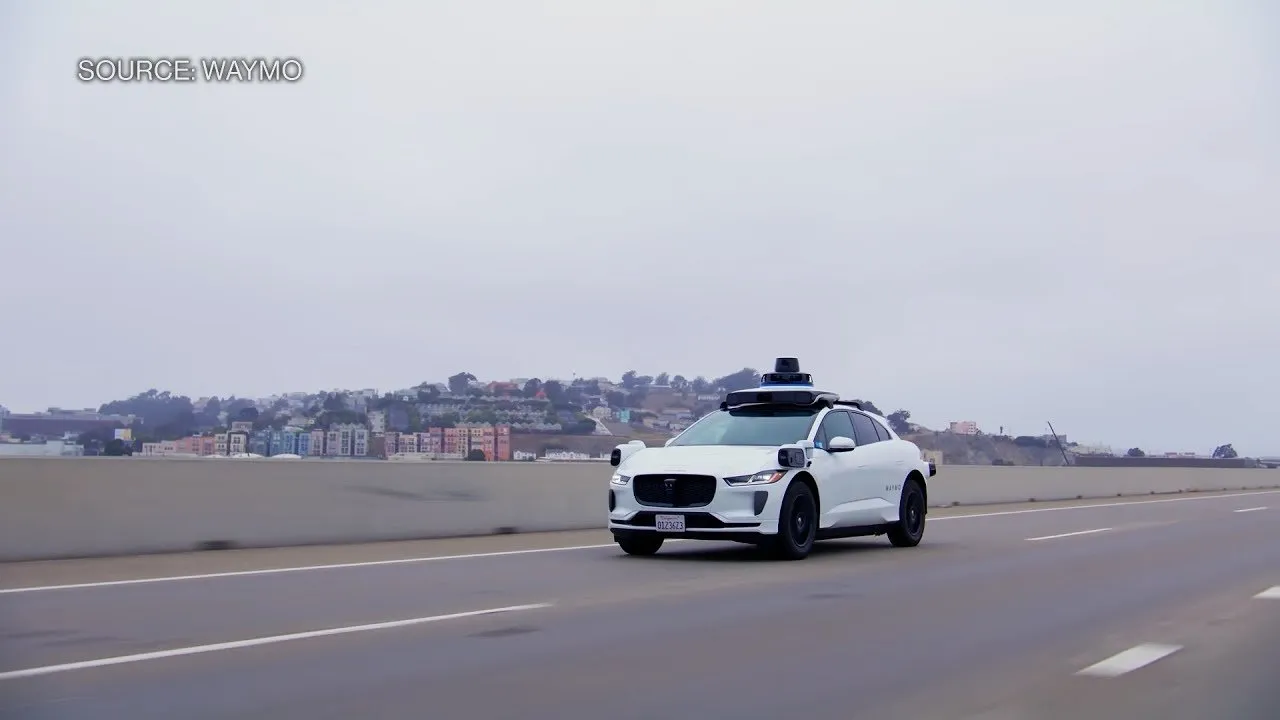
The company is currently operating a 24/7 service across six markets, delivering 400,000 paid rides weekly. The immediate goal is to more than double that volume within the next 18 to 24 months. To support this growth, Waymo is transitioning its fleet, moving from its current Jaguar I-PACE electric vehicles to the upcoming Zeekr platform and Hyundai Ioniq 5s, a move designed to lower unit costs and improve ride economics.
The Safety Case vs. Regulatory Hurdles
As Waymo expands, it faces the dual challenge of proving safety to the public while navigating a fragmented regulatory landscape. Mawakana emphasized that the company’s "North Star" remains its safety record. Citing internal data, she noted that over the course of 127 million miles, Waymo vehicles demonstrated an 82% reduction in airbag deployments and 90% fewer serious injury-causing crashes compared to human benchmarks.
However, recent incidents, including a collision with a pedestrian in Santa Monica and interactions with stationary school buses, have drawn scrutiny from the National Transportation Safety Board (NTSB). Mawakana addressed these issues directly, stating that Waymo welcomes the investigations as an opportunity to demonstrate the system's "superhuman" capabilities.
"We detected her... We hard braked and we made contact... at six miles an hour. And we also determined in our human equivalent model that a human would not have been able to perform as our super human driver performed. This is an example, we believe, of exactly why we do what we do."
Regarding technology, Mawakana defended Waymo’s use of a multi-sensor suite—incorporating LiDAR, radar, and cameras—contrasting it with the vision-only approach favored by competitors like Tesla. She argued that redundancy is non-negotiable for removing human supervisors safely.
Breaking Into New Markets
The regulatory environment varies drastically by region. In New York City, Waymo is working to overcome specific hurdles regarding human operator requirements. While the company has received permits for testing with supervision, fully driverless commercial operations require further regulatory shifts at the state level. Mawakana expressed optimism about becoming the first company to launch in New York, despite the complexities of the market.
Conversely, international markets appear more immediately welcoming. In London, Mawakana cited a "forward-leaning" regulatory framework interested in reducing road deaths. In Tokyo, Waymo is partnering with local entities to navigate the cultural and logistical nuances of the Japanese market, where an aging population has created a demand for new transportation solutions.
What's Next: The Path to 2026
The next two years are defined by what Mawakana calls "execution, execution, execution." The roadmap includes finalizing the rollout in the 20 targeted cities and achieving the milestone of one million paid trips per week. Success will be measured not just by ride volume, but by maintaining the company's safety culture during rapid expansion.
Simultaneously, Waymo continues to advocate for a unified federal framework for autonomous vehicles in the United States. Mawakana argues that the current patchwork of state-by-state regulations threatens to slow American innovation and cede global leadership in the sector.
"By the end of 2026, we will be doing over 1 million trips per week... We only talk about paid trips. And so we will be doing over 1 million paid trips per week by the end of this year. And that's the measurement of success in the near term."