Table of Contents
Warner Bros. Discovery has rejected the latest acquisition proposal involving Paramount, citing concerns regarding the deal’s structure and the significant debt load associated with the transaction. The breakdown in negotiations highlights a fundamental industry disagreement over the valuation of legacy cable assets as media giants struggle to balance traditional revenue streams with the imperatives of the streaming era.
Key Points
- Valuation Gap: The rejection stems from a disconnect between how investors and suitors value declining cable networks versus their cash-flow potential.
- Strategic Risks: Industry experts warn that prolonged M&A negotiations distract legacy studios from innovating against agile tech competitors and the creator economy.
- Future Focus: The next phase of media evolution relies on shifting from discrete AI projects to foundational AI ecosystems that drive hyper-personalization.
The Cable Conundrum and Debt Concerns
The core friction point in the negotiations revolves for the valuation of traditional broadcast and cable networks. While the Warner Bros. Discovery board expressed reservations about the debt load inherent in the Paramount deal, the broader issue remains the divergence in asset valuation.
According to market analysis, there is a split in perspective: Wall Street investors often argue that legacy networks hold more residual value than current offers reflect, while suitors like Skydance prioritize streaming potential, viewing legacy assets as depreciating. This creates a difficult valuation environment where "cash cow" channels must be weighed against a rapidly shifting advertising ecosystem that favors digital platforms.
The Distraction of Consolidation
Beyond the financials, analysts point to a significant operational risk inherent in large-scale media mergers: the loss of focus on innovation. While legacy studios navigate complex regulatory discussions and internal restructuring, the broader entertainment ecosystem—dominated by social media and the creator economy—continues to evolve rapidly.
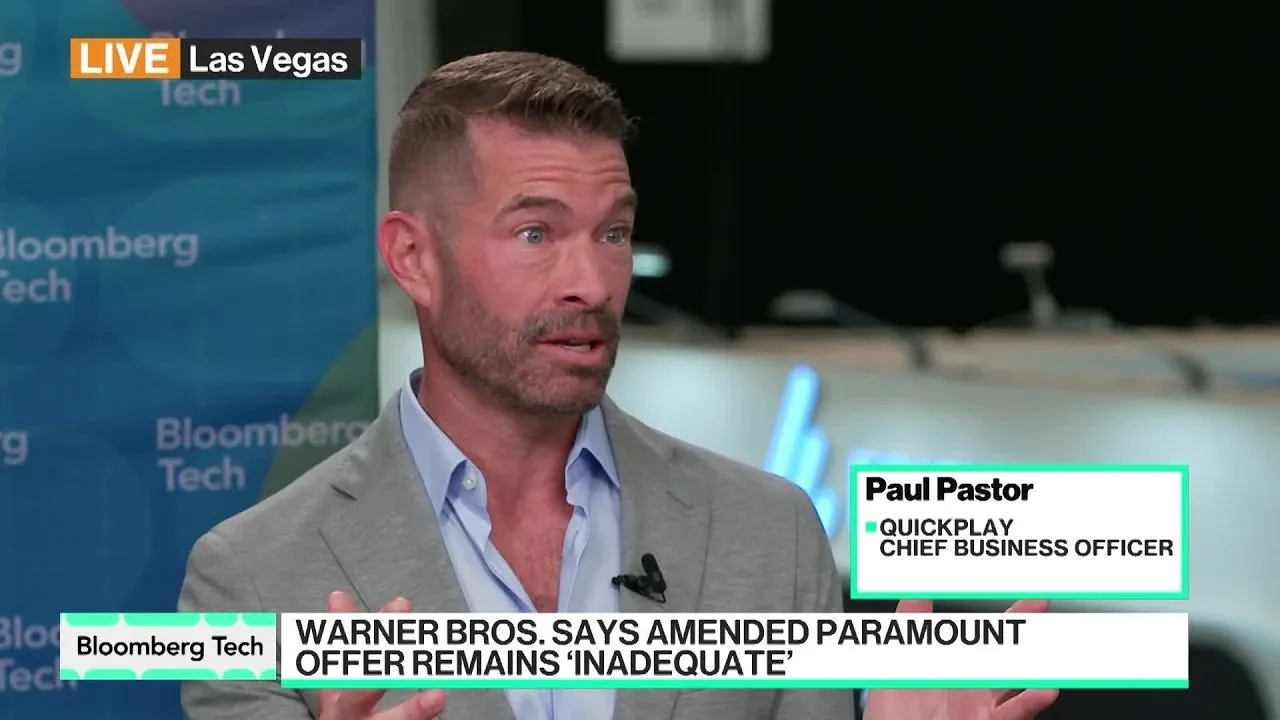
"This is the biggest risk of any big transaction... everyone internally thinks about what is my role in this transition and no one's focused on the fact that they're competing with an ecosystem that is evolving around them. If you're just focused on how do we put these two companies together versus the competition that is outpacing you with tech... you're going to be a lot further behind."
The competitive landscape has shifted significantly, with social media platforms now claiming a dominant share of both viewership and advertising dollars. M&A activity that stalls operational progress risks leaving traditional media companies unable to catch up to tech-first competitors like YouTube or Netflix, the latter of which continues to lead the industry in algorithmic personalization.
The Role of AI and User Experience
Looking ahead, the focus for media technology providers like Quickplay is shifting toward integrating Artificial Intelligence as a foundational element of the streaming stack. The industry is moving away from discrete experiments toward comprehensive AI ecosystems designed to solve retention and discovery problems.
Future consumer experiences will likely move away from immediate "paywalls" toward a model that uses short-form content as a discovery tool. By analyzing user interactions with short clips, platforms can generate a "cold start" personalization strategy, effectively customizing the viewing experience before a user commits to a subscription.
As 2026 approaches, the industry anticipates a major pivot where AI not only creates content efficiencies but dictates the entire architecture of viewer engagement, moving from simple video delivery to hyper-personalized, data-driven media fabrics.