Table of Contents
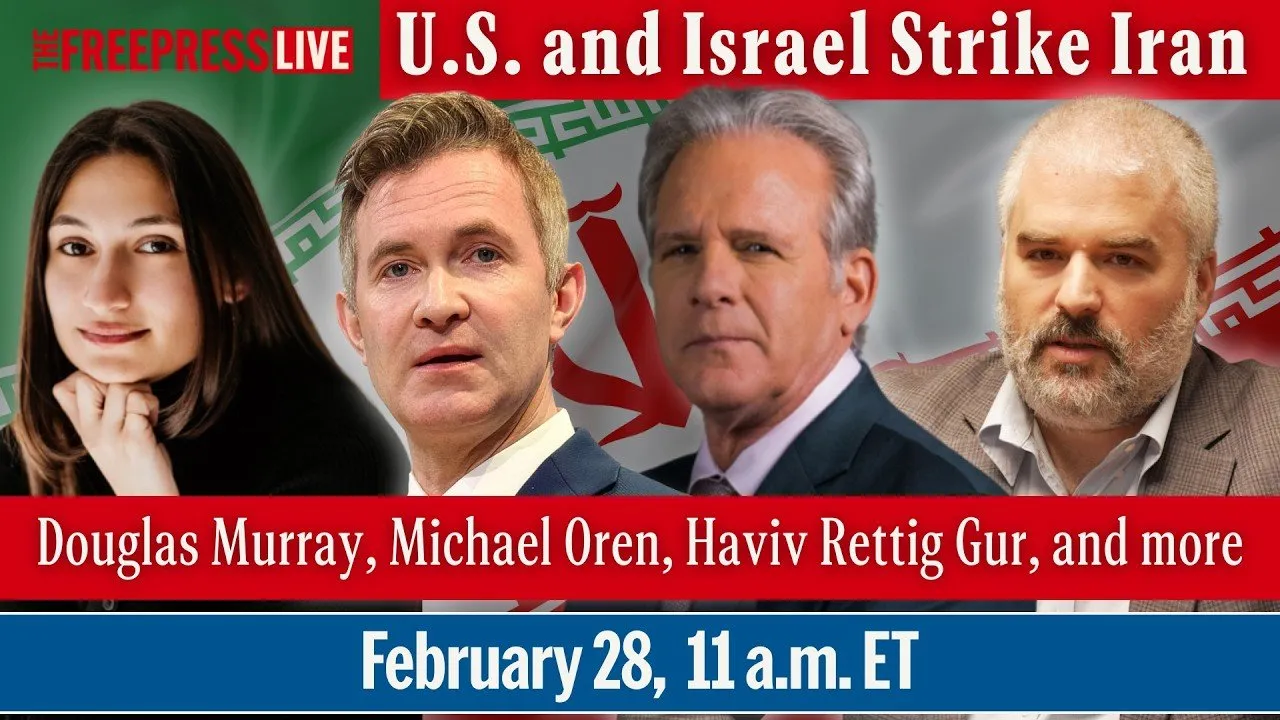
Overnight, the geopolitical landscape of the Middle East underwent a seismic shift as the United States and Israel launched Operation Epic Fury. This joint military campaign, characterized by precision air strikes against high-level military installations and regime infrastructure across Iran, marks the most significant escalation in the region in decades. With reports circulating regarding the potential decapitation of the Islamic Republic’s leadership—including unconfirmed rumors concerning Supreme Leader Ali Khamenei—the operation signals a fundamental departure from previous American strategies of containment or nation-building. Instead, the current administration appears to be betting on a high-stakes gamble: breaking the regime’s back from the air while calling upon the Iranian people to seize their own destiny.
Key Takeaways
- A Shift to Decapitation: Unlike the 2003 invasion of Iraq, this operation focuses on "decapitating" leadership and degrading military assets without committing ground troops for an occupation.
- The End of Diplomacy: The strikes followed a collapse of negotiations in Geneva, where Iranian officials reportedly refused to yield on uranium enrichment and ballistic missile programs.
- Regional Retaliation: Iran has responded with missile and drone strikes targeting US assets in Gulf states, including Bahrain, Kuwait, and Qatar, though many were intercepted.
- A Global Signal: Analysts argue the operation serves as a deterrent directed not just at Tehran, but at the "Axis of Authoritarians" including Moscow and Beijing.
- Internal Uprising: The success of the operation depends largely on whether the Iranian public, battered by economic crisis and regime brutality, rises to overthrow the remaining security apparatus.
From Diplomacy to Decapitation: The Genesis of Epic Fury
The transition from diplomatic maneuvering to kinetic action was swift but preceded by weeks of tension. Negotiators had presented Tehran with a set of non-negotiable demands: an end to all uranium enrichment, the handover of weapons-grade materials, and a total cessation of the ballistic missile program. When the Iranian regime refused to comply, the diplomatic "Maskirovka"—as historian Niall Ferguson described it—came to an abrupt end. The resulting military strikes targeted not just military hardware, but the very residences of high-ranking officials in the Islamic Revolutionary Guard Corps (IRGC).
The Goal of Regime Collapse
The strategic intent behind the strikes is twofold: to eliminate the threat of a nuclear-armed Iran and to create a power vacuum that local revolutionary forces can fill. By targeting command-and-control centers during daylight hours—a move that achieved significant tactical surprise—US and Israeli forces have sought to paralyze the regime’s ability to coordinate a domestic crackdown. The psychological impact of these strikes, particularly the breach of highly secretive leadership meetings, suggests a deep level of intelligence penetration within the Iranian state.
The United States has overwhelming military superiority... and it will come for you if you cross its red lines.
Breaking Without Buying: A New American Doctrine
A recurring theme among national security experts is the rejection of the "Pottery Barn" rule—the idea that "if you break it, you own it." In Iraq and Afghanistan, the United States committed hundreds of thousands of troops to stabilize and rebuild nations after toppling their governments. Operation Epic Fury operates under a different logic. By utilizing air power and precision technology that did not exist twenty years ago, the US seeks to dismantle the regime's capacity for repression without assuming the responsibility of governance.
The Risk of a Power Vacuum
Critics and observers alike note that while air power can destroy a government, it cannot easily build a new one. The gamble is that the Iranian people, who have demonstrated immense courage during the protests of early January, will step into the breach. However, without a formal occupation force, there is a risk of balkanization or a lingering insurgency led by IRGC remnants. The administration's stance is clear: the hour of freedom is in the hands of the Iranians themselves, and the US will not be picking winners or losers in the aftermath.
Regional Retaliation and the Gulf Response
Iran’s response to the initial wave of strikes was a barrage of missiles and drones aimed at US naval bases and regional allies. Bahrain, Kuwait, and the UAE all reported interceptions. Notably, the Iranian regime appears to be "losing friends and alienating people" by targeting fellow Islamic nations. Saudi Arabia, which had previously attempted to maintain a level of neutrality, has moved toward a more bellicose stance against Tehran following attacks on regional infrastructure.
Choke Points and Oil Markets
One of the most potent tools remaining in Tehran's arsenal is the ability to disrupt global energy supplies. Threats to close the Strait of Hormuz—a vital artery for global oil—remain a primary concern for economists. While the US Navy is prepared to keep these waterways open, any successful disruption could lead to a significant price spike, testing the domestic resolve of the American public and the global economy.
This is a war of no choice for the state of Israel.
The Domestic Front: Can the Iranian Street Prevail?
For a revolution to succeed, the "street" must overcome the "state." The IRGC and the Basij militia remain the regime’s primary tools of domestic terror. Experts argue that for the Iranian public to rise again, they must see that the security forces have been made "mincemeat." Decapitation strikes on leadership may provide the psychological opening necessary for mid-level defections within the regular army, which has historically been more aligned with the national interest than the revolutionary ideology.
Nationalism vs. Islamism
Contrary to fears that foreign strikes might cause a "rally around the flag" effect, many analysts believe the Iranian public is too disillusioned by decades of corruption and brutality to support the Mullers. The prevailing sentiment in the streets has shifted from reform to revolution. By framing the conflict as a liberation of the Iranian nation from a "theocratic colonizer," the opposition hopes to leverage nationalism as a unifying force against the remnants of the Islamic Republic.
The Global Signal: Beyond the Middle East
While the immediate theater is the Middle East, the audience for Operation Epic Fury is global. The conflict is seen as a message to Moscow and Beijing. By demonstrating "full-spectrum dominance," the United States aims to restore the deterrent credibility that many argue was eroded over the previous decade. There is, however, a strategic concern regarding the "Three-Body Problem": the US must manage crises in Europe, the Middle East, and the Far East simultaneously.
This is a regime that is fundamentally, foundationally anti-American.
The China Factor
Some scholars warn that the distraction of a wider Middle Eastern war could provide an opening for China to move against Taiwan. As the US focuses its primary military and intelligence resources on Iran, the global balance of power remains precarious. The challenge for Washington is to conclude the Iranian campaign swiftly enough to refocus on the Indo-Pacific theater before the "window of opportunity" for other adversaries opens further.
Conclusion
Operation Epic Fury represents a massive gamble on the resilience of the Iranian people and the efficacy of precision air power. By removing the "head of the snake" in Tehran, the US and Israel have initiated a process that cannot easily be reversed. Whether this leads to a stable, secular Iran or a period of prolonged regional chaos depends on the events of the coming days. The era of containment has ended; the era of consequences has begun. As the fog of war clears, the world watches to see if the Iranian people will indeed seize what may be their only chance for freedom in a generation.