Table of Contents
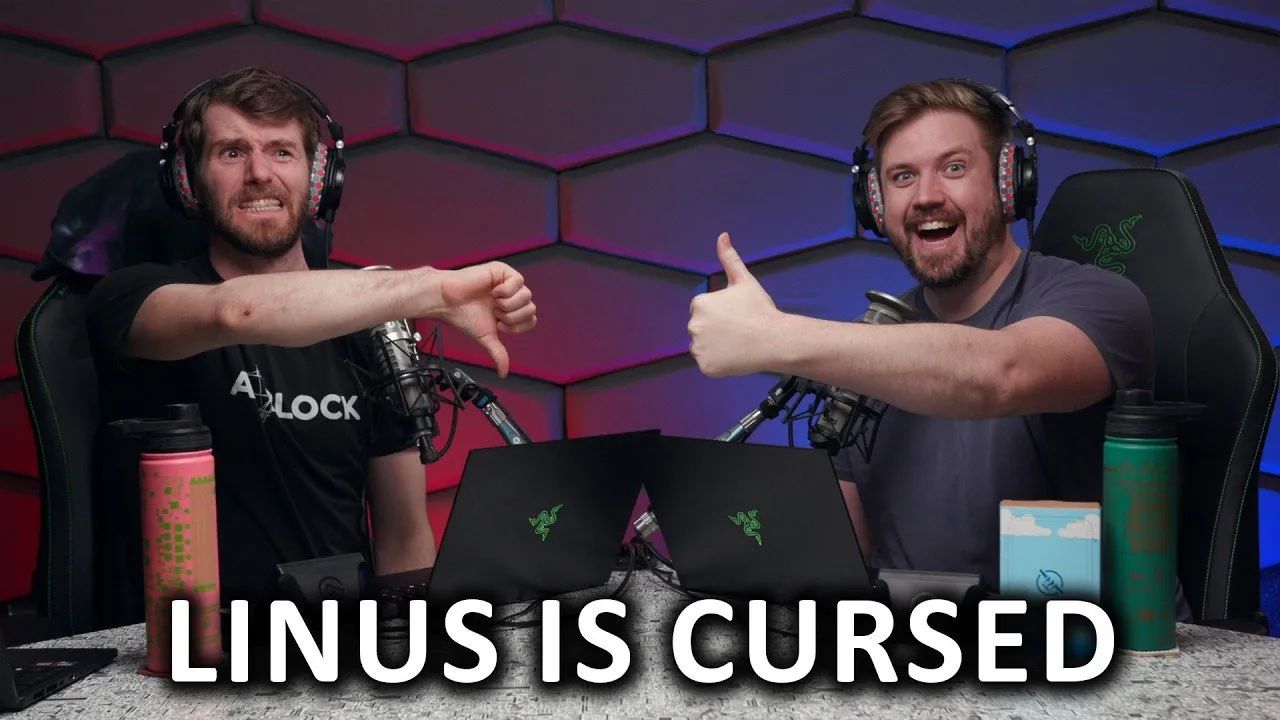
During the February 27, 2026, broadcast of The WAN Show, hosts Linus Sebastian and Luke Lafreniere detailed the early technical hurdles of the "Linux Challenge 2026," a month-long migration to open-source operating systems that has already exposed deep-seated friction in the gaming ecosystem. The discussion expanded into a critical analysis of Donut Labs' solid-state battery claims, the massive regulatory risks of a $111 billion Paramount-Warner Bros. Discovery merger, and the escalating role of AI in workplace monitoring. As tech enthusiasts and industry insiders look toward the mid-2020s landscape, these developments signal a period of intense consolidation and a growing divide between marketing claims and user reality.
Key Points
- Linus Sebastian reported significant stability issues with Pop!_OS during gaming sessions, sparking a debate on the "delusion" of Linux advocates regarding ease of use for mainstream users.
- Industry experts have raised alarms over Donut Labs' alleged solid-state battery breakthrough, suggesting the hardware may lack the destructive testing necessary to verify its core chemistry.
- A proposed Paramount takeover of Warner Bros. Discovery, backed by Larry Ellison, faces a $7 billion termination fee and intense scrutiny from the U.S. Department of Justice.
- New data suggests a negative correlation between in-class digital device usage and academic performance, fueling a broader discussion on the disappearance of "third places" and physical social interaction.
- Burger King has begun piloting "Patty," an OpenAI-powered assistant that monitors employee friendliness and meal preparation efficiency via real-time headset tracking.
The Linux Challenge 2026: A Struggle with Stability
The latest iteration of the Linux Challenge has seen Linus Sebastian and Luke Lafreniere adopting different distributions—Pop!_OS and CachyOS (an Arch-based distro), respectively. While the initial installation process appeared more streamlined than in previous years, Sebastian encountered immediate, game-breaking bugs in titles historically considered "native" or well-supported on Linux, such as Valve’s Left 4 Dead 2.
The primary point of contention centered on the discrepancy between community-reported status and actual user experience. Sebastian noted that while ProtonDB often lists games as "Working Perfectly Out of the Box," the reality frequently involves complex launch arguments and forced Vulkan implementations. This friction, he argues, remains the single greatest barrier to widespread adoption of the Linux desktop for gaming.
The "Tinkering" Debate
The hosts addressed a cultural divide within the Linux community, where veteran users often dismiss necessary troubleshooting as "not tinkering." Sebastian expressed frustration with users who claim a system works perfectly while simultaneously providing a list of terminal commands required to make it functional.
"When you are engaging with this level of delusion, I feel like I'm made to be the bad guy here. I almost feel like I'm being gaslit. I don't know where their line is, but in my opinion, if you want a year of the Linux desktop, you should be able to click play in Steam and it should just work." — Linus Sebastian, CEO of Linus Media Group.
While Lafreniere reported a smoother experience with CachyOS, he acknowledged that the lack of official support for critical productivity tools like Microsoft Teams continues to hinder professional workflows. The duo emphasized that for most consumers, the operating system is a tool, not a hobby, and the "fragmentation" of Linux flavors remains a significant hurdle for hardware optimization.
Solid-State Batteries and Regulatory Roadblocks
In the energy sector, Donut Labs has claimed a breakthrough in solid-state battery technology, a feat long considered the "Holy Grail" of electric vehicle (EV) development. However, Sebastian and Lafreniere highlighted skepticism from the scientific community, specifically citing analysis from Xeroth, a PhD in electric propulsion. Critics point out that VTT Technical Research Center of Finland, while testing the batteries, was not tasked with verifying the internal solid-state chemistry through destructive testing.
The skepticism is fueled by voltage curves and fast-charging graphs that closely resemble high-performance lithium-ion cells rather than true solid-state hardware. If Donut Labs is unable to provide verifiable proof of their claims, it could join a long list of battery startups that have failed to move past the "credibility washing" phase of development.
Media Consolidation: The Paramount Mega-Merger
The media landscape is facing another seismic shift as Paramount moves to acquire Warner Bros. Discovery. Following Netflix's withdrawal from the bidding war, Paramount’s $111 billion offer—backed by Oracle founder Larry Ellison—stands as the primary path forward. The deal would unite CNN, HBO Max, Nickelodeon, and CBS under a single corporate umbrella, a prospect that has already triggered investigations from the California Department of Justice.
The merger raises concerns regarding a "streaming monopoly" that could prove more restrictive and expensive for consumers than traditional cable packages. With a $7 billion termination fee on the line, the success of the deal rests on whether regulators believe such massive consolidation is in the public interest.
The AI Workplace and the Death of "Third Places"
The WAN Show hosts also touched upon a disturbing trend in retail and fast food: the implementation of AI to monitor employee social cues. Burger King’s "Patty" system represents a new level of "micromanagement via monitoring," where an AI listens to every interaction to ensure employees use approved phrases like "please" and "thank you."
"The more of this monitoring-level of supervision we have, the more you make your way into a complete breach of autonomy and privacy. We are circling the drain here. It is hard to be motivated at work when you are being spied on by an AI in your ear." — Linus Sebastian
This rise in digital monitoring coincides with the decline of "third places"—physical locations outside of home and work where people can socialize without a high financial barrier. Sebastian proposed the concept of "Third Place Inc," a theoretical business model focusing on "casual coexistence" where members could engage in "parallel play," such as listening to music or playing tabletop games, while checking their phones at the door to combat "doomscrolling."
Academic Performance and the Screen Time Crisis
Citing research from neuroscientist Jared Cooney Horvath, the hosts discussed the negative correlation between the $30 billion spent on classroom technology and declining standardized test scores for Gen Z. Data suggests that increased screen time in schools may be hindering rather than helping student performance in core subjects like math and science. The discussion highlighted a growing movement to return to analog teaching methods as the "digital promise" of the early 21st century faces a statistical reckoning.
Looking Ahead
As the Linux Challenge continues, the tech world awaits the release of the Switch 2 and further updates on Apple’s adoption of RCS encryption. Meanwhile, the legal battle between Reddit and the UK’s Information Commissioner’s Office (ICO) over age verification will likely set a global precedent for online privacy. For Sebastian and Lafreniere, the coming weeks will test whether modern Linux distributions can truly survive a high-pressure environment or if Windows remains the inevitable destination for the mainstream gamer.