Table of Contents
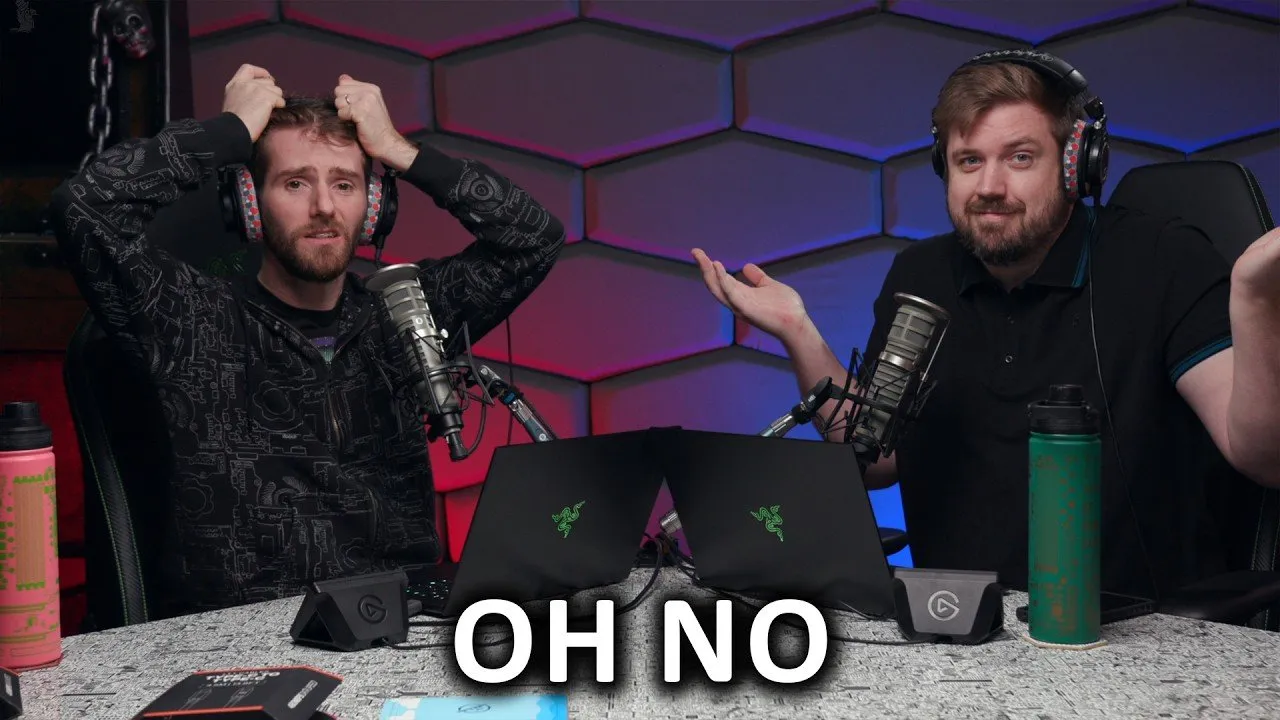
In a week marked by significant shifts in digital consumer rights and the creator economy, tech industry observers are analyzing a surge in European legislative support for game preservation alongside sobering data regarding online income disparity. During the latest broadcast of The WAN Show, hosts Linus Sebastian and Luke Lafreniere dissected the success of the "Stop Killing Games" petition, the implications of new cybersecurity breaches at major retailers, and the complex logistics behind launching high-specification hardware. The discussion highlighted a growing tension between consumer protection mechanisms and the operational realities of modern tech business.
Key Points
- Legislative Milestone: The "Stop Killing Games" petition has verified 1.3 million signatures, surpassing the threshold required for formal consideration by European Union politicians.
- Creator Economy Reality: New data suggests severe income stratification on platforms like OnlyFans, Twitch, and Steam, where being in the "top 1%" often equates to middle-class wages rather than immense wealth.
- Cybersecurity Breach: A server-side card skimmer was discovered on the Canada Computers checkout page, potentially compromising customer data for weeks or months.
- Hardware Supply Chain: Linus Media Group’s launch of "True Spec" cables faced immediate stock shortages, highlighting the difficulties of inventory forecasting for non-standard "tweener" SKUs.
- Market Shifts: Tesla announced the discontinuation of Model S and Model X vehicles by Q2 2026 to focus on robotics, while Ubisoft faces impending strikes in France.
The Reality of the Creator Economy
Recent viral discussions regarding income distribution on digital platforms have challenged the public perception of online fame. Data analyzed during the show reveals an extreme concentration of wealth at the very top of the creator pyramid, with a steep drop-off for even high-performing users.
On platforms like OnlyFans, creators in the top 1% are earning approximately $4 million annually, but the disparity widens rapidly within that percentile. Dropping to the top 2-3% yields a comfortable living wage, but falling outside the top 10% often results in negligible income. Similar trends were identified on Steam, where over 50% of games never gross more than $1,000, and Spotify, where artists in the top 20% may earn less than $500 annually.
Sebastian contextualized these statistics by comparing digital creators to traditional professions, noting that the "1%" in the real world often includes successful professionals like dentists or surgeons, rather than just ultra-wealthy tycoons.
"When you think of a top 1%... you might think you're balling. But if you go from the top 1% to the top 0.1%, the variance between those is similar to the top 1% to the top 50%. The extremes at the edge of the bell curve are insane."
On Twitch, a streamer with merely 20 concurrent viewers ranks in the top 1% of the platform, highlighting the massive oversaturation of the market and the difficulty of achieving financial viability solely through content creation.
Consumer Rights and "Stop Killing Games"
A major victory for digital consumer rights was confirmed this week as the "Stop Killing Games" initiative verified 1.3 million of its 1.4 million collected signatures. This volume places the petition well above the minimum requirement to be formally added to the European Commission's agenda. The initiative aims to legally require developers to maintain playable states for video games after official support ends, preventing the total erasure of purchased digital goods.
While the movement has gained legislative traction in Europe, consumer advocates remain wary of retail "dark patterns" in North America. Sebastian criticized major retailers, specifically citing Best Buy, for utilizing "Compare At" pricing models. These pricing strategies often reference theoretical future prices or third-party marketplace listings rather than established historical pricing, creating a misleading sense of value for the consumer.
Cybersecurity and Privacy Concerns
Security remains a critical concern following the discovery of a malicious script on the Canada Computers website. Unlike browser-based attacks, this incident appears to involve a server-side compromise where a card skimmer siphoned customer names, addresses, and credit card details in real-time. The breach, which may have been active since early December, underscores the vulnerabilities inherent in regional e-commerce infrastructure.
Simultaneously, privacy advocates are scrutinizing Microsoft’s confirmation that it handed over BitLocker encryption keys to the FBI during a criminal investigation. While Microsoft maintains this was a lawful data request compliant with their terms of service, the incident raises questions regarding the efficacy of cloud-backed encryption keys. If keys are automatically backed up to corporate servers, the privacy protection offered by BitLocker is effectively nullified against government subpoenas.
Supply Chain Logistics and Product Launches
In hardware news, Linus Media Group launched their line of "True Spec" USB cables, providing a case study in the complexities of manufacturing and inventory management. The launch aimed to disrupt the market by offering "tweener" sizes—non-standard lengths like 4-foot or 5-foot cables—to optimize desk setups. However, consumer demand for these intermediate sizes outstripped supply within hours.
The company utilized industrial CT scanning via Lumafield to verify the structural integrity and shielding of the cables, attempting to justify a higher price point through demonstrable engineering quality. The immediate sell-out of specific lengths highlights the challenge small-to-medium businesses face when forecasting demand for unproven market categories.
"We didn't know what the mix would look like... Was the entire industry right that everyone wants a 1-meter or 2-meter cable? It turns out everything in the middle, the 'no-in-betweener,' is just gone."
Implications and Future Outlook
The convergence of these stories suggests a tightening of the digital landscape. As the EU moves to regulate digital ownership through the "Stop Killing Games" initiative, corporations are simultaneously seeking new revenue avenues, from subscription-based hardware rentals (such as LG and HP’s new programs) to aggressive anti-adblock measures deployed by YouTube.
Furthermore, geopolitical instability is impacting global connectivity, with reports of a "digital isolation" strategy in Iran involving deep packet inspection and whitelisting, severing international internet access. As legislative bodies and corporations grapple for control over digital infrastructure, consumers are increasingly caught between seeking convenience and preserving their digital rights and privacy.