Table of Contents
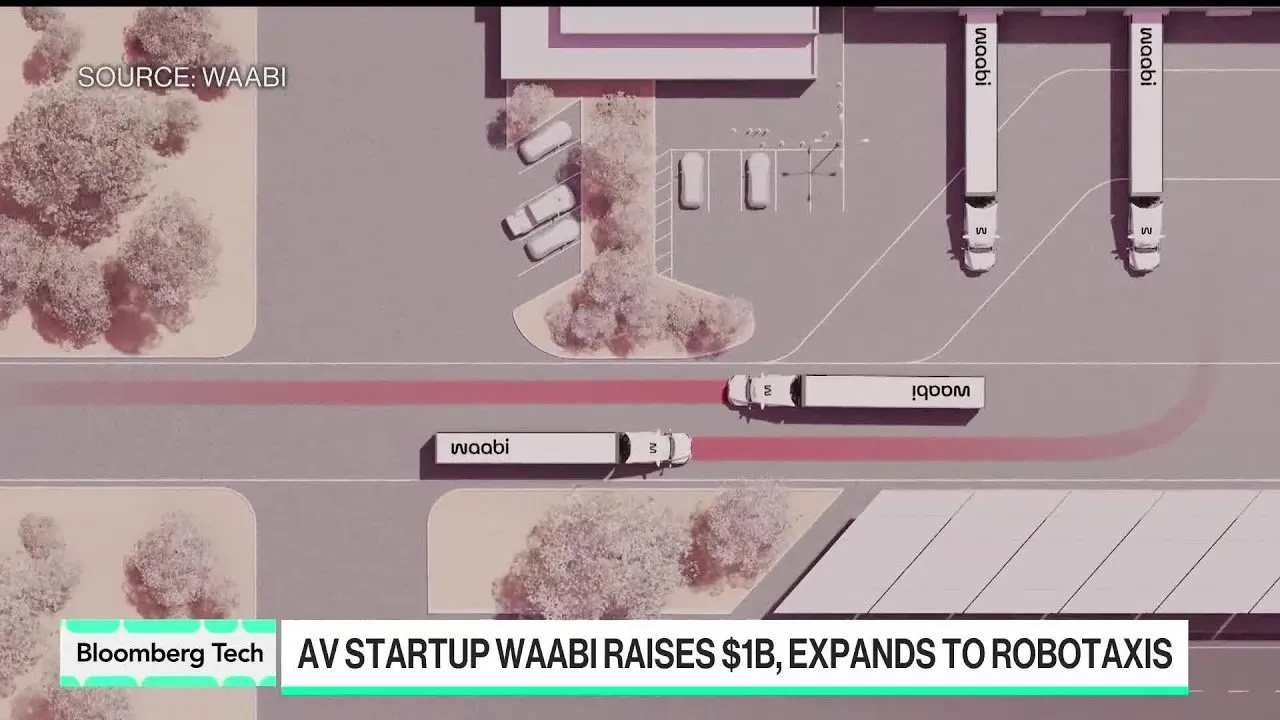
Waabi, the autonomous driving technology company led by AI pioneer Raquel Urtasun, has announced a major expansion into the robotaxi market supported by a strategic partnership with Uber. Leveraging its proprietary "Physical AI" technology, the Toronto-based firm intends to deploy a unified platform capable of operating both heavy-duty autonomous trucks and passenger vehicles, marking a significant departure from industry norms where these verticals are typically siloed.
Key Points
- Strategic Expansion: Waabi is moving beyond trucking into the robotaxi sector, backed by investment from Uber.
- Unified Tech Stack: The company utilizes a single "Physical AI" platform designed to operate both commercial trucks and passenger vehicles.
- Performance Incentives: Access to Uber’s capital is contingent on Waabi hitting specific technical and commercial milestones.
- Market Focus: Commercialization will prioritize the United States due to its more advanced regulatory environment compared to Canada.
The "Physical AI" Approach to Scaling
While most autonomous vehicle companies develop separate technology stacks for trucking and passenger transport, Waabi claims to have cracked the code for a unified system. CEO Raquel Urtasun describes this as a "physical revolution," asserting that their generative AI approach allows for a highly capital-efficient go-to-market strategy.
According to Urtasun, the core differentiator is the company's ability to adapt a single software architecture to different vehicle form factors. This flexibility allows Waabi to leverage advancements made in their trucking division to rapidly deploy capabilities in the robotaxi space.
"What makes us very unique is the fact that we have next-generation technology... a platform that for the first time in the industry is going to be able to drive both robotaxis as well as driving trucks. We are very advanced in terms of both the technology as well as commercialization in trucking, and now we're going to enter Robotaxi really, really quickly."
Partnership with Uber and Commercial Milestones
The expansion is fueled by a new funding round and a commercial partnership with Uber. While specific financial terms regarding the tranche release were not fully disclosed in the interview, Urtasun acknowledged that the capital injection from Uber is tied to performance metrics. However, she characterized these requirements as "simple milestones" that the company is well-positioned to achieve.
A key factor in this confidence is the current state of Waabi’s technology. Unlike systems designed exclusively for highway driving, Waabi’s software is already capable of navigating general surface streets—a critical requirement for urban robotaxi operations.
Regulatory Landscape: US vs. Canada
despite being a Canadian company rooted in the Toronto tech ecosystem, Waabi’s immediate commercial focus remains on the United States. When asked about the comparative regulatory environments, Urtasun was clear that the U.S. offers a more viable path to market adoption right now.
"The U.S. is definitely ahead of the Canadian market in terms of regulatory [steps] as well as adoption. Canada has to do quite a bit to catch up... For us, our first market has been over the last couple of years for trucking really the U.S., just [because it is] a much larger market."
Talent and Future Outlook
The company also addressed the competitive landscape for artificial intelligence talent. Despite reports of escalating compensation wars for top-tier engineers, Waabi reports high retention rates and strong recruitment without paying excessive premiums. Urtasun attributes this to the engineering appeal of working on a "once in a generation" product that utilizes generative AI to solve real-world physical problems.
Looking ahead, Waabi plans to continue aggressively hiring while executing its dual-market strategy. By securing capital from a global mix of investors—spanning Silicon Valley, Canada, Europe, and the Middle East—the company aims to validate its thesis that a generative, physically-aware AI is the fastest route to scalable autonomous driving.