Table of Contents
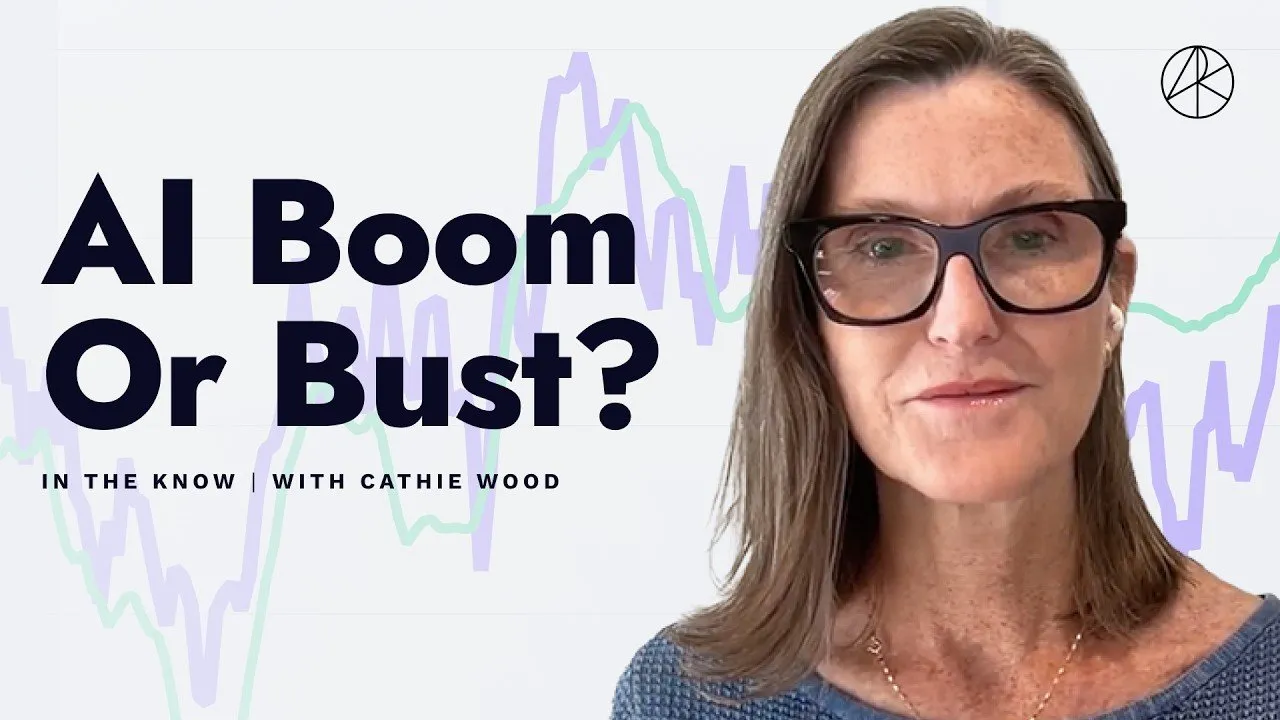
Recent market turbulence has left many investors unsettled, yet distinct patterns are emerging from the noise. While algorithmic trading drives much of the immediate volatility, a deeper look reveals a disconnect between automated reactions and the fundamental shifts occurring in the global economy. We are currently witnessing the early stages of a technological transformation that parallels—and potentially exceeds—the internet revolution of the 1990s. By focusing on high-conviction research rather than reactionary movements, we can identify where the true value is accumulating during this period of disruption.
Key Takeaways
- Volatility as Opportunity: Much of the current market instability is algorithmically generated, creating entry points for investors focused on long-term structural change rather than short-term price action.
- The Deflationary AI Boom: Artificial Intelligence is driving massive productivity gains, which acts as a powerful anti-inflationary force, potentially leading the U.S. budget into a surplus by the end of the decade.
- Inflation Misconceptions: Official statistics likely overstate inflation; real-time data suggests we are approaching zero or negative inflation due to falling housing costs and supply chain normalization.
- The "Wall of Worry": Unlike the speculative excess of the Dot-com bubble, today's market is climbing a "wall of worry," suggesting a healthier, more sustainable bull market environment.
- Crypto divergence: While Bitcoin has faced pressure from risk-off selling, the fundamental thesis remains intact, particularly as developers focus on building high-throughput infrastructure for an AI-driven future.
The AI Revolution: Climbing a Wall of Worry
The volatility we see today stands in stark contrast to the speculative mania of the late 1990s. During the Tech and Telecom bubble, companies could announce massive spending plans with zero profitability and see their stock prices soar. Today, the environment is far more disciplined. When major technology firms announce increased capital expenditures, the market often reacts with skepticism rather than exuberance. This skepticism creates a "wall of worry," which is historically a hallmark of a healthy, durable bull market. Investors are demanding tangible results and clear trajectories for free cash flow. This scrutiny forces companies to be efficient, but it also creates a disconnect for those looking at the bigger picture.
"Most of this volatility is algorithmically generated. Algorithms are not doing the research that we're doing because this is the biggest opportunity of our lifetime."
We are moving toward agentic AI—systems that don't just chat but execute complex tasks autonomously. This shift suggests that traditional SaaS (Software as a Service) models, which often rely on "one-size-fits-all" seats, may lose market share to customizable AI platforms. The market creates volatility when it struggles to price these shifts, but for research-driven investors, this consolidation into high-conviction names offers a significant advantage.
Macroeconomic Shifts: The Path to Surplus
There is a prevailing narrative that the United States is trapped in a cycle of endless deficits and debt. However, the productivity gains unleashed by AI and robotics paint a different picture. We project that real global GDP growth could accelerate to 7-8% by the end of this decade. If this materialized, revenue growth combined with cost efficiencies could shrink the federal deficit dramatically, potentially leading to a budget surplus by the late 2020s.
The Productivity Paradox
Economists often fear that rapid growth leads to inflation. This view, deeply rooted in the inflationary scars of the 1970s, ignores the deflationary nature of technology. True productivity is doing more with less. Take Palantir as a prime example: they recently reported U.S. commercial revenue growth of 142%, achieved while their sales force actually shrank. This is a profound decoupling of revenue from labor costs. When output per hour increases this dramatically, unit labor costs are contained, and inflation is naturally suppressed.
Rethinking the Deficits
In the 1970s and 80s, bond vigilantes obsessed over the "twin deficits"—the budget deficit and the trade deficit. Today, the trade deficit is often misunderstood. A trade deficit in goods and services is mathematically balanced by a capital surplus. The U.S. remains a magnet for global capital due to its business-friendly environment and leadership in innovation. Consequently, we anticipate the U.S. dollar will strengthen, further acting as a check against inflation.
The Truth About Inflation and Interest Rates
Official government statistics were designed for the industrial age and struggle to capture the nuances of the digital and AI era. This lag creates a distorted view of the economy, particularly regarding inflation.
Housing and Real-Time Data
While the Consumer Price Index (CPI) shows lingering inflation, real-time indicators tell a deflationary story. Existing home price inflation has dropped below 1%, and rents are falling in many areas. Because shelter costs make up a massive portion of the CPI and are reported with a significant lag, official print is overstating actual inflation.
The Monetary Policy Disconnect
The yield curve remains inverted at the short end, signaling that Federal Reserve policy is still restrictive. The Fed operates on the belief that growth causes inflation. However, if growth is driven by productivity (supply-side expansion) rather than just demand, it puts downward pressure on prices.
"If we have negative inflation and I think we will... and real GDP growth is growing rapidly, in this Fed that would cause a tightening and that would be a bad mistake."
We are likely entering a period where the divergence between reported inflation and true inflation (which is likely near 0% or negative) becomes undeniable. This should eventually force a normalization of interest rates, providing a tailwind for innovation equities.
Consumer Sentiment vs. The Entrepreneurial Boom
There is a palpable disconnect between GDP numbers and consumer sentiment. The consumer is unhappy, largely due to the affordability crisis in housing and the cumulative effect of past food price inflation. Delinquency rates on auto loans have surpassed 2008 levels, indicating significant stress among lower-income demographics. However, a bright spot is emerging in the labor market, specifically among the youth. The unemployment rate for the 16-24 demographic has dropped below 10%, defying the broader trend of cooling labor markets. This is likely driven by the democratization of entrepreneurship via AI. Younger generations are leveraging AI tools to build businesses, consult, and generate income outside of traditional corporate structures. We are witnessing an explosion of entrepreneurial activity that government statistics—which rely on traditional payroll surveys—are ill-equipped to measure. This shift suggests that while traditional employment may face headwinds, the "gig economy" is evolving into a more sophisticated, high-productivity sector.
Crypto Assets: Building Through the Bear Market
In the realm of digital assets, we see a divergence between Gold and Bitcoin. Gold has reached all-time highs, acting as a traditional safety valve. Bitcoin, conversely, has been caught in "risk-off" algorithmic selling baskets, behaving more like a high-beta tech stock than digital gold in the short term. Despite this price action, the fundamental network health of Bitcoin remains robust. The current correction has not broken the long-term uptrend established since 2017. More importantly, the development within the crypto ecosystem has not slowed.
The Rise of DeFi Infrastructure
While prices consolidate, builders are focusing on infrastructure capable of supporting an AI-driven economy. We are seeing a shift away from the limitations of current chains (like Ethereum’s 13 transactions per second) toward high-throughput networks. Projects like LayerZero represent a "back to the future" moment for DeFi, aiming to create seamless interoperability that can handle millions of transactions per second. This capacity is essential for "machine-to-machine" commerce, where AI agents will transact autonomously across the internet.
Conclusion
The current market environment is defined by a clash between backward-looking economic data and forward-looking technological reality. The fear in the market is palpable, but for the innovation investor, fear is preferable to euphoria. We are not in a bubble; we are in a period of high-stakes transformation. The convergence of AI, robotics, and blockchain technology is reshaping the cost structure of the global economy. While the transition creates volatility, the trajectory points toward a future of profound productivity gains and deflationary growth. The most dangerous move in this environment is to retreat to the sidelines based on flawed signals. The momentum of change is building, and the opportunity lies in staying on the right side of innovation.