Table of Contents
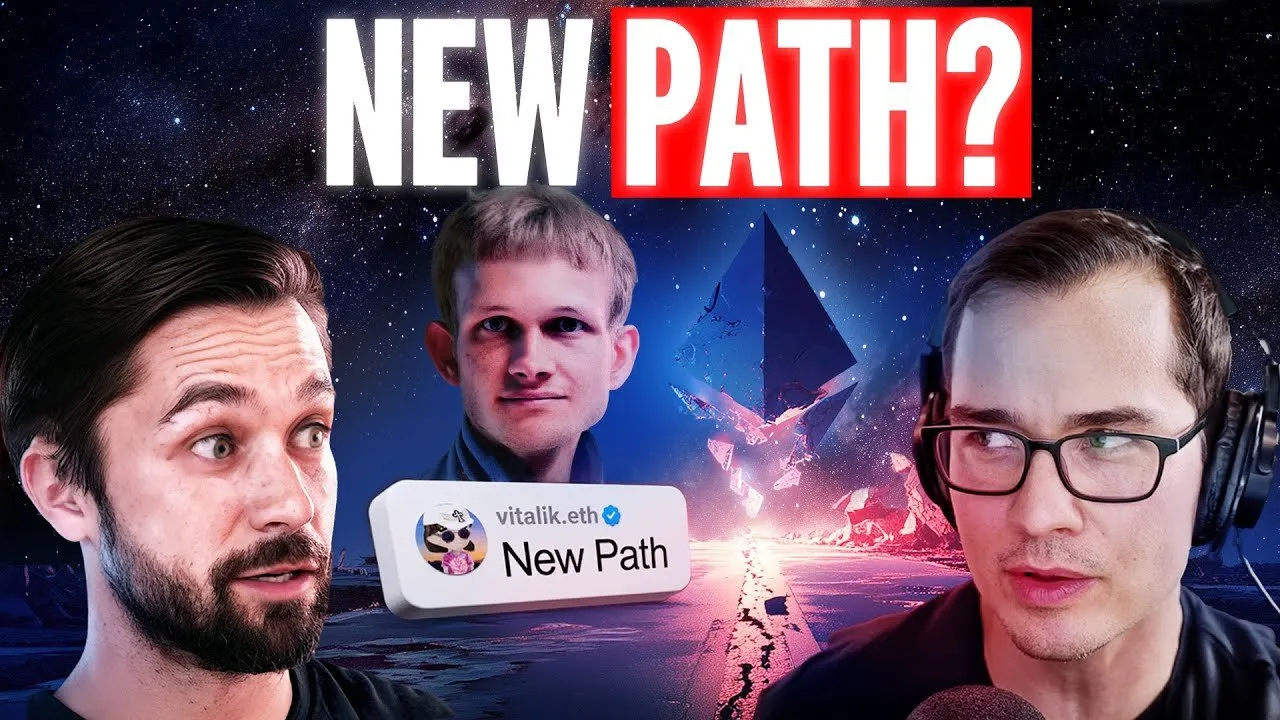
In the fast-moving world of cryptocurrency, a single statement from Ethereum co-founder Vitalik Buterin can signal a massive shift in industry direction. Recently, a pivotal conversation has emerged regarding the conclusion of the "rollup-centric roadmap"—a strategy that has guided Ethereum’s development since October 2020. While the use of rollups continues, the era of them being the singular center of Ethereum's scaling strategy appears to be closing.
This shift isn't merely technical; it represents a fundamental change in how the ecosystem views Layer 2s (L2s), liquidity, and the definition of Ethereum itself. As the industry grapples with the realities of fragmented liquidity and the complexities of "Stage 2" security, the narrative is evolving from blind optimism to pragmatic differentiation. Below, we dissect the end of the rollup-centric era and what lies ahead for the leading smart contract blockchain.
Key Takeaways
- The "Centric" Era is Over: While rollups remain part of the ecosystem, the 2020 vision of a purely rollup-centric roadmap has concluded due to slower-than-expected progress in security and interoperability.
- Fragmentation Killed the "Superchain" Dream: The expectation that all L2s would share liquidity and state (creating a unified Ethereum experience) failed to materialize, resulting in fragmented user experiences.
- L1 Scaling is Back: With the emergence of ZK-EVM technology, Ethereum Layer 1 is now projected to scale significantly on its own, reducing the absolute dependency on L2s for basic throughput.
- The End of "L2 = Ethereum": The community is moving away from the meme that Layer 2s are synonymous with Ethereum. Instead, they are viewed as an alliance of differentiated chains rather than direct extensions.
- Differentiation Over Equivalence: The new path favors L2s that offer unique features (like privacy or specific application logic) rather than simple EVM equivalence.
The Two Failures of the Original Vision
The pivot away from a strictly rollup-centric roadmap stems from two critical realizations regarding the progress of Layer 2 technology. In 2020, the assumption was that L2s would seamlessly extend Ethereum's block space while inheriting its full security and liquidity. By 2026, the reality has proven far more complex.
The Struggle for Stage 2 Security
The first core issue is the difficulty of reaching "Stage 2" rollups. A Stage 2 rollup is defined as a fully decentralized codebase extension of Ethereum, where the Layer 2 block space enjoys the "full faith and credit" of Ethereum’s security without reliance on training wheels or multisigs. The industry has found it exceptionally difficult to move the ecosystem to this final stage.
Most rollups have remained stuck in Stage 1, unable to fully inherit the trustless guarantees of the main chain. This delay undermines the original promise that L2s would simply be Ethereum, just faster.
The Failure of Interoperability
The second, and perhaps more damaging, failure lies in interoperability. The vision was a world of shared network effects—shared state and shared liquidity across all rollups. The goal was to abstract away the underlying chains so that the user experience felt like one unified Ethereum.
"This is the vision of roll-ups and scaling Ethereum block space... shared liquidity across all of these roll-ups... and it's not shared. It feels very fragmented."
Instead of a unified "Ethereum Alliance," the ecosystem fractured into a war of all against all. Without strong interoperability standards established early on, L2s became isolated islands of liquidity, competing rather than collaborating. This fragmentation broke the illusion that L2s were simply "branded shards" of Ethereum.
Redefining the Relationship: Are L2s Ethereum?
For years, a prevailing meme in the community was "Layer 2s are Ethereum." This was a powerful narrative tool used to keep economic activity and mindshare within the ecosystem. However, as the technical realities of fragmentation and security delays set in, this meme has been retired.
Vitalik’s recent communications suggest a move toward honesty regarding branding. If an L2 does not offer Ethereum-level guarantees or shared liquidity, it cannot claim to be Ethereum. This has led to a "laundering" of the Ethereum brand, where external projects utilized the network's reputation without delivering its core values of decentralization and censorship resistance.
From Equivalence to Differentiation
From 2022 to 2023, the holy grail for L2 developers was "EVM Equivalence"—creating a mirror image of the Ethereum execution environment. The logic was that equivalence would facilitate the seamless shared state mentioned above. With that dream dead, the goalpost has shifted.
The new roadmap encourages differentiation. If Ethereum Layer 1 can scale itself (more on that below), L2s should not just be slower, centralized clones of the main chain. They should offer features the main chain cannot:
- Privacy: Chains like Aztec that offer encrypted transactions.
- Hyper-scale: Specialized environments like MegaETH tailored for specific high-performance needs.
- Corporate Sovereignty: Chains like Arbitrum Orbit allowing institutions (e.g., Robinhood) to retain control over their ledger while leveraging Ethereum’s tech stack.
The Return of Layer 1 Scaling
Perhaps the most bullish component of this roadmap correction is the resurgence of Layer 1 scaling. In the early days of the rollup-centric roadmap, ZK-EVMs (Zero-Knowledge Ethereum Virtual Machines) were considered a technology that was a decade away. Today, they are a reality.
The emergence of ZK-EVMs means Ethereum’s main layer is projected to increase its throughput massively. This fundamentally changes the necessity of L2s. If the base layer can handle significant transaction volume through ZK scaling, it no longer needs to rely solely on L2s for basic block space.
This technological leap allows Ethereum to reclaim its "centricity." The L1 becomes a high-performance settlement layer, while L2s become specialized service providers rather than necessary crutches for basic functionality.
The "Harry Seldon" Trap and Capital Allocation
Critiques of the rollup-centric roadmap often point to the "Harry Seldon" fallacy—a reference to Isaac Asimov’s Foundation series. The fallacy is the belief that a single genius or a small elite can master-plan a decentralized system over decades, predicting exactly how distinct actors will coordinate.
The Ethereum leadership attempted to orchestrate a complex roadmap assuming that independent rollup teams would naturally coordinate on standards and liquidity sharing. In reality, market forces drove these teams to compete, resulting in chaos rather than a cohesive "planned" outcome.
The Cost of Delay
Critics, including those who defected to competing chains like Solana, argue that this top-down miscalculation resulted in a massive misallocation of capital. Billions of dollars and years of developer talent were poured into L2 infrastructure based on a thesis that ultimately required a pivot.
"There was a too large amount of capital mismanagement... people continued to spend their lives working towards this vision that much of the industry had identified as obsolete."
While Vitalik’s leadership style emphasizes consensus and careful deliberation—often preventing catastrophic errors—it can also lead to slow reaction times. The market identified the fragmentation issue years before the official pivot, leading to frustration among those who felt the course correction should have happened 24 months sooner.
The Path Forward: A Partial Win
Despite the headwinds and the "wasted" effort on the unification dream, the outcome of the last five years is best described as a "partial win" for Ethereum.
The network successfully preserved its core value proposition: decentralization. While other chains took shortcuts to achieve scale at the cost of validator count and censorship resistance, Ethereum refused to compromise. With the integration of ZK technology, Ethereum is now poised to offer Bitcoin-level decentralization with the scalability of high-performance chains.
The New North Star
Moving forward, the community must rally around a new objective: the ZK-EVM Precompile. Just as "The Merge" and "EIP-4844" became singular rallying cries for the ecosystem, implementing ZK-EVMs natively on Layer 1 must become the priority. This "Manhattan Project" for Ethereum scaling will allow the network to cement its lead and render the throughput wars irrelevant.
Furthermore, the L2 business model remains undefeated. Even if they are not "Ethereum," L2s provide an incredible service for distinct economies (like Base or Arbitrum) to operate efficiently without bearing the massive costs of Layer 1 security. The relationship is shifting from a confused identity to a clear alliance: Ethereum provides the secure settlement layer, and L2s provide the specialized execution environments.
Conclusion
The rollup-centric roadmap was an ambitious hypothesis that ran into the messy reality of market incentives and technical hurdles. While the dream of a seamless, unified "Superchain" of L2s has faded, it is being replaced by a more pragmatic reality.
Ethereum is returning to its roots of scaling Layer 1 via ZK technology while allowing L2s to flourish as differentiated, specialized allies. It is a pivot away from rigid central planning toward a market-driven ecosystem that values sovereignty and genuine scalability. The roadmap is dead; long live the roadmap.
![20 Altcoins in 30 Minutes… Most Are Dead [Here’s What’s Not]](/content/images/size/w1304/format/webp/2026/02/20-altcoins-analysis-buy-zones.jpg)