Table of Contents
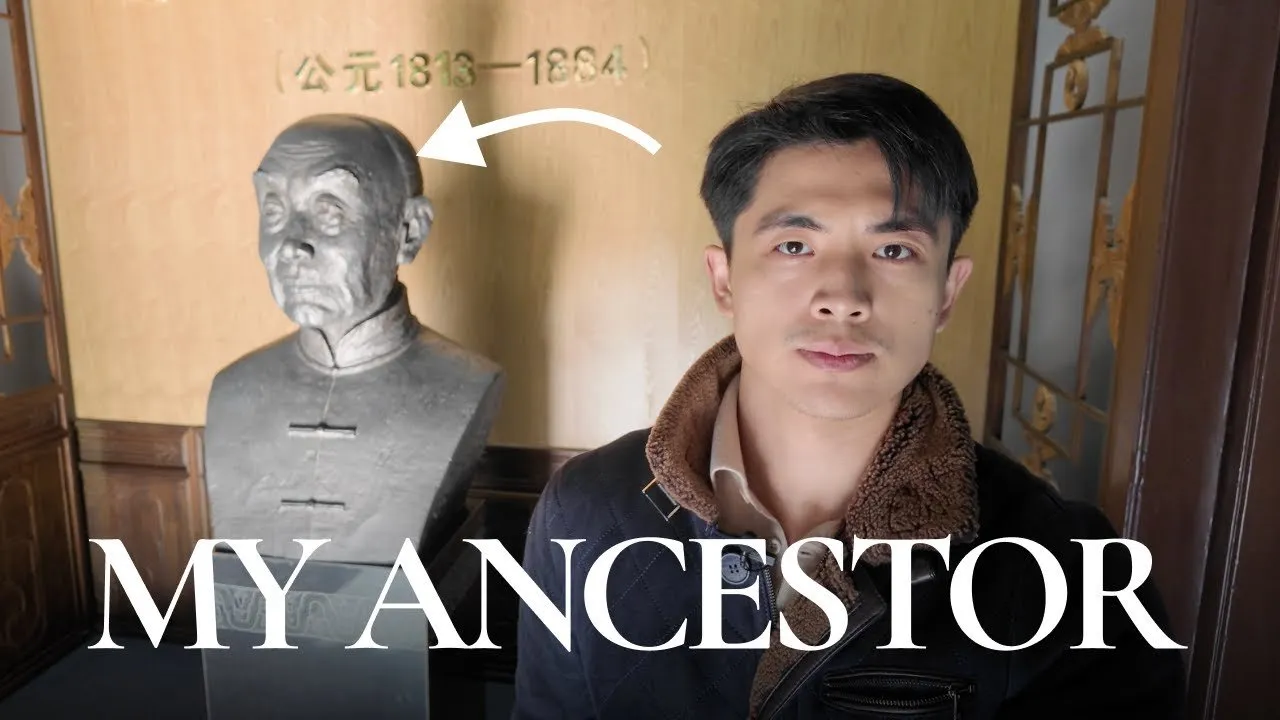
Discovering your ancestral roots can be a profound journey, but imagine uncovering a family legacy that spans centuries of scholarly achievement and connects directly to your life's work. This is the remarkable story of one person's pilgrimage to their ancestral home in China, where they discovered how their great-great-grandfather's 150-year-old letter seemed to predict their modern path, and how ancient inscriptions hold keys to understanding classical wisdom that remains relevant today.
Key Takeaways
- Ancient Chinese epigraphy was practiced not just as academic study, but as a means to transmit timeless wisdom and virtue to future generations
- The imperial examination system in China created one of history's most rigorous meritocratic pathways, elevating scholars regardless of social class
- Classical texts should be read "according to yourself" - as personal mirrors for self-examination rather than detached intellectual exercises
- Archaeological discoveries of ancient scripts like pottery script and oracle bone script continue to reshape Chinese historical consciousness and challenge orthodox interpretations
- The Maoling tripod exemplifies how ancient artifacts can serve as multi-layered texts that demonstrate the enduring power of transmitting antiquity
The Imperial Scholar's Legacy
In the heart of Beijing's Forbidden City, where emperors once held court over the "central kingdom of the world," an extraordinary scholarly tradition was born. This was where Chen Jieqi, a distinguished epigrapher of the Qing dynasty, achieved one of his greatest triumphs in the imperial examinations.
Understanding the Imperial Examination System
The imperial examination system represented one of history's most sophisticated meritocratic institutions. Operating for over a thousand years, these statewide tests occurred every three years during the Qing Empire's peak, when China's population reached 400 million people. Only the top 200 scholars from across the entire nation would advance to the final stage - the palatial exams, where the emperor himself would test and rank the candidates.
The elite among these scholars would earn the coveted jinshi degree, the highest rank available to imperial scholars. The most exceptional would receive invitations to join the Hanlin Academy, serving as the emperor's intellectual advisors, historians, and tutors. The Chen family produced approximately 19 jinshi degree holders over 600-700 years, establishing them as one of China's great scholarly houses.
From Political Power to Scholarly Pursuit
Chen Jieqi's father, Chen Yun, exemplified political success in imperial China. As deputy grand secretary and minister of personnel, he wielded enormous influence as one of the empire's most powerful men. More significantly, he served as tutor to the young Emperor Daoguang and became one of his most trusted advisers upon the emperor's ascension.
However, political fortune proved volatile. When Emperor Daoguang struggled to suppress a rebellion led by someone claiming to be Jesus's son, he demanded that wealthy great houses fund the war effort. The Chen family received the largest bill - one and a half tons of silver. This financial burden, combined with personal losses including his mother's death, prompted Chen Jieqi to abandon political life and retreat to his ancestral home in Shandong province.
The Art of Reading According to Yourself
In his ancestral home, Chen Jieqi established a private academy for his clan and wrote a profound instructional letter that would resonate across generations. This document, titled "Dashu," outlined his philosophy on classical education and the proper approach to studying ancient texts.
The Ancient Wisdom vs. Modern Foolishness
Chen Jieqi began his letter with a striking observation:
The ancients studied the classics and many were wise. The moderns do not study the classics and most of them are foolish.
He argued that contemporary people possessed the same innate talents as the ancients, but failed to apply themselves to classical study, resulting in wasted lives - what he described as "facing the wall."
The Revolutionary Concept of Personal Reading
The letter's most crucial insight concerned how to approach classical texts:
To read according to yourself, you will be limitless.
This philosophy rejected treating classics as mere intellectual puzzles or academic exercises. Instead, Chen Jieqi advocated using these texts as mirrors for self-examination and personal transformation. He distinguished this approach from modern academic departments where scholars might study Stoic philosophy without applying its principles to their own lives.
Importantly, "reading according to yourself" didn't mean reading whatever appealed to one's fancy. Rather, it meant studying specific canonical texts in their proper order, but allowing each work to speak personally to the reader's current life circumstances and needs.
Epigraphy as Cultural Archaeology
Chen Jieqi's scholarly work extended far beyond classical commentary into the realm of epigraphy - the study of ancient inscriptions. His approach differed dramatically from modern archaeological practices, combining the roles of collector, scholar, and cultural transmitter.
Discovering Lost Scripts
Chen Jieqi achieved two groundbreaking discoveries in ancient Chinese linguistics. First, he became the first scholar to identify and decode pottery script, a proto-language dating back approximately 4,500 years. This ancient form represented one of the earliest stages of written Chinese, preserved on pottery fragments with characters barely recognizable to modern eyes.
His work laid the intellectual foundation for an even greater discovery by his relative and correspondent, Wang Yirong, who uncovered oracle bone script about 30 years later. Over 200 letters between the two scholars documented their collaborative efforts to unlock these ancient linguistic codes.
Transforming Historical Consciousness
The decipherment of these ancient scripts has fundamentally altered Chinese historical understanding in several ways:
- Extended Historical Timeline: Oracle bone script provided undeniable evidence for the Shang Dynasty's existence, previously dismissed as legendary by Western academics, pushing back verifiable Chinese history by several hundred years
- Challenged Orthodox Interpretations: Better understanding of ancient etymology and linguistic contexts revealed flaws in established Confucian orthodoxy, contributing to intellectual liberalization
- Enhanced Textual Understanding: Access to previously unreadable texts expanded the corpus of classical Chinese literature available for study
As Chen Jieqi wrote in one of his poems:
From chaos to heavenly order was from language, and so too does language light up wisdom and understanding in man.
The Maoling Tripod: A Testament to Transmitting Antiquity
Chen Jieqi's most significant archaeological achievement was the identification and decipherment of the Maoling tripod, a 3,000-year-old bronze vessel from the Zhou Empire. This artifact, housed in his collection at the "Tower of Ten Thousand Seals," exemplifies the multi-layered nature of his scholarly approach.
The Tripod's Historical Significance
Created during the middle period of the Zhou Empire, when the dynasty faced potential collapse, the tripod contains extensive inscriptions detailing a crucial moment in Chinese history. Emperor Zhou Xuanwang appointed Duke Mao as his minister, exhorting him to help resurrect the lost virtue of their empire by imitating the founding Zhou emperor.
The strategy succeeded. Duke Mao's efforts helped extend the Zhou Empire's lifespan, transforming what could have been its final ruler into a middle-period emperor instead.
Three Layers of Antiquity Transmission
The Maoling tripod demonstrates the principle of transmitting antiquity on multiple levels:
- Textual Content: The inscription itself records an emperor's exhortation to imitate ancient virtue
- Personal Legacy: Duke Mao created the tripod to commemorate these events and instruct his descendants
- Scholarly Recovery: Chen Jieqi's identification and decipherment brought this testament to antiquity's power back into historical consciousness
The tripod's form itself functions as a text worthy of study, with its physical construction, artistic elements, and historical context providing layers of meaning beyond the inscribed characters.
The Fragrance of Books: Maintaining Scholarly Tradition
Chen Jieqi concluded his instructional letter with a poignant concern about maintaining his family's intellectual heritage. He used the beautiful Chinese concept of shu xiang - literally "book fragrance" - to describe the scholarly atmosphere of great houses.
The Sensory Experience of Learning
The term shu xiang employs the same character used for describing delicious food, suggesting that classical learning should be as appealing and nourishing as a home-cooked meal. Great scholarly families were said to "smell of books" in the way a home might smell of wonderful cooking - immediately recognizable and deeply satisfying.
This metaphor captures Chen Jieqi's vision of classical education as something that should permeate a family's entire atmosphere, creating an environment where wisdom becomes as natural and essential as daily sustenance.
A Message Across Generations
Chen Jieqi's final words in the letter proved remarkably prescient:
In times of trouble, remember what I have written here and revive that ancient virtue.
Written nearly 150 years ago for his descendants, this exhortation would find fulfillment in unexpected ways, inspiring future generations to continue the work of rescuing and transmitting classical wisdom for contemporary application.
Conclusion
The story of Chen Jieqi illustrates how scholarly pursuits can transcend mere academic exercise to become vehicles for cultural transmission and personal transformation. His approach to epigraphy - combining collection, decipherment, and philosophical application - demonstrates that ancient wisdom remains vibrantly relevant when approached with the right methodology.
His distinction between merely "collecting antiques" and truly "transmitting antiquity" offers a powerful framework for contemporary classical education. The goal isn't to accumulate knowledge as an intellectual trophy, but to allow ancient insights to reshape our understanding and guide our actions.
Most remarkably, his personal letter to future generations created a bridge across centuries, connecting 19th-century classical scholarship with 21st-century efforts to revive traditional wisdom. This continuity suggests that the human quest for meaning and virtue remains constant, even as the specific challenges of each era evolve.
The shu xiang - the fragrance of books - need not fade from our modern homes and institutions. Like Chen Jieqi, we can approach classical texts not as museum pieces, but as living documents capable of transforming our lives and guiding us toward ancient virtues that remain perpetually relevant.