Table of Contents
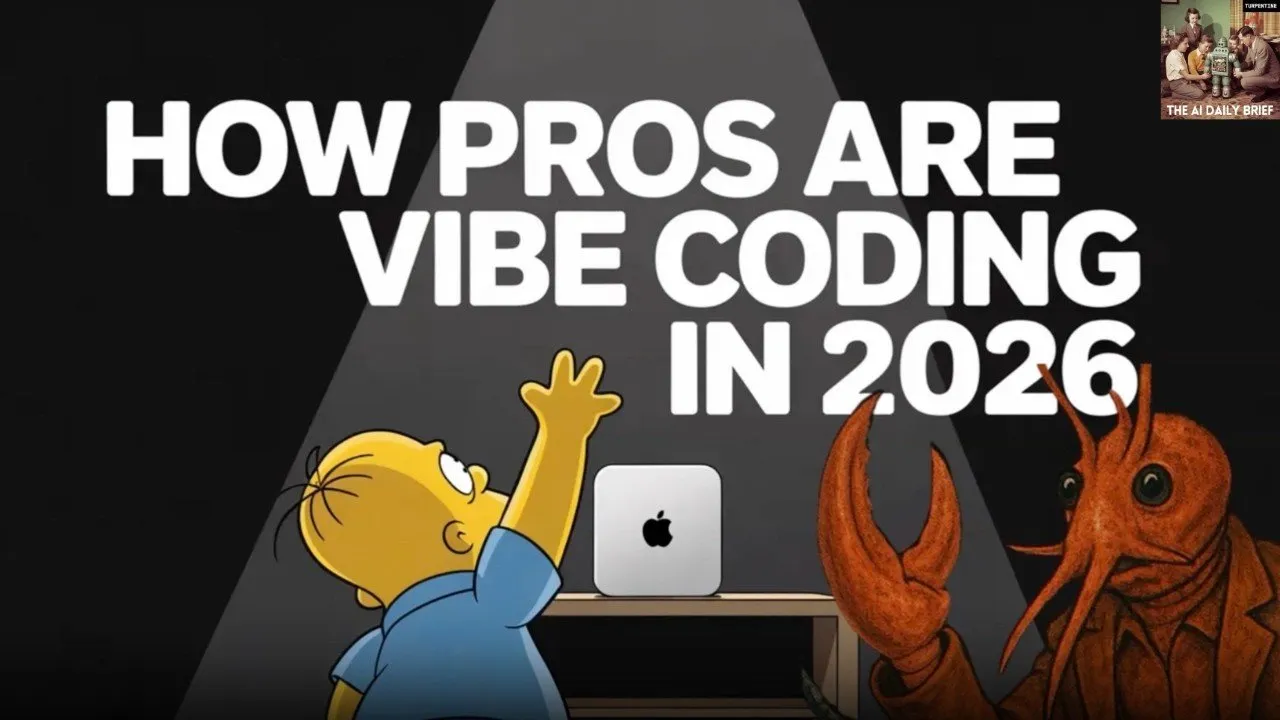
The landscape of software development is undergoing a radical shift in early 2026, transitioning from interactive "vibe coding" to fully autonomous "agentic coding." Driven by advanced models like Opus 4.5 and Codex 5.2, developers are now deploying armies of AI agents capable of executing complex projects overnight with minimal human oversight, effectively removing the user as the operational bottleneck.
Key Points
- The Shift to Autonomy: The industry focus has moved from human-in-the-loop prompting to "set and forget" systems where agents work independently around the clock.
- Enterprise Experiments: Cursor successfully ran hundreds of concurrent agents to build a web browser from scratch, utilizing a new "Planner and Worker" hierarchy to solve coordination issues.
- The "Ralph" Loop: A new standardization of autonomous workflows involves breaking Product Requirement Documents (PRDs) into atomic user stories that agents process in continuous loops.
- Local Infrastructure: The rise of Claudebot (CLAWD) has sparked a trend of running self-improving, personal AI employees on local hardware like Mac Minis to manage apps, messaging, and coding tasks.
Pushing the Frontiers of Autonomy
The defining narrative of the current technological cycle is the evolution of AI from a tool that assists to a system that operates. Following the holiday period, where many developers experimented with new capabilities in Opus 4.5 and Claude Code, a realization emerged: agentic coding can now extend far beyond simple script generation.
Cursor, a leader in AI-integrated code editors, recently published findings from an ambitious internal experiment titled Scaling Long-Running Autonomous Coding. The company attempted to build a web browser from scratch—a project involving over 3 million lines of code and a custom rendering engine—using an autonomous setup. The experiment utilized hundreds of concurrent agents running continuously for a week.
While the initial output was not on parity with established engines like WebKit, simple websites rendered correctly. However, the primary breakthrough was operational rather than functional. Cursor discovered that flat hierarchies among agents failed due to resource locking and risk aversion. To solve this, they implemented a strict division of labor:
- Planners: A subset of agents that continuously explore the codebase to generate tasks.
- Workers: Agents that execute assigned tasks without worrying about the broader context or coordinating with other workers.
- Judges: Agents that review completed cycles to determine if the next iteration should proceed.
"The core question, can we scale autonomous coding by throwing more agents at a problem, has a more optimistic answer than we expected. Hundreds of agents can work together on a single codebase for weeks, making real progress on ambitious projects."
Standardizing Workflows: The "Ralph" Methodology
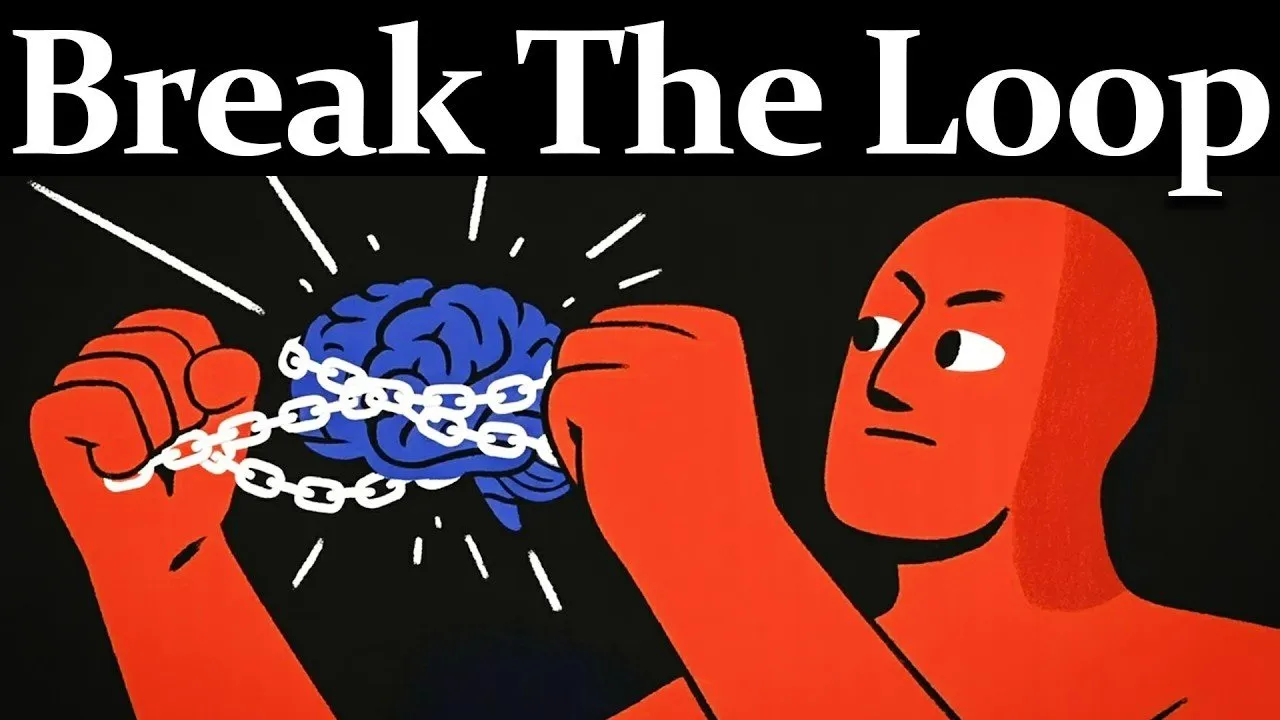
As autonomous systems scale, developers are coalescing around standardized methodologies to manage them. One dominant concept is "Ralph," a term coined by developer Jeffrey Huntley. Effectively, Ralph is a "bash loop" for AI—a command structure that tells the system to repeat a specific task until a condition is met.
According to developer Ryan Carson, the Ralph workflow transforms the software development lifecycle into a six-step autonomous loop:
- Draft a detailed Product Requirements Document (PRD).
- Convert the PRD into discrete, atomic user stories.
- Add clear acceptance criteria for each story.
- Loop the AI agent through each story independently.
- Log learnings to prevent repeated errors.
- Human review of edge cases upon completion.
This method allows memory to persist via Git history and text files, enabling the "ship while you sleep" paradigm that is currently driving startup growth strategies.
The Rise of Claudebot and the Digital Employee
Parallel to enterprise-grade experiments, individual developers are leveraging a new tool known as Claudebot (CLAWD). Unlike cloud-based interfaces, Claudebot is an open-source agent often hosted on local hardware, such as Mac Minis or gaming PCs. It utilizes a gateway to connect advanced models directly to personal applications like WhatsApp, Slack, and terminal environments.
The primary appeal of Claudebot is its ability to act as a fully functional employee. It can browse the web, execute terminal commands, and even write its own plugins to acquire new skills. Nat Eliason, a prominent voice in the space, recently documented his experience hiring his "first digital employee" using this stack.
"Nothing like waking up to a report from Claudebot about everything that went wrong in my app yesterday and what it already did to fix it... [It] analyzes transcripts from the day, emails customers with bad experiences apologizing... and adds their feedback to the daily report for our next morning brainstorm."
While some skeptics argue that these agents are currently limited to administrative "corporate busywork," early adopters report significant utility in automated customer success, error resolution (via Sentry webhooks), and continuous code deployment.
Evolving Interfaces: Beyond the Terminal
As the capabilities of these agents grow, the interfaces used to control them are also maturing. While the "Ralph" loop originated in the command line interface (CLI), there is a growing consensus that the CLI is becoming a bottleneck for high-level orchestration.
New Graphical User Interface (GUI) tools, such as Conductor, are gaining market share. Industry figures like Notion’s Brian Lovin report spending significantly more time in Conductor than in traditional design tools like Figma or code editors. The shift suggests that as AI coding becomes more agentic, the developer's role is transitioning from writing code to orchestrating workflows through visual dashboards.
The trajectory for the remainder of 2026 is clear: the most successful developers will be those who can effectively remove themselves from the loop, managing armies of autonomous agents that execute high-level architectural goals 24/7.