Table of Contents
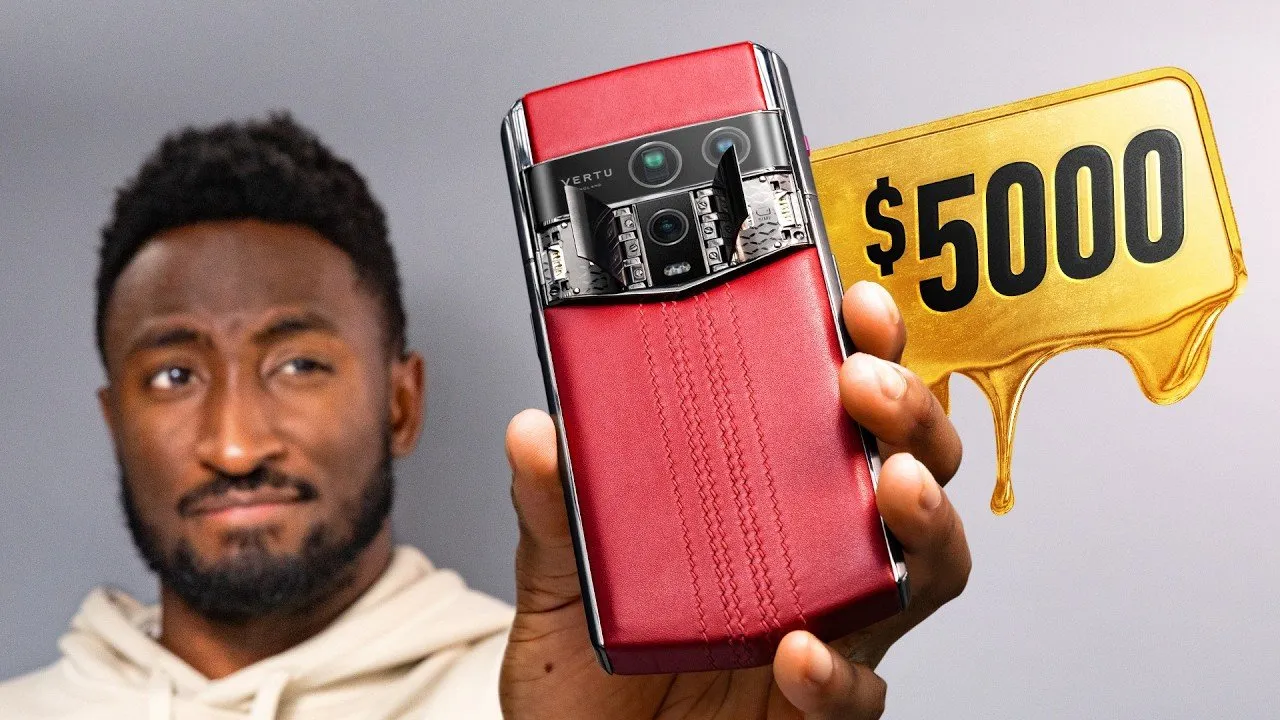
The Vertu Agent Q, a luxury smartphone priced at approximately $5,380, markets itself as the world's first "AI agent phone for entrepreneurs," yet a detailed technical review exposes significant discrepancies between its marketing claims and actual performance. Tech reviewer Marques Brownlee (MKBHD) recently subjected the device to rigorous testing, revealing that its marquee features—including a 24/7 concierge and "mechanical" camera systems—rely on misleading specifications and questionable execution.
Key Takeaways
- Pricing and Positioning: The device costs over $5,000, with high-end models reaching $50,000, positioning itself as an ultra-luxury tool for business elites.
- False Hardware Claims: Marketing materials promise a "mechanical zoom" and "variable aperture," but testing reveals these are software simulations utilizing standard fixed lenses.
- Concierge Reality: The advertised AI agent functions as a slow-response human service requiring manual payment workarounds, such as PayPal screenshots.
- Build Quality Trade-offs: While the device features premium leather and unique aesthetics, it lacks standard flagship features like waterproofing and wireless charging.
Luxury Marketing Meets Technical Reality
Vertu, a brand originally established by Nokia as a luxury subsidiary, is now under new ownership and appears to be pivoting toward the burgeoning artificial intelligence market. However, the hardware specifications of the Agent Q present a mixed bag of modern components and dated technology. The device houses a Snapdragon 8 Elite processor, 1TB of storage, and 16GB of RAM, specs that align with modern flagships. However, the display is limited to 1080p, and the physical design—characterized by a V-shaped chassis and calfskin leather—necessitates the omission of standard features such as wireless charging and an IP water-resistance rating.
The most contentious findings concern the camera system. Vertu’s website claims the device features the "world’s first true mechanical zoom lens" and a mechanical variable aperture. Upon testing, these claims crumbled. The camera utilizes a fixed lens system, and the "variable aperture" is a software filter that applies artificial blur to images without altering light intake or depth of field physically.
"The EXIF data actually tries to say these photos are at f1 and f16, but they're clearly lying because the shutter speed didn't change, the ISO didn't change, and the photos look essentially identical to each other."
The "AI" Concierge: Promise vs. Execution
The central selling point of the Agent Q is its "AI" concierge service, accessed via a dedicated ruby button. Vertu promises an intelligent agent capable of handling complex tasks for entrepreneurs. In practice, the service appears to be a manual, human-operated call center disguised as artificial intelligence.
During a controlled test, Brownlee tasked the agent with ordering a t-shirt. The process took over seven hours to complete and involved significant friction. The "agent" requested manual payment via PayPal or cryptocurrency (USDT) and required the user to send a screenshot of the payment confirmation. Furthermore, communication was riddled with typos and requests to delay tasks until Beijing business hours, undermining the premise of a 24/7 global AI assistant.
Digital Deterioration of a Legacy Brand
The investigation highlights a shift in Vertu's strategy following its sale to private equity and subsequent move to China. While previous iterations of luxury phones—such as those by Caviar—focused on material excess like diamonds or gold, the Agent Q attempts to sell software capabilities that do not exist as described. The company’s website contains technically inaccurate terminology, such as referencing a non-existent "Snapdragon 8 Elite Supreme" chip, suggesting a marketing strategy heavily reliant on industry buzzwords rather than engineering substance.
Market Implications
The release of the Agent Q serves as a cautionary tale in the luxury electronics sector. It highlights the growing trend of "AI washing," where companies attach artificial intelligence branding to standard or sub-par services to justify premium pricing. For consumers, the device illustrates the diminishing returns of ultra-luxury tech hardware, where a $5,000 device may perform objectively worse than a standard $1,000 flagship smartphone.
As the line between luxury goods and functional technology blurs, consumers are advised to scrutinize technical claims rigorously. The Vertu Agent Q ultimately presents itself not as a technological innovation, but as a "crudely skinned Android phone designed to take advantage of people with way more dollars than cents."