Table of Contents
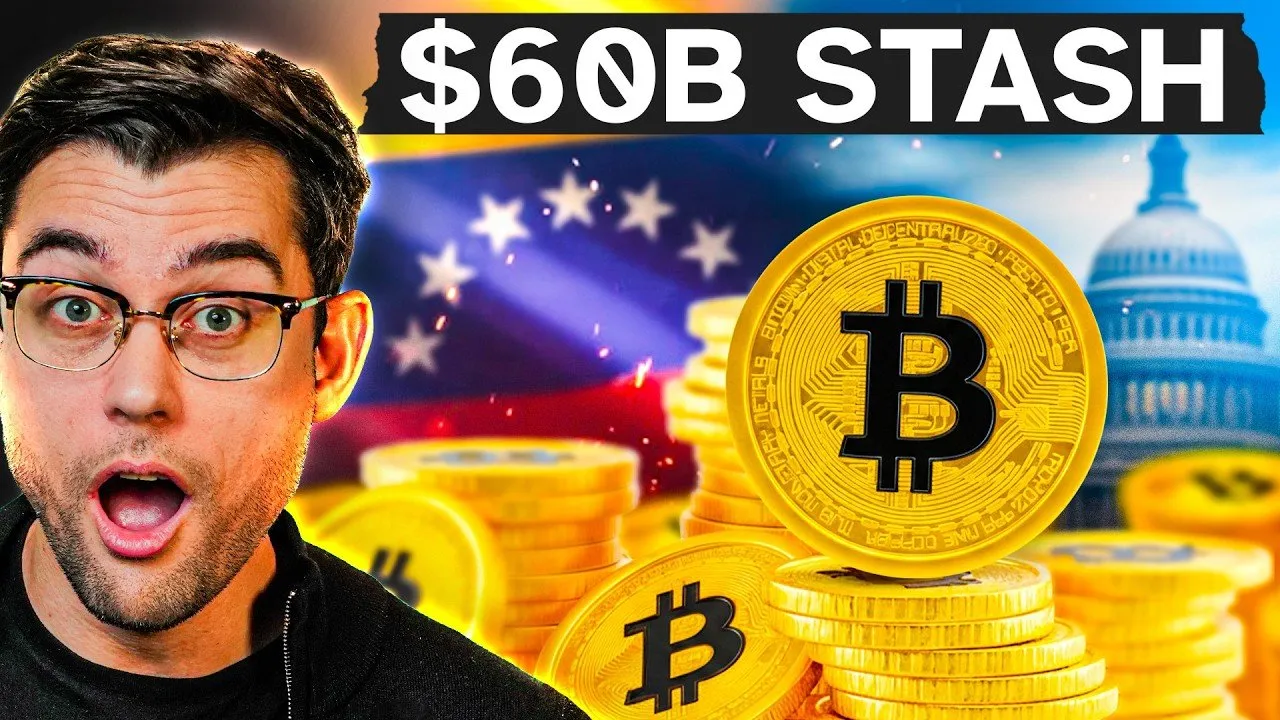
Following the intervention of U.S. forces in Caracas, intelligence reports suggest the United States government may be attempting to secure the world’s largest undisclosed state-owned Bitcoin holding. Sources allege that the former Maduro regime accumulated a "shadow reserve" of up to 600,000 Bitcoin—valued at approximately $60 billion—through illicit gold mining operations and sanctions-evading oil exports.
While the physical control of government infrastructure has shifted, the digital custody of these assets remains in question. If the United States successfully obtains the private keys to this stockpile, it would control nearly 5% of the total Bitcoin supply, fundamentally altering the global cryptocurrency market and international financial geopolitics.
Key Points
- The Alleged Stash: Intelligence sources estimate Venezuela holds 600,000 BTC, accumulated by converting gold and oil revenues into cryptocurrency to bypass U.S. banking sanctions.
- Custody Battle: Despite physical control of the region, U.S. authorities face the technical challenge of locating private keys potentially held by regime loyalists or intermediaries.
- Market Impact: If seized, the U.S. government’s total holdings would approach 1 million BTC, creating a massive supply shock under the new "seize and hold" strategic reserve policy.
- Verification Gap: Blockchain analytics firms have not yet identified a specific wallet cluster matching this volume, suggesting complex obfuscation methods or potential intelligence inaccuracies.
The Mechanics of the Shadow Reserve
The accumulation of this purported fortune was driven by necessity. Cut off from the SWIFT banking system, the Maduro regime reportedly transformed Venezuela into a "crypto-fiscal state." According to investigative reports, including those from the Whale Hunting newsletter, the regime systematically converted state assets into digital currency over the last decade.
The strategy reportedly involved two primary mechanisms. First, approximately $2 billion in gold from the Orinoco mining arc was sold and converted into Bitcoin when the asset traded near $5,000. Second, the state oil company, PDVSA, began settling exports in stablecoins like USDT. Following the freezing of over $180 million in USDT by Tether, the regime allegedly pivoted to Bitcoin—an asset immune to centralized freezing—for its permanent reserves.
Furthermore, in May 2024, the Venezuelan government executed a massive crackdown on private mining, seizing over 11,000 ASIC machines. Analysts posit these machines were not destroyed but repurposed to mine Bitcoin directly for the state, creating a decentralized network of wallets obscured through mixers like Tornado Cash.
The Technical and Legal Quagmire
Despite the scale of the alleged holdings, verifying and seizing the assets presents a significant hurdle. Official trackers like Bitcoin Treasuries currently credit the Venezuelan government with only 240 Bitcoin. Blockchain intelligence firm Arkham has publicly stated it has not identified a "smoking gun" wallet cluster holding the rumored 600,000 coins.
The primary obstacle for U.S. authorities is the cryptographic nature of the asset. Unlike physical gold bars, Bitcoin cannot be seized without the private keys. These keys are likely distributed among a network of regime loyalists or financial intermediaries, such as the network previously managed by Alex Saab.
"I leave that to others in the administration," said SEC Chair Paul Atkins in a recent interview, describing the prospect of seizing the stash as "uncertain."
This uncertainty creates a binary outcome: if the keys are lost or destroyed, 3% of the world's Bitcoin supply is effectively burned, permanently reducing global liquidity. If the keys are recovered, the U.S. government becomes the dominant whale in the ecosystem.
Implications for the Global Market
If the United States successfully seizes these assets, its total Bitcoin holdings would surge to approximately 1 million coins, when combined with the 325,000 BTC currently held from previous seizures like the Bitfinex and Silk Road cases. This would place the U.S. government on par with the holdings attributed to Bitcoin creator Satoshi Nakamoto.
Historically, the U.S. Marshals Service auctioned seized cryptocurrency. However, under the Strategic Bitcoin Reserve policy established by executive order in March 2025, the U.S. has adopted a "seize and hold" strategy. Treasury Secretary Scott Bessent has confirmed that seized assets are no longer to be liquidated.
Removing 600,000 coins from the liquid supply would likely trigger a massive upward price shock. However, it also raises geopolitical concerns. For nations within the BRICS bloc (Brazil, Russia, India, China, South Africa) attempting to bypass the dollar, a U.S. government holding 5% of the total Bitcoin supply could be viewed as an imposition of digital hegemony, potentially undermining Bitcoin's narrative as a neutral, sovereign-grade asset.
Humanitarian and Future Considerations
Beyond market mechanics, the discovery of these assets poses a profound ethical dilemma. These funds represent the diverted wealth of the Venezuelan nation, accumulated during a period of economic collapse. While international precedents like the UN Convention Against Corruption exist for returning stolen assets, the process is notoriously slow and politically fraught.
As the situation in Caracas stabilizes, the focus will shift to the forensic accounting efforts of the NSA and DOJ. The crypto market now waits to see whether the U.S. government will emerge as the undisputed kingpin of the digital asset class, or if billions of dollars in Bitcoin will remain permanently locked in a cryptographic limbo.