Table of Contents
The intersection of cryptocurrency and geopolitics has always been volatile, but recent developments involving Venezuelan sanctions, high-stakes prediction markets, and internal governance fissures within major privacy protocols have brought these tensions to a boiling point. As the industry matures, the friction between decentralized ideals and regulatory realities is creating complex moral and legal dilemmas for investors and developers alike.
From the alleged misuse of stablecoins in sanctioned regimes to the murky ethics of trading on political coups, the crypto landscape is currently navigating a minefield of compliance and governance challenges. Below, we explore the intricate details of the Contigo controversy, the debate over "insider trading" in prediction markets, and the structural overhaul at Zcash.
Key Takeaways
- Sanctions Liability is Absolute: The controversy surrounding Contigo highlights that U.S. sanctions laws are based on strict liability—intent does not absolve companies from the consequences of facilitating transactions for sanctioned entities.
- The Insider Trading Gray Area: Recent winnings on Polymarket regarding Venezuelan leadership have sparked a debate on whether "insider trading" logic applies to geopolitical events in the same way it applies to corporate equities.
- The Decline of the Foundation Model: The resignation of the Electric Coin Company (ECC) team to form a for-profit entity suggests that the non-profit foundation model may no longer be the most effective way to scale crypto products or retain top talent.
The Contigo Controversy: Fintech at the Edge of Sanctions
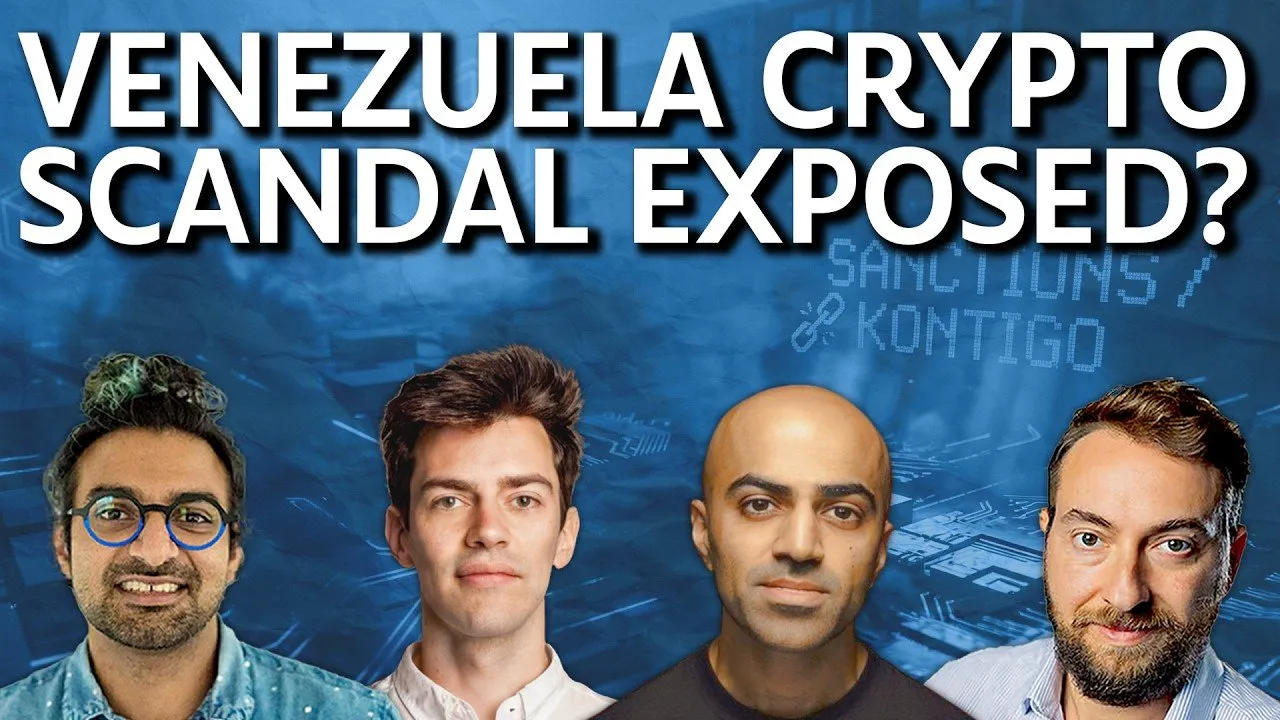
A recent exposé regarding the Y Combinator-backed startup Contigo has ignited a fierce debate regarding the role of stablecoins in emerging markets. Contigo, a remittance app designed to provide Venezuelan citizens with access to U.S. dollars, has been accused of facilitating transactions for sanctioned entities while utilizing major U.S. banking rails like JP Morgan and Lead Bank.
The Arbitrage Mechanism
The core of the allegations centers on how Contigo reportedly generated revenue. While ostensibly a remittance platform, reports suggest the company may have been engaging in arbitrage between the official Venezuelan government exchange rate and the black market rate for Bolivars. By holding one of the few crypto licenses in Venezuela—and allegedly maintaining ties to state-owned banks—the firm was positioned to profit from capital controls.
This situation presents a significant paradox for the crypto industry. On one hand, stablecoins fulfill a humanitarian mission by allowing citizens living under hyperinflationary regimes to access stable currency. On the other hand, the infrastructure used to provide this access can inadvertently—or intentionally—bypass U.S. sanctions designed to pressure authoritarian governments.
Strict Liability and Due Diligence
From an investment and legal standpoint, the nuance of "helping the unbanked" often collapses under the weight of U.S. law. The defining characteristic of sanctions enforcement is strict liability. Unlike other areas of criminal law where intent (mens rea) is a mitigating factor, sanctions violations are punished regardless of whether the violation was accidental or intentional.
"It's not enough to say 'oh I didn't know' or 'whoopsy daisy.' Doesn't matter. Strict liability means that [if] you violated sanctions, punishments come on you regardless of what your intent was."
The Contigo case serves as a stark warning for venture capitalists and fintech operators: relying on standard KYC (Know Your Customer) checks at the point of onboarding may be insufficient. In a digital environment, continuous monitoring is required to ensure that U.S. banking rails are not being exploited by sanctioned state actors.
Prediction Markets and the Ethics of "Insider Trading"
The concept of insider trading is well-defined in equity markets, but the rise of prediction markets like Polymarket has introduced new ambiguities. Recently, a trader reportedly profited approximately $400,000 by betting on geopolitical shifts in Venezuela shortly before they occurred. This has led to scrutiny from lawmakers and proposals to ban government officials from betting on prediction markets.
Equities vs. Commodities
The legal theory behind insider trading typically rests on the theft of information from a company and its shareholders. If an employee trades on non-public earnings data, they are effectively stealing value from the firm. However, this logic does not neatly transfer to geopolitical events or commodities.
When a trader bets on a military action or a political upheaval based on private information, it is unclear who the "victim" is in the traditional sense. While there are obvious national security concerns if government officials trade on classified intelligence, the lines blur when private citizens trade on observational data—such as spotting military movements or utilizing local networks.
The Question of Externalities
The debate ultimately revolves around positive and negative externalities. In commodities markets, insider trading is often permissible because it aids in price discovery and allows producers to hedge risk. In prediction markets, the societal value of knowing a coup is about to happen is debatable.
"If it's about us capturing Maduro, that is for sure information that Delta Force doesn't want to get out... I think the information does have a rightful owner that you're stealing it from that could compromise national security interests."
While technocrats may argue about the efficiency of markets, the public reaction is likely to be driven by moral intuition. The general public often views betting on human suffering, war, or political instability as distasteful, regardless of the legal technicalities. As prediction markets grow, they will likely face regulation not just based on market mechanics, but on these prevailing moral sentiments.
Zcash and the End of the Foundation Era
The privacy coin Zcash is undergoing a significant governance restructuring that may signal a broader shift in how crypto protocols are developed. The entire team at the Electric Coin Company (ECC), responsible for Zcash development and the Zashi wallet, recently resigned to form a new for-profit entity, citing restrictive board governance at the non-profit level.
The Limits of Non-Profits
For years, the "Foundation Model" was the standard for crypto projects, aiming to decentralize governance and remove profit motives from protocol development. However, the Zcash split highlights the limitations of this structure. Non-profits often struggle to incentivize rapid product development, raise external capital, or pivot strategies effectively.
The ECC team’s move to a for-profit structure (Cash Z) reflects a growing realization that user-facing products—particularly wallets—require aggressive growth strategies and top-tier talent that non-profits rarely attract.
"The problem with all these arguments is talent... the best talent want to own their own fates."
The Wallet Dilemma
This transition exposes a critical tension in the crypto ecosystem: the misalignment between a protocol's need for neutrality and a wallet's need for revenue.
- The Non-Profit Approach: A foundation-funded wallet can remain pure, supporting only the native asset (e.g., Zcash) without predatory fees. However, these products often suffer from poor UX and lack of innovation due to a lack of competition.
- The For-Profit Approach: A private company (like MetaMask or the new Cash Z) is incentivized to build a superior user experience. However, the drive for profit inevitably leads to "mission creep"—such as cross-selling other tokens, adding swap fees, or deprioritizing the original protocol in favor of trending assets.
For a blockchain to succeed, it requires at least one "killer wallet" that simplifies the user experience for the masses. The industry is currently learning that achieving this standard may require abandoning the idealistic foundation model in favor of traditional corporate structures that can better align incentives with user acquisition.
Conclusion
Whether it is the navigation of strict U.S. sanctions in Venezuela, the policing of information in prediction markets, or the restructuring of Zcash's development teams, the common thread is the collision of crypto idealism with structural reality. As the industry integrates more deeply with global finance and geopolitics, the "move fast and break things" era is being replaced by complex negotiations regarding compliance, governance, and the very definition of market fairness.
For more insights on these topics, visit choppingblock.xyz for full disclosures.