Table of Contents
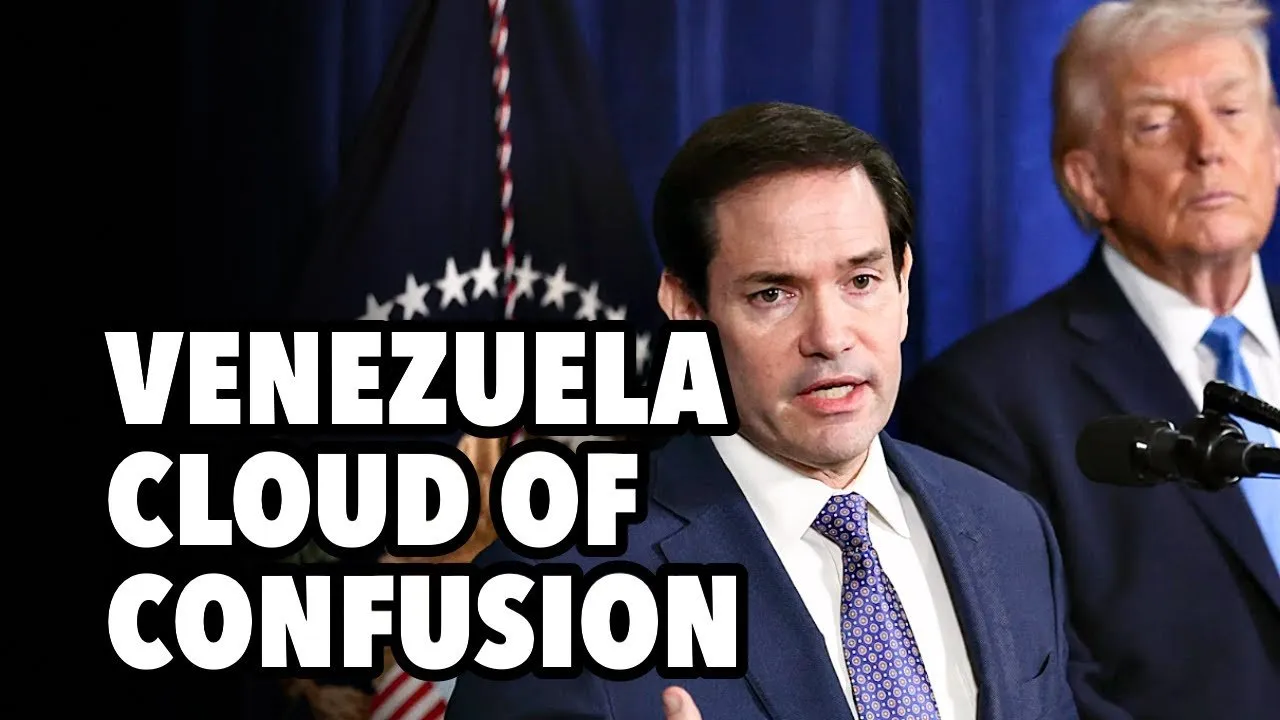
The recent upheaval in Venezuela was far more than a chaotic regime change or a simple kidnapping; it bears all the hallmarks of a classic, calculated coup d'état orchestrated from within. While the headlines focus on the removal of Nicolás Maduro, the underlying mechanics reveal a complex web of back-channel diplomacy, betrayal, and strategic alignment between the Trump administration—specifically Senator Marco Rubio—and high-ranking insiders within the Venezuelan regime. This was not merely an external extraction, but a palace coup where the survival of the existing administrative structure was traded for the head of state.
The narrative emerging is one of transaction rather than ideology. As details surface regarding intermediaries in the Gulf states and secret communications with the CIA, it becomes clear that the primary objective was securing United States interests—specifically oil—while leaving a compliant administration in Caracas. This event signals a distinct shift in US foreign policy, moving away from the rhetoric of "democracy promotion" toward a more transactional, resource-focused approach that has caught global superpowers like China and Russia completely off guard.
Key Takeaways
- The "Inside Job" Dynamic: Evidence points to a deal between the US and Venezuelan insiders, led by Vice President Delcy Rodríguez, to sacrifice Maduro in exchange for retaining power and stabilizing the country.
- Military Complicity: The Venezuelan military stood down during the operation, leaving Maduro’s Cuban security detail as the only line of defense, highlighting a deep rift between the national army and the President's foreign protectors.
- The Oil Reality: While the US objective is clearly resource acquisition, the dilapidated state of Venezuela's heavy crude infrastructure means a return to profitability will require massive investment and time, contradicting expectations of an immediate economic bonanza.
- Rubio’s Foreign Policy dominance: Marco Rubio has emerged as the de facto architect of US foreign policy in Latin America, sidelining traditional diplomatic channels in favor of aggressive, intelligence-led operations.
- Geopolitical Intelligence Failures: Both China and Russia suffered significant humiliation, as their intelligence networks failed to detect the plot despite having a heavy presence on the ground.
An Inside Job: The Rodriguez-Rubio Connection
The seamless nature of the operation suggests that it could not have succeeded without high-level cooperation from within the Maduro administration. Reports indicate that insiders, specifically a faction led by Vice President Delcy Rodríguez, established back channels with US officials long before the event took place. These communications, reportedly mediated by Arab nations—potentially Qatar or the UAE—laid the groundwork for a transition that would remove Maduro while preserving the administrative status quo.
The Trump administration, and particularly Marco Rubio, appear to have been impressed by Rodríguez. Unlike the fragmented political opposition led by figures like María Corina Machado, whom the US ultimately bypassed, Rodríguez demonstrated an ability to manage the economy and the bureaucracy even under crushing sanctions. This pragmatic assessment led to a startling conclusion: the US could achieve its resource goals more effectively by working with competent regime insiders than by installing a volatile opposition government.
This was a standard classic coup d'état operation. Insiders around Maduro who had some sort of back channel communication... decided that it was time for Maduro to go and for a new administration to be put in place, an administration that would look after the US's interests.
The Betrayal of Maduro
Maduro’s removal appears to be the result of a cold calculation by his own inner circle. Over time, he became a political liability, clinging to power largely through Cuban support rather than domestic political strength. While rumors suggest Maduro was willing to concede almost everything to the US—including oil rights and migration controls—to stay in power, his desperate bargaining may have undermined him. If he was willing to give away the store, his utility to the nationalist elements of his own party evaporated. His associates likely reasoned that they could cut the same deal with the Americans directly, removing the "middleman" and securing their own future.
The Military Stand-Down and the Cuban Disconnect
One of the most telling aspects of the operation was the complete lack of resistance from the Venezuelan armed forces. Despite possessing sophisticated air defense systems and Russian-supplied weaponry, American helicopters operated with impunity over Caracas. There was no anti-aircraft fire, no deployment of chaff, and no maneuvering to evade threats. This confirms that orders had been circulated to stand down, ensuring the US extraction team faced no domestic military opposition.
The violence that did occur revealed a stark division within the security apparatus. The firefights reported involved Maduro’s personal security detail, which was comprised almost entirely of Cuban nationals. The Venezuelan military effectively stepped aside, allowing the US forces to target the Cuban bodyguards. This suggests a deep-seated resentment within the Venezuelan military establishment toward the Cuban influence over Maduro, a friction the US and internal coup plotters successfully exploited.
The Economics of Intervention: Oil, Gold, and Reality
President Trump’s post-operation rhetoric has been unusually transparent regarding the motivation for the coup: oil. Abandoning the traditional diplomatic language of "human rights" and "democracy," the administration has framed this as a necessary seizure of resources. However, the expectation of a sudden economic windfall may be severely misplaced.
The challenges facing the US oil ambition include:
- Infrastructure Decay: The Venezuelan oil industry has been nationalized since 1976 and severely neglected for decades. It will likely take tens of billions of dollars and at least ten years to restore production to significant levels.
- Refining Complexity: Venezuelan crude is notoriously heavy and difficult to refine. Processing it is expensive, and in a global market where oil prices are already relatively low, the profit margins may not justify the geopolitical cost.
- Market Competition: If the US successfully rehabilitates Venezuela’s output, it risks flooding the market and driving prices down below the break-even point for domestic US shale producers, potentially harming the American energy sector.
While there is speculation about rare earth minerals and gold, these are long-term plays that require sophisticated processing capabilities—an area where China currently holds a global monopoly. The immediate financial return for the US is likely to be far lower than the "bonanza" described in political speeches.
Geopolitical Shockwaves: Intelligence Failures and New Targets
The success of this operation has exposed significant weaknesses in the intelligence capabilities of US adversaries. China and Russia, despite having invested heavily in Venezuela and maintaining a physical presence in Caracas, were caught completely unaware. This represents a massive intelligence failure, particularly for Beijing. Chinese officials were reportedly on the ground conducting meetings with the Maduro government just hours before the operation, oblivious to the fact that their partner was about to be removed.
Whether we like to face the fact or not, China and Russia... don't have that kind of global presence or that gift for covert action that the Americans do.
This failure echoes Russia's blindness to the 2014 Maidan coup in Ukraine. It suggests that while Eastern powers are adept at economic statecraft, they lack the deep, covert operational reach that the CIA and US military possess in the Western Hemisphere.
The Rise of Marco Rubio and the Threat to Cuba
Perhaps the most significant outcome of this event is the consolidation of power by Marco Rubio within the Trump administration. Functioning as both a diplomat and a national security strategist, Rubio is effectively running US foreign policy in the Americas. With Venezuela "secured," the crosshairs are now firmly fixed on Cuba.
The narrative being built is that Cuba is the next domino to fall. Having lost their Venezuelan lifeline and oil supply, Havana is incredibly vulnerable. The US administration’s rhetoric suggests an imminent squeeze on the island nation, aiming to dismantle the last stronghold of anti-American sentiment in the Caribbean. For China and Russia, this signals a forceful US drive to completely excise their influence from Latin America.
Conclusion
The removal of Nicolás Maduro marks a turning point in international relations, characterized by a shift from "rules-based order" to a doctrine of "might is right." By openly acknowledging that the operation was driven by resource acquisition and executed through backroom deals, the US has discarded the moral pretense usually accompanying regime change. While this may achieve short-term strategic goals, it risks alienating European allies and validates the cynical worldview of adversaries like Russia and China.
As the dust settles, the new administration in Caracas faces the difficult task of balancing US demands with domestic stability, while the world watches to see if this aggressive protection-racket style of foreign policy becomes the new standard for the Trump era. The message to the world is clear: sovereignty is conditional, and resources are up for grabs.