
Table of Contents
Traditional economics operates on a simple, elegant assumption: humans are rational actors who weigh pros and cons to make logical decisions. Any product manager who has watched a user struggle through a "simple" onboarding flow knows this is objectively false. Humans are emotional, present-biased, and often behave in ways that defy standard logic.
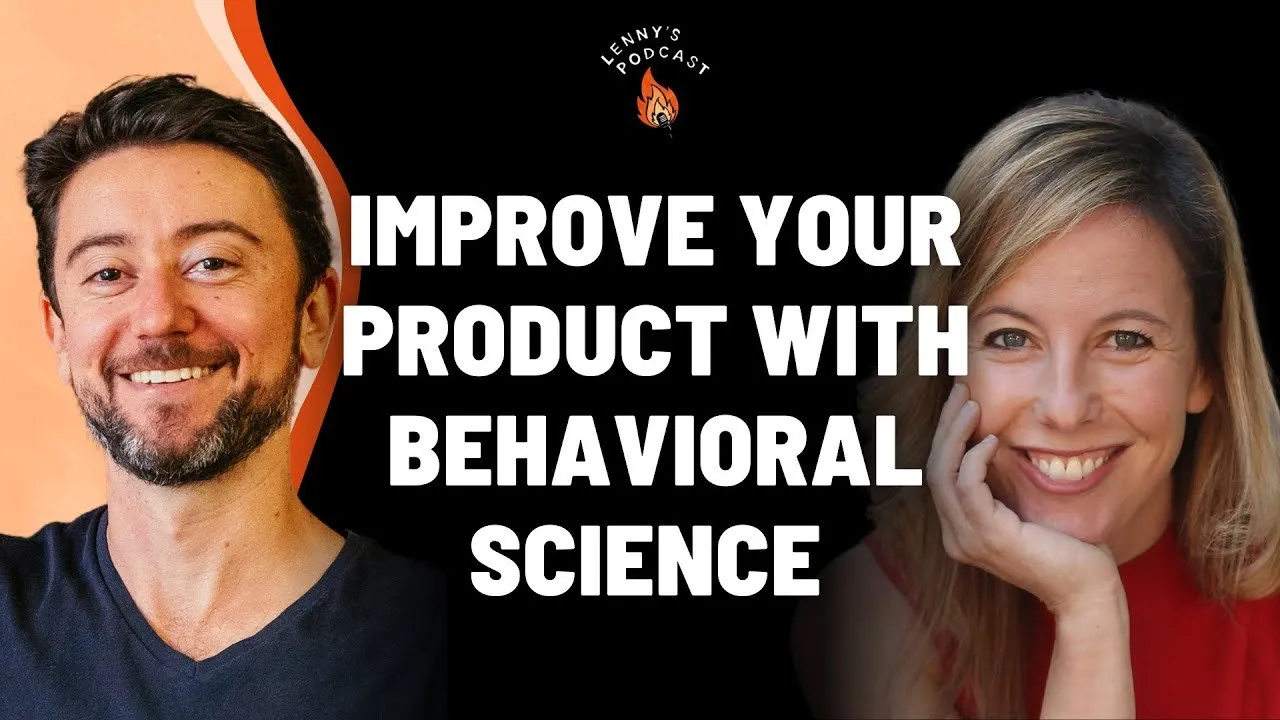
Kristen Berman, CEO and co-founder of Irrational Labs, has spent her career bridging the gap between academic psychology and product design. By understanding the predictable ways in which people are irrational, product teams can design environments that actually change behavior. Whether it is helping TikTok reduce misinformation or assisting One Medical in increasing appointment bookings, the application of behavioral science goes far beyond simple A/B testing.
Here is a deep dive into how behavioral design works and how you can apply the "3B Framework" to build better products.
Key Takeaways
- Get "uncomfortably specific" with behavior: You cannot design for "engagement." You must design for a specific action, such as "completing two workouts within the first seven days."
- Friction isn't always the enemy: While the general rule is to reduce barriers, adding the right kind of friction—like questions during onboarding—can actually increase conversion by building investment.
- Diagnose before you design: Before building new features, map out every single step a user takes (logistical and cognitive) to identify where their psychology conflicts with your product flow.
- Budgeting features rarely work: Despite users claiming they want budgeting tools, the cognitive load is often too high to sustain the behavior. Defaults and rules of thumb are more effective.
- The "Right for Wrong" principle: Sometimes you must leverage a superficial motivation (like clearing a notification badge) to drive a meaningful outcome (like financial health).
The 3B Framework of Behavioral Design
To audit and improve product flows, Irrational Labs utilizes a model called the "3Bs": Behavior, Barriers, and Benefits. This framework helps teams move from abstract goals to concrete psychological interventions.
1. Behavior
The first step is often where teams fail. Companies are excellent at defining outcomes (e.g., "increase retention") but often struggle to identify the exact behavior required to achieve that outcome.
Berman advises teams to get "uncomfortably specific."
If you are a Product Manager at Peloton, "working out" is too vague. A behavioral definition would be: "Within seven days of starting the app, the user completes two 10-minute workouts with two different instructors."
Without defining the behavior at this granular level, you cannot identify the specific psychologies hindering that action. Note that the only wrong answer for a target behavior is "logging in." Logging in is a gateway, not a value-generating behavior.
2. Barriers
Once the behavior is defined, you must identify what stands in the way. Berman categorizes barriers into two types:
- Logistical Barriers: The tangible steps, such as entering a credit card number, clicking a confirmation link, or waiting for a page to load.
- Cognitive Barriers: The mental hurdles. This includes uncertainty aversion (not knowing if a ride-share will arrive on time causes you not to book) or the status quo bias (doing what you did yesterday because it requires less energy).
3. Benefits
Finally, you must amplify the reasons to act. The critical insight here is that humans act for immediate benefits, not long-term ones. We are present-biased. While a user should save money for retirement (a future benefit), they are more likely to take action if it gives them an immediate dopamine hit or solves a right-now problem.
"There are plenty of reasons that somebody... should take an action, but you actually have to give them a reason to take an action today."
This leads to the concept of "Right for Wrong"—helping people do the right thing for the wrong reason. For example, a user might complete a task in Asana not because it helps team collaboration (the right reason), but because they want to see the celebratory "unicorn" animation fly across the screen (the wrong, but effective, reason).
Challenging Product Intuitions
Behavioral science often yields results that contradict standard product "best practices." Berman highlights several instances where intuition leads teams astray.
The Fallacy of Frictionless Sign-Up
The golden rule of growth is usually "remove friction." However, Berman notes that adding steps to a sign-up flow can sometimes increase conversion. This technique involves asking users questions about themselves before they create an account.
When a site like Apartment List asks, "Do you want a patio? Do you want a view?", they aren't just collecting data. They are forcing the user to visualize the benefit of the product. By the time the user hits the account creation gate, they have mentally invested in the result. Stitch Fix and Trunk Club have utilized similar strategies to massive success.
The takeaway: Friction that helps a user visualize the value proposition can be motivating. Friction that is purely bureaucratic (like a captcha) remains a conversion killer.
Why Budgeting Features Fail
In a revealing case study with a major fintech app, the most requested feature from users was budgeting. The team built it, assuming it would drive engagement and financial health.
The result? Zero change in average spend.
When you map the psychology of budgeting, the failure becomes predictable. To budget successfully, a user must:
- Know their income and expenses.
- Create a plan.
- Check the plan before every purchase.
- Have the willpower to say "no" repeatedly throughout the month.
The cognitive load is simply too high. Berman suggests that instead of building complex tools that require high willpower, products should rely on defaults (like automatic 401k enrollment) or rules of thumb (heuristics like "I don't take Ubers on weekdays").
Case Studies: Psychology in the Wild
Berman shared two distinct examples of how diagnosing psychologies led to significant metrics changes.
Tick Tock: Slowing Down Misinformation
Tick Tock faced a challenge common to all social platforms: the spread of misinformation. The goal was to change a specific behavior: decrease the sharing of unverified videos.
In this context, the product team needed to add barriers. They introduced a friction point—a label warning that the content was unverified and a prompt asking, "Are you sure you want to share this?"
This intervention works because of hot vs. cold states. Users scrolling social media are in a "hot" state—reactive and fast. The prompt forces a "cold" state, triggering a moment of reflection. This simple friction point reduced misinformation sharing by 24%.
One Medical: Reducing Choice to Increase Action
One Medical wanted to increase engagement, specifically getting new users to book their first appointment. The team realized that if a user didn't book during onboarding, they likely wouldn't return until they were sick—at which point they might revert to old habits (calling their old doctor) due to the status quo bias.
The barrier was choice overload. Users had to pick a doctor, pick a time, and pick a location.
The solution was to simplify the decision architecture. During onboarding, the app asked a few health questions and then recommended a specific provider and a specific time (often a virtual appointment for the next day). By removing the cognitive burden of choice, they increased appointment bookings during onboarding by 20%.
The Behavioral Diagnosis Process
How can product teams replicate these results? It starts with the Behavioral Diagnosis.
Most teams rely on user interviews, but people are notoriously bad at predicting their own future behavior. Instead of asking users what they want, Berman's team creates a "journey map on steroids."
They take screenshots of every single step in the user flow—sometimes resulting in a 300-slide deck—and analyze the psychology at each click. They look for:
- Information Aversion: Is the user scared to see the data (e.g., a debt balance or weight)?
- Regret Aversion: Is the user hesitating because they are afraid of making the wrong choice?
- Cognitive Load: Is the user being asked to calculate or remember something?
"If you define that behavior... so much that if you're not arguing with your teammates you're doing it wrong... you can actually define the psychologies that affect someone's decision making."
Conclusion
Behavioral science teaches us that we cannot rely on users to be rational, nor can we rely on them to tell us the truth about their future actions. To build better products, we must observe what people actually do, not what they say they will do.
By defining behaviors with extreme specificity, mapping the cognitive and logistical barriers, and designing for immediate benefits, product teams can bridge the gap between intent and action. Whether the goal is to improve health outcomes or simply get a user to finish a sign-up flow, the answer usually lies in the details of human psychology.



)