Table of Contents
The current geopolitical landscape surrounding Iran is defined by a volatile mix of internal economic fragility and relentless external pressure. Observers of the region are currently witnessing a scenario that bears a striking resemblance to the early stages of the Syrian conflict in 2011. What began as localized grievances over inflation and currency instability has reportedly morphed into a broader security crisis, seemingly accelerated by foreign actors intent on regime change. While the Iranian government appears to be stabilizing the immediate unrest—potentially with technical assistance from BRICS allies—the underlying structural issues remain.
Furthermore, the diplomatic signaling from Washington presents a complex paradox. While there is rhetoric regarding negotiation, the historical trajectory established during the first Trump term, combined with the influence of interventionist factions, suggests that a military confrontation may be on the horizon. The following analysis explores the convergence of Iran’s internal policies, the failure of Western diplomatic overtures, and the inevitability of conflict driven by the "all-or-nothing" doctrine of regime change.
Key Takeaways
- The Syria Parallel: Current unrest in Iran mirrors the 2011 Syrian crisis, where legitimate economic grievances were rapidly infiltrated to spark violent insurgency and justify foreign intervention.
- The Myth of Diplomacy: Despite President Pezeshkian’s reformist and Western-friendly stance, US and Israeli policy remains fixated on total regime change rather than diplomatic normalization.
- The "12-Day War" Context: Recent escalations are viewed not merely as disputes over nuclear enrichment, but as failed "decapitation strikes" intended to collapse the Iranian political system.
- Trump’s Ambiguity: While Donald Trump publicly floats the idea of negotiations, his administration's actions and the influence of "neoconservative" advisors point toward an eventual military clash.
- Information Warfare: The narrative surrounding the protests—including inflated casualty figures and the demonization of leadership—follows a standard playbook used previously in Libya and Syria.
Echoes of Syria: From Economic Grievance to Insurrection
To understand the current turmoil in Tehran, one must look back at Damascus in 2010. The parallels are stark and disturbing. The unrest in Iran initially stemmed from tangible economic distress—inflation, currency fluctuation, and the severe impact of long-standing sanctions. However, analysts argue that these organic protests were rapidly co-opted. Much like the Syrian model, legitimate frustration over economic policy was leveraged by external actors to introduce violence, attacking police stations and government infrastructure to provoke a heavy-handed state response.
The Pezeshkian Paradox
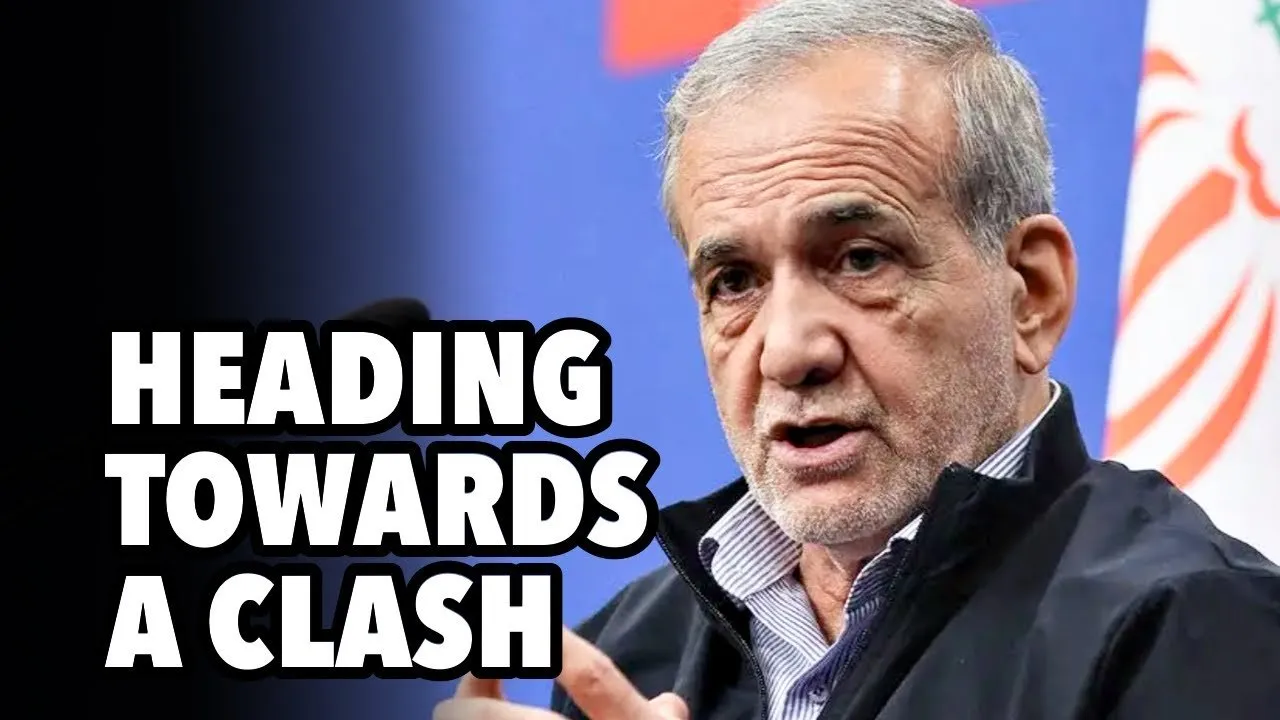
A critical, often overlooked factor is the role of Iran's current administration. President Pezeshkian entered office with a reformist agenda, arguably attempting to liberalize the economy too quickly and without sufficient safeguards. This approach, while intended to modernize the system, inadvertently triggered currency collapse and a surge in inflation.
Paradoxically, Pezeshkian represents the very "Western-friendly" figure that Western diplomats typically claim they want to engage with. He has signaled a profound willingness to reopen dialogue with the West, yet his overtures have been largely ignored. This highlights a fundamental disconnect: the internal economic mismanagement provided the spark, but the fuel is being poured by external forces uninterested in Iran's actual governance improvements.
"Neocons are not about establishing good relations with the country, sorting out whatever problems exist. Neocons are always about regime change because for them it is all or nothing."
The Unrelenting Drive for Regime Change
The geopolitical strategy employed by the United States and Israel appears to have moved beyond containment and into active destabilization. The events of last June, referred to by some analysts as the "12-Day War," serve as a grim case study. This confrontation was not primarily about uranium enrichment; it was a targeted attempt to decapitate the Iranian leadership structure. The strikes aimed at political and military elites were designed to induce a systemic collapse—a goal that ultimately failed as the Iranian government reconstituted itself and survived.
The Discarded Option of Diplomacy
If the goal of the West were truly nuclear non-proliferation or regional stability, President Pezeshkian would be the ideal partner. He controls economic and domestic policy and has maintained his commitment to engagement despite being personally targeted during military escalations. However, the rejection of his diplomatic hand reveals the true objective: control.
The interventionist factions in Washington—often termed "neocons"—do not seek a friendly independent government; they seek a compliant client state. This is why figures like the former Crown Prince, Reza Pahlavi, are being promoted in Western media despite having negligible support within Iran. The promotion of such figures, who have not set foot in the country since 1978, illustrates the disconnect between Western aspirations and Iranian ground realities.
The Trump Factor: Ambiguity and Escalation
As the United States transitions politically, the stance of Donald Trump introduces a layer of calculated unpredictability. Trump notoriously withdrew from the JCPOA (the Iran Nuclear Deal) during his first term—a deal that even European partners admitted was working—thereby setting the stage for the current crisis. His current rhetoric oscillates between offering a "carrot" (negotiations) and wielding a "stick" (threats of overwhelming force).
Structural Chaos and Security Lapses
The situation is further complicated by internal disarray on both sides. In Washington, decision-making appears concentrated within a small, tight-knit clique, potentially bypassing broader intelligence assessments. In Tehran, despite the loyalty of the security services, there are glaring lapses in internal security, evidenced by the regular assassination of high-profile figures within Iranian borders.
This "structural chaos" increases the risk of miscalculation. While Trump may publicly state he hasn't seen enough violence to warrant an attack yet, his administration is reportedly exploring military options. The lack of military assets currently deployed—such as carrier groups—suggests an immediate invasion is unlikely, but the window for a kinetic clash is opening as both sides organize for confrontation.
The Information War Playbook
Modern regime change operations are fought as much in the media as they are on the ground. We are currently witnessing the deployment of a familiar narrative playbook used against Gaddafi in Libya and Assad in Syria. This involves the immediate delegitimization of the government, reports of "bloodthirsty" crackdowns, and often wildly inflated casualty numbers that are rarely corrected after the fact.
The pattern is consistent:
- Provocation: Violent elements infiltrate peaceful protests.
- Reaction: The state responds to secure order.
- Distortion: Media narratives portray the state response as an unprovoked massacre of innocents.
- Justification: These reports are used to build moral consent for military intervention or severe sanctions.
"We see the protests, we see the warnings about not doing bad things to the protesters. We see the extraordinary stories about hundreds or thousands of people killed... intended to delegitimize the government. They did that with Yanukovych. They did that with Assad. They've done that with Gaddafi."
Conclusion
While the Iranian government, backed by the technical capabilities of its BRICS partners, appears to have weathered the most recent wave of unrest, the danger has not passed. The underlying economic fragility remains a vulnerability, and the external determination to force a regime change has not waned.
Despite the veneer of potential diplomacy, the trajectory points toward conflict. The disconnect between a reformist Iranian president seeking dialogue and a Western policy establishment intent on total capitulation suggests that a collision is inevitable. Whether through internal destabilization or direct military action, the drums of war are beating louder, and the window for a peaceful resolution is rapidly closing.