Table of Contents
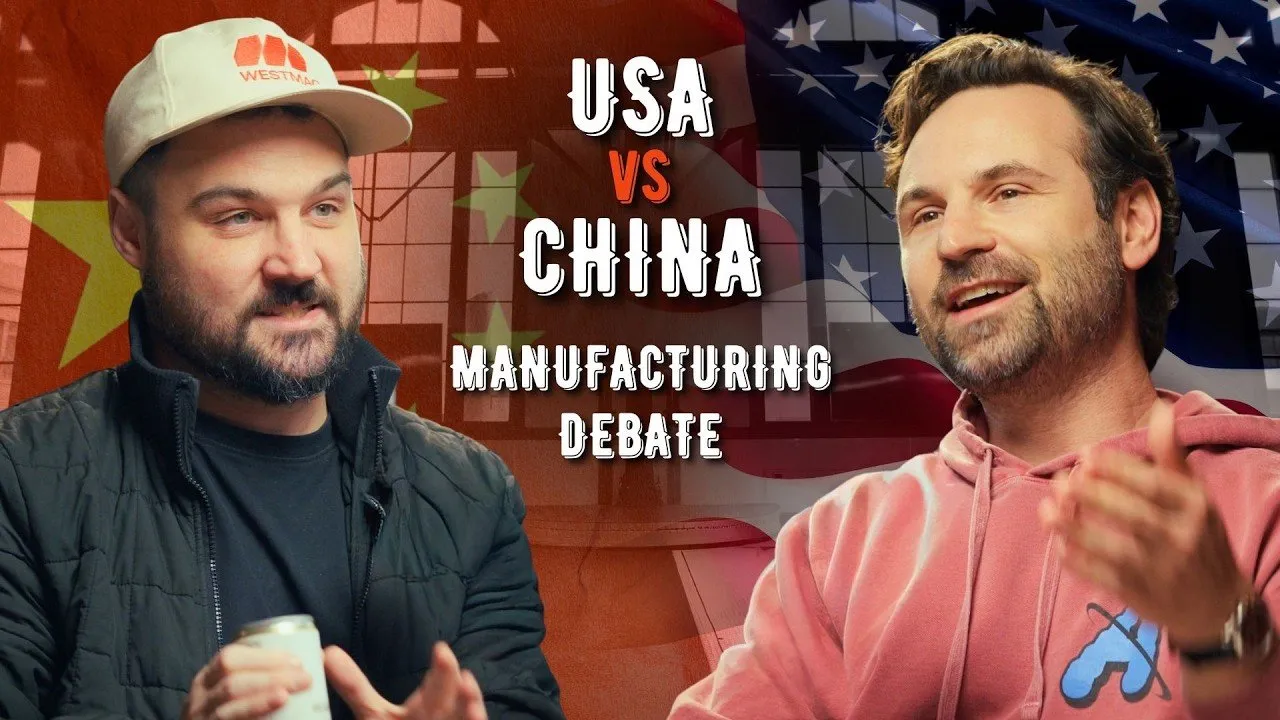
The global landscape of manufacturing has undergone a seismic shift over the last four decades. In the 1980s, the United States accounted for roughly 30% of the world’s manufactured goods; today, that figure has dwindled to approximately 16%. Meanwhile, China has surged from near-obscurity to commanding nearly 30% of global production. This transition represents one of the most significant transfers of power in human history, moving beyond mere labor costs to a fundamental gap in engineering expertise and industrial infrastructure. As modern hardware evolves into complex electromechanical systems, the debate is no longer about "cheap labor," but about who possesses the "tribal knowledge" required to build the future.
Key Takeaways
- Tacit Knowledge as a Competitive Moat: Manufacturing is a "stateful system" where the most critical optimizations—the "implicit weights"—are only learned through high-throughput mass production.
- The Evolution of Chinese Manufacturing: China has moved from low-end "toy factories" to advanced R&D hubs where engineering teams co-design products alongside Western entrepreneurs.
- The "Electric Stack" Framework: Modern industrial power depends on five pillars: lithium-ion batteries, power electronics, embedded compute, electromagnetics, and computer vision.
- Structural Barriers in the US: Re-industrialization faces significant hurdles, including "NIMBY" (Not In My Backyard) opposition, restrictive environmental regulations, and a venture capital model that often avoids heavy infrastructure.
- The Humanoid Robot Race: The development of humanoid robots represents the ultimate frontier of manufacturing; whoever masters this supply chain first may achieve a permanent industrial advantage.
The Erosion of Tacit Knowledge and the "Rust Belt" Legacy
The decline of American manufacturing is often discussed in purely economic terms, but the human cost is measured in the loss of "tribal knowledge." When a factory closes, the collective expertise of the engineers and technicians who understood the nuances of the machinery disappears. This "tacit knowledge" is not something that can be easily downloaded or taught in a classroom; it is earned through years of trial and error on the factory floor.
For entrepreneurs attempting to build hardware in the US, the reality is often jarring. While Silicon Valley excels at software and "moonshot" ideas, the Midwest’s once-mighty industrial base has been squeezed to the absolute margin. This has created a disconnect where the people designing products are thousands of miles away from the people making them. Critics argue that by offloading production, the US has essentially offloaded the ability to innovate on the manufacturing process itself.
"We have only so much tribal knowledge left. Once it’s gone, it’s gone. Preserving tacit knowledge is very hard because it’s not like the Matrix where you just jump in and download."
This loss of knowledge creates a feedback loop. Without high-throughput production, American engineers lack the data needed for "reinforcement learning" in manufacturing. In contrast, Chinese factories act as massive neural networks, constantly absorbing and refining process data to improve efficiency and quality.
China’s Transition: From Low-End Labor to Engineering Hubs
A common misconception in the West is that China remains a destination for "cheap labor" characterized by low-quality output. While this may have been true in the 1990s, the reality in 2024 is vastly different. Modern Chinese contract manufacturers (CMs) offer much more than floor space; they provide full engineering teams that co-design products to fit their specific supply chains and tooling.
For a hardware startup, going to China is often the only way to "run as fast as possible." The ecosystem in cities like Shenzhen is built for speed. If an entrepreneur needs a specific battery cell or a specialized camera module, it is often just an email away. This hyper-competitive environment has produced a new class of industrial leaders.
"In China, there are 20 Elons. Maybe their Elons are not as good... but if I’m an American entrepreneur that wants to build the most advanced device, I can just go there and do it."
This infrastructure allows for a "fractional use" of advanced resources. Just as software companies use AWS to avoid building their own servers, hardware companies use Chinese CMs to access world-class tooling and engineering without the multi-billion dollar upfront investment. This creates a powerful incentive for even the most patriotic founders to look abroad to remain competitive.
The "Electric Stack" and the Future of Hardware
To understand the current manufacturing landscape, one must look at what is being called the "Electric Stack." This framework suggests that almost all next-generation devices—from autonomous vehicles and drones to advanced kitchen appliances—are built on the same core technologies. If a nation cannot manufacture these components at scale, it loses its ability to compete in the broader tech economy.
The Five Pillars of the Electric Stack
- Lithium-ion Batteries: The foundation of portable and sustainable energy.
- Power Electronics: The circuitry required to manage and convert electrical power efficiently.
- Embedded Compute: The "brains" of the device, integrating software with physical hardware.
- Electromagnetics: Essential for motors, actuators, and sensors.
- Computer Vision Hardware: The sensors and camera modules that allow machines to perceive the world.
Currently, the US is struggling to maintain a foothold in several of these categories. For example, there is virtually zero high-volume camera module manufacturing in the United States. Even when final assembly happens domestically, the high-value components—the "weights" of the system—are almost invariably imported from Asia. This dependency creates a fragile supply chain that is vulnerable to geopolitical shifts.
Regulatory and Cultural Barriers to Reshoring
Even with ample capital, reshoring manufacturing to the US is fraught with systemic obstacles. One of the most significant is the regulatory environment. In states like California, which was once an industrial powerhouse, a "scaffolding" of environmental laws has made certain types of manufacturing nearly impossible. Specifically, restrictions on "chemistry with metals"—such as anodizing or semiconductor fabrication—have driven these industries to other states or overseas.
Furthermore, the "NIMBY" movement has historically stifled the construction of the housing needed for a manufacturing workforce. In China, industrial campuses like those of BYD often include high-rise housing and amenities for workers directly on-site. In the US, the separation of "hipsterville" engineering hubs from "Rust Belt" factory towns creates a friction that slows down the iteration cycle.
"The factory and the engineers need to be in sync. That’s the superpower that companies like BYD bring to bear. The factory and the engineering office are in the same facility."
There is also the challenge of the US capital markets. Venture capital is generally designed for the high margins and low capital expenditure of software. Financing a $100 million factory is a different beast entirely, requiring a level of patience and risk tolerance that many modern funds lack. Without a cohesive national industrial policy, American founders are often left "hopping on one leg" compared to their state-subsidized counterparts in China.
Opportunities: Leveraging the AI and Data Center Boom
Despite the challenges, there is a silver lining. The current AI boom and the massive build-out of data centers provide a unique opportunity to "pull" advanced manufacturing back to the US. Data center racks are, in essence, highly complex electromechanical systems. They require advanced power supplies, energy storage, and thermal management—all components of the Electric Stack.
By treating data center procurement as a matter of industrial policy, the US could incentivize the creation of domestic supply chains for these components. However, this requires a shift in thinking. Currently, many of these high-value components are excluded from tariffs, allowing hyperscalers to continue sourcing from abroad. Critics argue this is a missed opportunity to use a massive CAPEX boom to rebuild the American industrial base.
Conclusion
The manufacturing debate between the US and China is not merely an economic competition; it is a fundamental test of national will and systemic efficiency. Re-industrializing the United States will require more than just building factories; it will require a complete overhaul of regulatory frameworks, a new approach to capital formation, and a renewed cultural dignity for industrial work. As the world moves toward a future dominated by robotics and the "Electric Stack," the ability to transform files into physical products will remain the ultimate measure of a nation's sovereignty and power. The tools and talent exist; the question is whether the US has the collective resolve to use them.