Table of Contents
The United States faces an escalating challenge to its technological dominance as Chinese artificial intelligence models rapidly capture global market share. Recent data indicates a surge in the adoption of Chinese open-source and open-weight models, which have expanded from a negligible portion of global token usage to nearly 30% in just over a year, forcing a recalibration of strategy among leaders in Silicon Valley and Washington, D.C.
Key Points
- Market Shift: Chinese-developed AI models have scaled from roughly 1% to nearly 30% of global token usage in approximately 15 months.
- Strategic Focus: U.S. policymakers are shifting their definition of "winning" the AI race from mere model performance to securing global market share for trusted, allied technology.
- Distribution Strategy: Experts argue that American innovation alone is insufficient; the U.S. must prioritize a robust distribution strategy to compete with the cost-effectiveness of Chinese offerings.
- Policy Alignment: The connection between tech executives and the Presidential Council of Advisors on Science and Technology (PCAST) is intensifying, as government leaders seek to bridge the gap between commercial interests and national security.
The Race for Global Dominance
The core of the current geopolitical tension lies in a fundamental disagreement regarding what success looks like in the artificial intelligence sector. While Silicon Valley has long prioritized building the most powerful models, Chinese developers have focused on accessibility, cost-efficiency, and ubiquity. By offering models that are "good enough" at a fraction of the cost, Chinese providers are effectively securing their infrastructure into the global tech ecosystem.
This rapid proliferation of Chinese technology presents a significant hurdle for the United States. As global industries adopt these low-cost tools, the infrastructure for AI deployment—and the data that fuels it—becomes increasingly dependent on non-Western architectures. Addressing this trend requires more than just domestic innovation; it demands an integrated approach that connects federal policy, private sector execution, and international alliances.
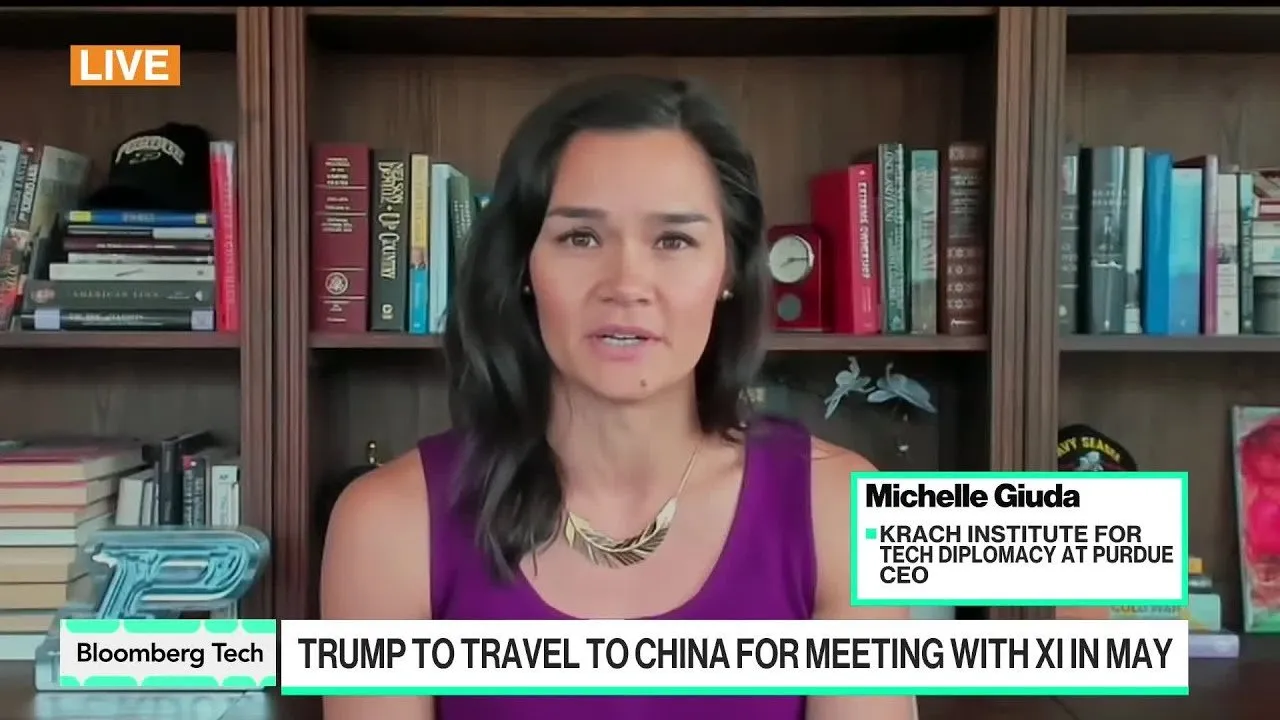
"If you look at market share of artificial intelligence, there's a concerning trend growing with Chinese models, and specifically their open weight and their open source models, which are cheap. They're good enough."
Bridging Silicon Valley and Washington
The relationship between the private technology sector and the U.S. government has transitioned from informal dialogue to a highly fortified partnership. Groups such as PCAST (President’s Council of Advisors on Science and Technology) have become central to this exchange. Critics and analysts alike are examining whether the presence of major tech companies—many of which have historically deep financial ties to the Chinese market—can align with a cohesive national security strategy.
According to market observers, this bridge is not merely a reactionary measure but a sustained effort to influence policy. The challenge for these advisers is balancing the commercial desire to maintain access to the Chinese market with the government’s imperative to maintain technological supremacy in a competitive environment where AI is increasingly "borderless."
Infrastructure and Future Outlook
Looking ahead, the success of the U.S. strategy will likely depend on more than just high-level policy or software development. The domestic landscape faces pressure regarding the physical requirements of the AI boom, specifically the construction of energy-intensive data centers and the creation of high-tech jobs that sustain local economies. Furthermore, analysts stress that American leadership is not a solo pursuit.
The U.S. government intends to continue leveraging the Presidential Council of Advisors on Science and Technology to harmonize private sector goals with broader geopolitical strategy. Simultaneously, the focus will shift toward strengthening alliances to ensure that trusted, transparent, and secure technology remains the global standard. As the global AI market continues to mature, the ability of the U.S. to pair its innovation with a competitive distribution model will be the ultimate test of its technological strategy.