Table of Contents
In a move that has fundamentally altered the geopolitical landscape of the Western Hemisphere, U.S. forces executed a high-stakes, large-scale strike in Venezuela, resulting in the capture of Nicolas Maduro and his wife. The operation, described by President Trump as a necessary action against a "narco-terrorist" regime, marks a dramatic pivot in American foreign policy and raises urgent questions about the future of Venezuela.
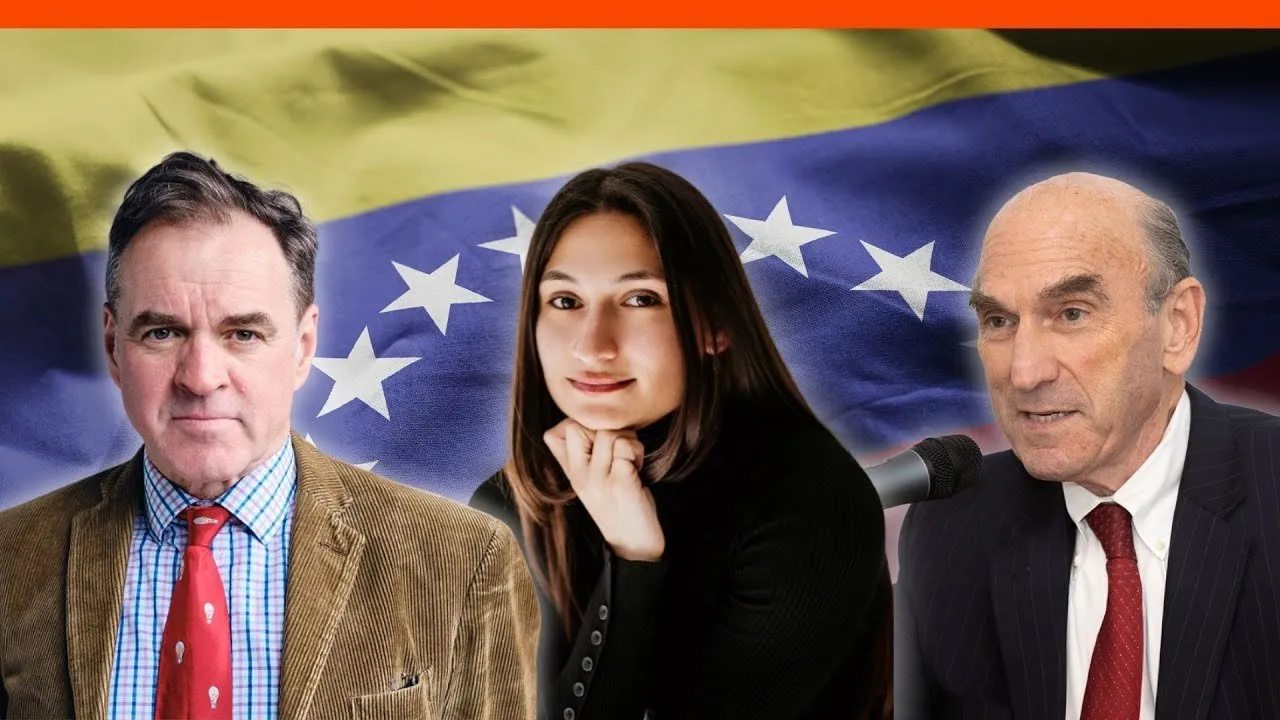
To unpack the operational details and the historical significance of this event, we turned to two leading experts: Elliot Abrams, former Deputy National Security Adviser and Special Representative for Venezuela, and Niall Ferguson, renowned historian and columnist for The Free Press. Their analysis provides a comprehensive look at the intelligence breakthrough, the legal implications, and the precarious path toward a democratic transition.
Key Takeaways
- A Massive Intelligence Success: The extraction was not a small "snatch and grab" but a coordinated military action involving thousands of personnel, air support, and a naval flotilla, executed without leaks.
- The "Trump Corollary": Historian Niall Ferguson argues this marks a revival of the Roosevelt Corollary to the Monroe Doctrine, asserting the U.S. right to intervene in the Western Hemisphere to remove hostile regimes.
- Transition Anxiety: While the operation was successful, the political path forward is fraught with risk. The administration has communicated with regime remnants but surprisingly has not yet engaged with democratic opposition leader Maria Corina Machado.
- Geopolitical Shockwaves: This operation sends a stark warning to U.S. adversaries, particularly Iran, while representing a significant strategic loss for China, which has heavily invested in the Maduro regime.
The Operation: Intelligence, Extraction, and Indictment
According to Elliot Abrams, the operation to capture Maduro was the culmination of months of visible military buildup. A significant naval flotilla had gathered in the Caribbean—ostensibly for counter-narcotics operations—which served a dual purpose: suppressing potential reactions from the Venezuelan military and positioning assets for the extraction.
The raid itself relied on precise intelligence. Maduro, who has spent years under the protection of Cuban intelligence and rarely slept in the same location twice, was pinpointed at a moment of vulnerability. Abrams noted that Maduro was seized at one of his residences while attempting to reach a safe room. Following his capture, he was transported by helicopter to a U.S. ship and is being transferred to the Southern District of New York to face arraignment.
The Charges
The legal basis for this intervention is a sealed indictment that has existed for roughly five years. The charges against Maduro and his inner circle—including his wife and security minister Diosdado Cabello—are severe.
"The US is alleging that the involvement of the government goes beyond even mere payoffs into real cooperation... protection by the Venezuelan security forces of Colombian and Venezuelan drug trafficking."
Abrams emphasized that this was not a pretext for regime change, but a response to a "narco-state" reality where the government actively facilitated the movement of cocaine to the U.S. and Europe.
The Power Vacuum: A Precarious Transition
The most pressing question following the extraction is: Who runs Venezuela now?
During his press conference, President Trump stated that the U.S. would essentially "run" the country until a transition could occur. However, reports on the ground indicate that Maduro’s Vice President, Delcy Rodriguez, is claiming the presidency. This has created a confusing and potentially dangerous power dynamic.
The Opposition Paradox
Abrams expressed deep concern regarding the administration's diplomatic posturing. despite the democratic opposition winning a landslide victory (70% of the vote) in the recent election under the leadership of Maria Corina Machado and candidate Edmundo Gonzalez, the Trump administration has reportedly spoken with regime holdovers but not Machado.
"The notion that we've talked to Maduro's vice president and not talked to Maria Corina Machado is baffling... My fear now is that there'll be some kind of bad deal where hangers on from the Maduro regime get to stay in power."
If the U.S. creates a transitional government with the remnants of the Chavista regime rather than the democratically elected opposition, Abrams warns it would be a "disastrous outcome" for the Venezuelan people.
Historical Context: The Return of the Monroe Doctrine
Niall Ferguson places this event in a broader historical arc, describing it as the implementation of the "Trump Corollary" to the Monroe Doctrine. Historically, the Roosevelt Corollary asserted the U.S. right to intervene in Latin American nations to stabilize them. Ferguson argues that after decades of passivity, the U.S. is reasserting its dominance in the Western Hemisphere.
Comparisons to Panama and Chile
Critics, including the New York Times editorial board, have labeled the attack illegal and unwise, citing a history of checkered U.S. interventions. Ferguson counters this by pointing to the long-term failures of non-intervention in places like Cuba and Nicaragua.
He draws a favorable comparison to the overthrow of General Noriega in Panama. However, he notes a significant evolution in tactics: where the Panama operation required 27,000 troops, the Venezuela extraction was a surgical strike involving special forces (Delta Force, Navy SEALs) with a much lighter footprint. This aligns with a shift in American sentiment against "forever wars" while maintaining support for decisive, short-term military actions.
"The American public is very supportive of military interventions that can be described as surgical strikes... They like these things to be done quickly."
Global Implications: China, Iran, and Energy
Beyond the immediate region, the removal of Maduro sends ripples through the global order, specifically affecting U.S. rivals China and Iran.
The Loss for Beijing
China has been a primary economic lifeline for the Maduro regime, investing billions in Venezuelan oil infrastructure. Ferguson notes that this operation represents a "decisive turning of the tide" against Chinese influence in Latin America. It demonstrates that despite economic encroachments, the U.S. retains the ability to play "hardball" in its own backyard.
A Warning to Tehran
The operation also serves as a potent signal to the Iranian regime, which is currently facing internal protests and economic fragility. Abrams suggests that the willingness of the U.S. to take direct military action against an indicted head of state will force Tehran to take American threats regarding their nuclear and ballistic missile programs far more seriously.
The Energy Factor
President Trump was notably transparent about the economic motivations behind the operation, citing the need for "good neighbors and good energy." Ferguson characterizes this as a refreshingly honest, "19th-century" approach to foreign policy where national interest and profit motive are openly intertwined.
Conclusion
The capture of Nicolas Maduro is a tactical triumph for U.S. intelligence and special forces, but the strategic victory remains unsecured. The ultimate success of this intervention will depend on the transition of power. If the U.S. can facilitate a return to democracy under the legitimate election winners, it could stabilize a failed state and unlock vast economic potential.
However, as Ferguson warns, the U.S. faces a significant risk: the challenge of "running" a country without getting bogged down in a protracted occupation. With the administration prioritizing domestic concerns and debt reduction, the appetite for a long-term presence is low. The coming weeks will determine whether Venezuela moves toward a democratic renaissance or slides into a chaotic power struggle between regime loyalists and the opposition.