Table of Contents
The geopolitical temperature in the Middle East has reached a critical boiling point. With the deployment of significant military assets—including the USS Abraham Lincoln carrier strike group—the United States appears to be positioning itself for a major operation against Iran. Following the collapse of back-channel negotiations and a hardening of demands regarding ballistic missiles, the window for diplomacy has seemingly closed. The focus has shifted from containment to a strategy that bears striking resemblance to previous regime change efforts, raising urgent questions about the feasibility of such operations and the potential for catastrophic escalation.
Key Takeaways
- Imminent Military Action: The positioning of US carrier strike groups and the breakdown of diplomatic talks suggest a kinetic strike against Iran is likely in the near future.
- Regime Change Strategy: Reports indicate the goal is not merely destroying nuclear facilities, but engineering a collapse of the government, modeled after US strategy in Venezuela.
- Intelligence Warnings: Both US and Israeli intelligence agencies have reportedly advised that the Iranian government remains stable and resilient, making a forced collapse unlikely.
- Risk of Escalation: While the US administration aims for a quick "knockout blow," Iran has signaled it will treat any strike as an all-out war, potentially targeting US bases and closing the Strait of Hormuz.
- The Neocon Trap: A failed quick strike could trap the US in a prolonged conflict, with political pressure forcing escalation rather than de-escalation.
The Strategic Shift: From Containment to Regime Change
The nature of the military buildup in the region suggests a departure from standard deterrence. The presence of the carrier strike group is not merely for show; it represents the foundation of a strike package facing Iran. While there were initial reports of negotiations, the terms demanded by the US administration—specifically regarding the limitation of Iran's ballistic missile program—were likely designed to be rejected.
According to reports from agencies like Reuters, the objective has moved beyond tactical strikes on nuclear infrastructure. The intent is to engineer a collapse of the regime. The operational theory relies on creating enough chaos to allow protesters to storm government buildings and seize control, effectively decapitating the leadership while leaving the bureaucratic structure intact.
The "Venezuela Model"
This strategy mirrors the playbook used in Venezuela, where the US attempted to remove the top leadership while hoping to install a compliant successor who would govern according to American interests. In the Venezuelan scenario, the plan involved replacing Nicolas Maduro with a figure like Delcy Rodriguez, expecting the state apparatus to fall in line. The administration appears to be seeking a similar outcome in Tehran: removing the Supreme Leader and the President, then installing a pre-selected figure to manage the country.
The Intelligence Disconnect
A striking aspect of this developing situation is the apparent chasm between the political leadership's intent and the assessments provided by intelligence services. Reports suggest that the administration has been advised by its own intelligence agencies, as well as those of Israel, that the planned operations will not achieve regime change.
The regime is still in firm control. It still has enough critical mass of support within Iran despite the protests... the military and security services continue to be loyal to the regime and will continue to remain so.
Intelligence analysts argue that Iran is fundamentally different from Venezuela. It is a complex society with a political system deeply rooted in religious ideology. Unlike the fragility perceived in Caracas, the Iranian system possesses a "critical mass" of support, particularly among the religious establishment and the security services, including the IRGC. The assessment is clear: the government is not a house of cards waiting for a single push to collapse.
Structural Resilience vs. Decapitation Strikes
The "decapitation" strategy faces significant hurdles due to Iran's unique political structure. In Venezuela, there was a clear constitutional line of succession that the US attempted to manipulate. Iran’s hierarchy is far more opaque and religiously integrated.
- The Dual Leadership: Power is divided between the President (Masoud Pezishkian) and the Supreme Leader (Ali Khamenei). Removing one or both does not guarantee a power vacuum that a US-backed proxy could fill.
- The Clerical Establishment: The Supreme Leader is a religious figure. Any successor would likely emerge from the clerical establishment, a group largely hostile to US interests. There is no secular "Vice President" waiting in the wings to pivot the country toward the West.
- Stakeholder Complexity: The Iranian power structure involves the IRGC, various militias, and deeply entrenched religious bodies. These groups are unlikely to accept a foreign-imposed leader.
If the Supreme Leader were removed or captured, the most plausible outcome is not a transition to a US-friendly democracy, but the rise of an even more hardline faction from within the clerical or military establishment.
The Trap of an "All-Out War"
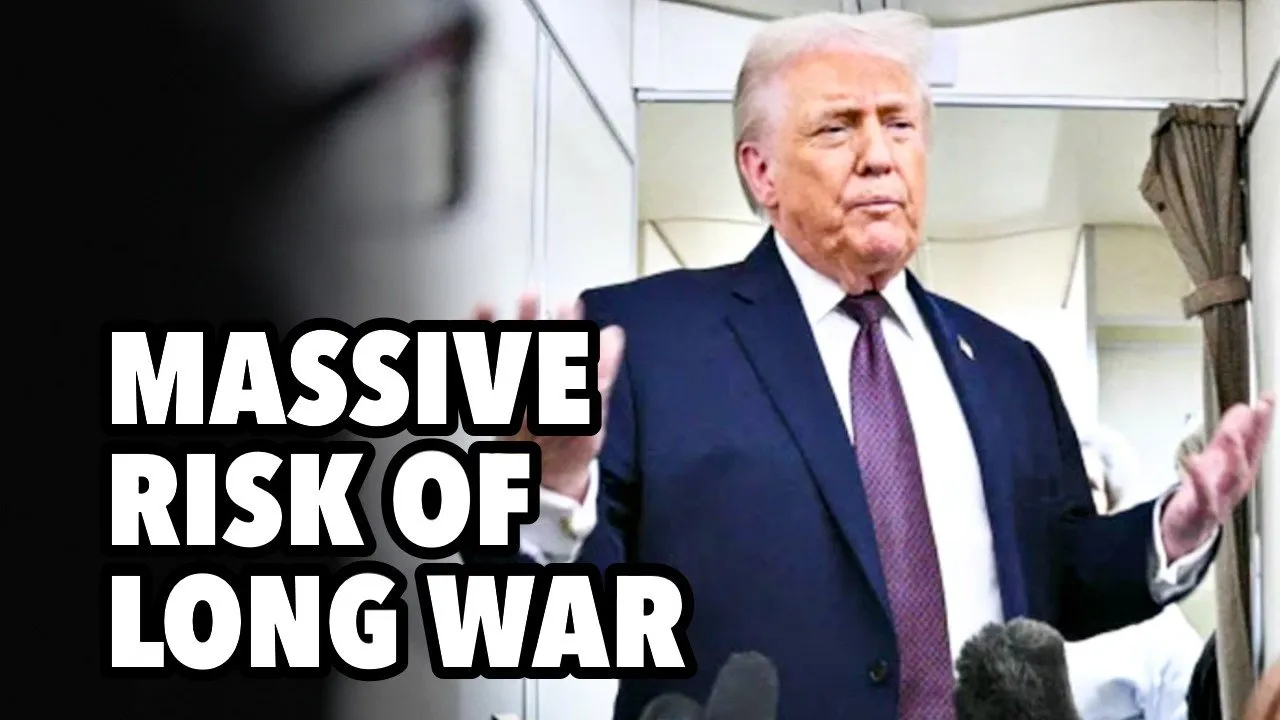
The US administration ostensibly wants to avoid "boots on the ground" or a prolonged conflict, aiming instead for a cinematic, short-term victory—a knockout blow delivered in the first or second round. However, this relies on the enemy behaving exactly as predicted. Iranian officials have explicitly warned that they will not treat a limited strike as a limited engagement.
The Iranian Response
Unlike previous exchanges where responses were measured to avoid escalation, Tehran has signaled that a regime-change operation will be met with all-out war. This could include:
- Direct missile strikes against US bases in the region.
- Targeting American aircraft carriers.
- Closing the Strait of Hormuz: This would cut off roughly one-third of the world's oil supply, causing a global energy crisis that would have immediate and severe economic repercussions.
If the initial US strike fails to topple the government within days, the dynamic shifts in Iran's favor. Iran has strategic depth, mountainous geography, and a vast arsenal of missiles. A conflict dragging on for weeks would mirror the "12-Day War," where the balance of advantage tilts toward the defender as the aggressor runs out of quick options.
Conclusion: A High-Stakes Gamble
The drive toward conflict appears to be fueled by a long-standing obsession within certain US policy circles, dating back to the withdrawal from the JCPOA. The administration risks entering a trap where the only response to a failed "quick win" is further escalation.
If they are faced with a long war in which the balance of advantage seems to be tilting to Iran's favor, they're going to demand escalation. They have no reverse gear.
By attempting to replicate a strategy that failed in Venezuela in a much more complex and militarily capable nation like Iran, the US risks plunging the region into a catastrophic war. If the Iranian government proves more resilient than the political architects believe—as intelligence agencies have warned—the US may find itself committed to a conflict it cannot easily win and cannot afford to lose.